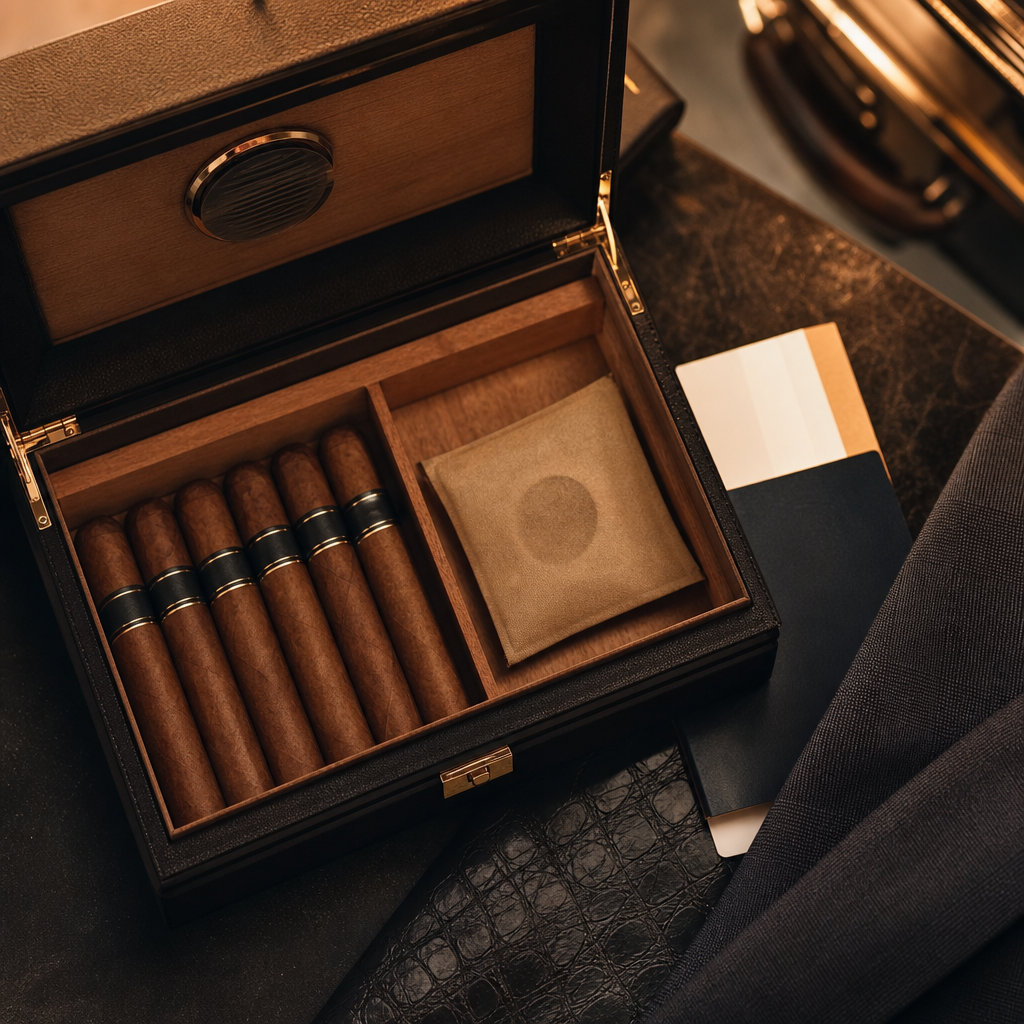
Why Cutting a Cigar Is So Important
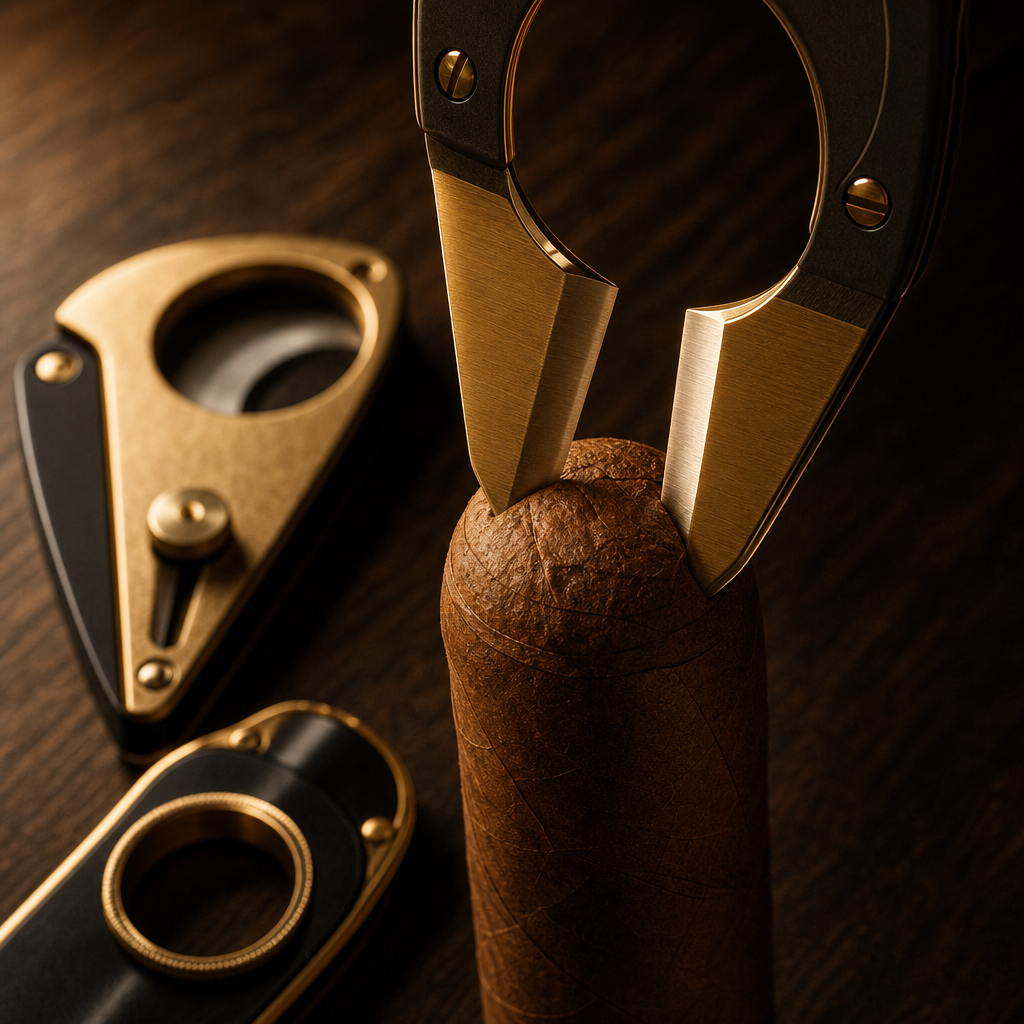
Why Cutting a Cigar Is So Important
Cutting a cigar is the step beginners most easily mess up -- a bad cut can cause the entire cigar to fall apart, burn unevenly, and feel like it has no draw.
It is also the first test of cigar etiquette -- at W Cigar Bar, you can roughly tell a person's cigar experience just by watching how they cut a cigar.
Three Mainstream Cutting Methods
1. Guillotine -- The Most Mainstream
Appearance: Similar to a small double-blade guillotine; insert the head of the cigar and press down with both hands.
Advantages:
- Largest opening -- sufficient smoke flow and the smoothest draw
- Beginner-friendly -- less likely to cut incorrectly
- Accessible pricing -- a good guillotine is NT$1,500-5,000
Disadvantages:
- Cutting too deep can make the cigar fall apart -- depth must be controlled
- Not suitable for slender Lancero formats -- too thin and easy to cut crooked
Recommended tool: LUBINSKI double-blade guillotine -- made in Italy, stainless steel blades, lifetime sharpness. W Cigar Bar is LUBINSKI's general agent in Taiwan, and test cuts are available on site.
2. V-Cut -- A Favorite Among Advanced Enthusiasts
Appearance: The blade is shaped like a V, leaving a V-shaped groove on the head of the cigar after cutting.
Advantages:
- Will not make the cigar fall apart -- only cuts the surface layer
- Concentrates smoke flow -- richer mouthfeel
- Preserves more wrapper -- suitable for dark maduro cigars
Disadvantages:
- Smaller smoke flow -- requires a stronger draw
- Not suitable for large-ring cigars (>54 ring gauge)
Recommended scenarios: Cigars that require a rich mouthfeel, such as Padrón Anniversary, Liga Privada T52, Cohiba Maduro.
3. Punch -- Old-School Gentleman
Appearance: A small round blade that punches a circular hole in the head of the cigar.
Advantages:
- Extremely unlikely to fall apart -- only opens a small hole
- Convenient to carry -- most punches are keychain-sized
Disadvantages:
- Smallest smoke flow -- suitable for slow smoking
- Not suitable for tapered formats (Pyramid)
Recommended scenarios: British gentleman's club style, or elegant Cuban cigars such as Hoyo de Monterrey.
The Correct Cutting Depth
Find the Cap
The head of a cigar has a small circular covering called the "Cap" -- it is applied by hand by the factory roller:
- Single Cap: one layer of cap (most brands)
- Triple Cap: three layers of cap (high-end cigars such as Cohiba, Padrón Anniversary)
- Pigtail Cap: a small hand-rolled pigtail (Liga Privada Únicos)
Where to Cut
Only cut the top of the Cap; do not cut below the Cap -- cutting below the Cap will cause the wrapper to peel and the cigar to fall apart.
Safe depth: 1-2 mm down from the tip of the cigar -- do not exceed the range of the Cap.
Visual Check
After cutting, look at the opening:
- Perfect: the cigar's internal binder + filler are visible, and the wrapper edge remains intact
- Too shallow: insufficient smoke flow (cut a little deeper again)
- Too deep: the wrapper begins to peel (the quality of this cigar will be affected)
What to Do If You Cut It Wrong
If you cut too deep and the wrapper begins to peel:
- Do not panic -- many experienced enthusiasts have encountered this
- Apply a tiny bit of saliva to the peeling area -- this is a traditional cigar industry "natural repair agent"
- Light it and smoke it -- be careful during the first 5 minutes; it will usually stabilize afterward
Recommended Tools and Brands
| Budget | Recommended Tool |
|---|---|
| Entry-level NT$500-1,500 | LUBINSKI entry-level guillotine |
| Advanced NT$2,000-5,000 | LUBINSKI stainless steel double-blade |
| Collector NT$8,000+ | LUBINSKI titanium alloy limited edition |
W Cigar Bar is the general agent in Taiwan for LUBINSKI Italian accessories -- you are welcome to visit and experience 30+ different cutters on site.
You are welcome to visit W Cigar Bar Gentlemen's Cigar Lounge in Da'an District, where Cigar Prince Wilson Tsai will personally teach you how to cut a cigar correctly.
FAQ Q&A
Q1: What kind of cutter counts as "good"?
Three key points: (1) the blade is sharp enough -- it cuts cleanly in one motion without dragging or compressing the wrapper (2) the double blades are perfectly aligned -- the cut is round and not crooked (3) the grip is comfortable -- it can be operated with one hand. The LUBINSKI Italian stainless steel double-blade (NT$2,500-5,000) is the best-value option sold at W Cigar Bar. A cheap NT$200 plastic guillotine will become misaligned by the tenth cigar, ruining cigars instead, which is not worth it.
Q2: What should I do if I cut it crooked / too deep?
- Slightly crooked: trim it once more; it can be saved within another 1-2 mm downward
- A piece of wrapper has opened up: stick it back with a tiny bit of saliva (this is the cigar industry's traditional "natural repair"); smoke carefully for the first 5 minutes, and most will stabilize
- The entire wrapper peels off: this cigar is ruined; ask the shop to replace it or accept the loss
Q3: Can I use scissors / a utility knife / my teeth to cut a cigar?
Absolutely not.
- Scissors: compress the wrapper and leave an uneven cut
- Utility knife: uneven force and a crooked cut
- Teeth (Western cowboy style): 100% ruins the cigar and wets the tobacco leaves with saliva
A professional guillotine is designed so that two blades cut inward from opposite directions simultaneously, which is the only mechanically correct solution. Investing in a good cutter = investing in the cigar experience of the next ten years.
Q4: How should pointed cigars (Pyramid / Torpedo / Belicoso) be cut?
V-cut is best: cut a V-shaped groove about 1/3 down from the tip, preserving the elegant curve of the tip + sufficient smoke flow. A guillotine is also possible, but it can only be a horizontal straight cut -- do not shave the entire tip flat; that is design murder. Punch cutters are not suitable for figurado (the hole is too small and smoke flow is insufficient).
Q5: Will a punch become blocked in the second half?
Yes. A punch has a small outlet, and ash and tar will accumulate, so in the final 1/3 you will clearly feel that you cannot draw. Countermeasures: (1) halfway through, use a cedar spill to poke and clear it (2) directly re-cut it once with a guillotine (this is the biggest disadvantage of a punch) (3) switch to the next cigar. Therefore, a punch is suitable for shorter sessions (robusto 60 minutes OK), but not for longer sessions (churchill 120 minutes will collapse).
LUBINSKI Italian accessories official website: cigarclub.tw -- operated by W Cigar Bar