Factors Determining the Flavor of Cigars: From Cultivation to Production
Factors Determining the Flavor of Cigars: From Cultivation to Production
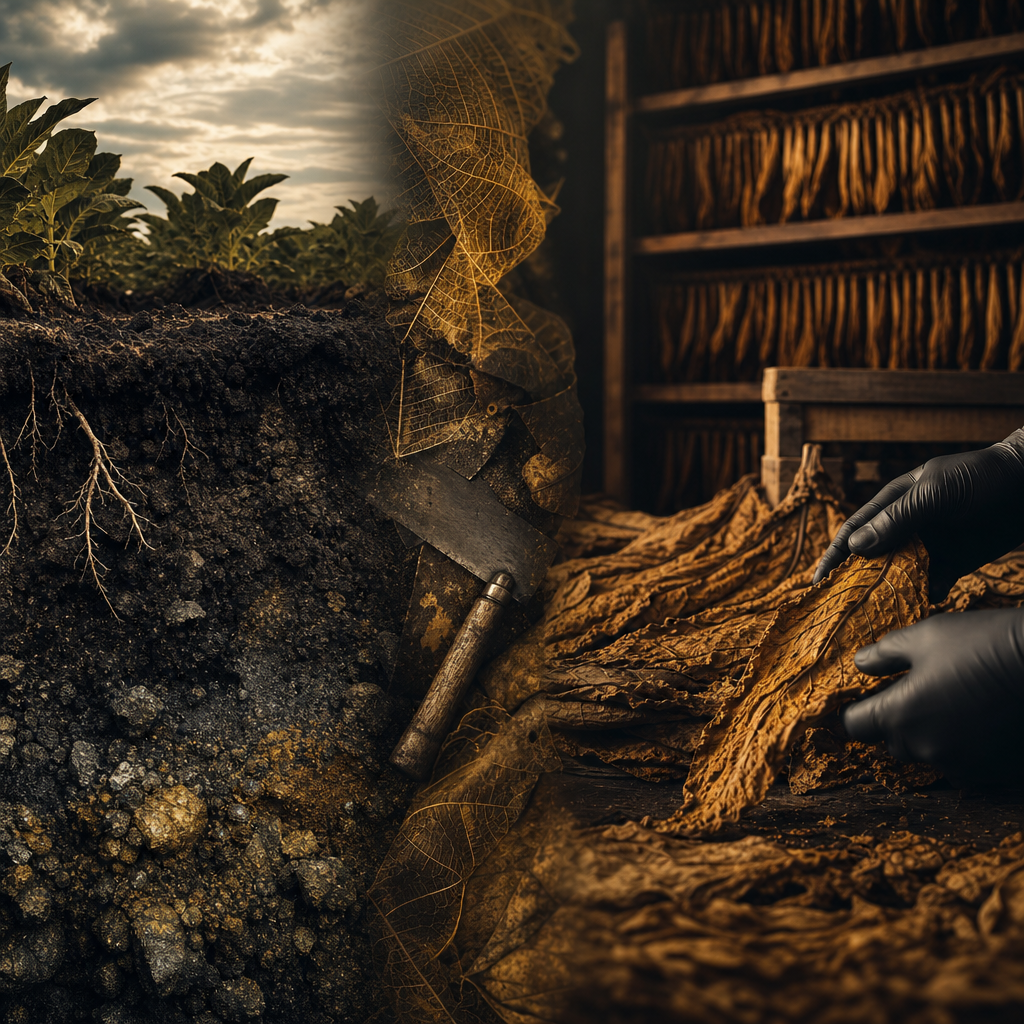
I often say that the flavor of a cigar doesn't start when it's lit, but rather when the seed touches the soil. Veterans talk about brands, sizes, and vintages, but to truly understand, one must grasp how soil, climate, leaf position, fermentation, and rolling collectively shape the framework of a cigar.
As the editor of "Cigar Bible," I've seen many cases where cigars of the same brand and size perform differently. The differences arise not only from storage but also from field management and workshop judgment; a cigar is not a single formula but the result of a series of trade-offs.
Soil: The Mineral Blueprint of Flavor
The reason why Cuba's Vuelta Abajo has long been regarded as a premium tobacco leaf region is not just its latitude, but the combination of red soil, sandy loam, and drainage capability. In the Pinar del Río area, many fields have loose topsoil and clay-rich subsoil, preventing waterlogging after rain, allowing roots to seek nutrients deeper. This results in tobacco leaves accumulating more stable sugars and oils at maturity, presenting cedar, leather, earth, and a faint sweetness.
The Cibao Valley in the Dominican Republic often exhibits a more mellow mineral feel and creamy tone, while Nicaragua's Estelí volcanic soil tends to bring out black pepper, coffee, and cocoa richness. Comparing Padrón 1964 Anniversary with Arturo Fuente OpusX, the former often has deep roasted coffee and cocoa, while the latter, from the Dominican Chateau de la Fuente region, showcases spicy, woody, and dried fruit layers. Soil alone does not determine flavor, but it sets the foundational tone of a cigar.
Veterans who only look at the country name may overlook the differences of "different fields within the same country." Both Cuba's Partagás Serie D No.4 and Hoyo de Monterrey Epicure No.2 can use Cuban leaves, but the former often shows more pronounced earthiness, pepper, and richness, while the latter leans towards woody, nutty, and gentle sweetness; brand style, leaf source, and blend choices guide the soil characteristics to different expressions.
Climate and Vintage: Different Temperaments of the Same Brand
Cigar vintage differences are often simplified by novices as "the older, the better," but veterans know the key lies in the year's temperature, rainfall, sunlight, and harvest timing. When Cuba launched Cohiba Siglo VI in 2003, its long size, larger ring gauge, and mature blend made it a representative of the new century; however, the proportion of sweetness in the front, creaminess in the middle, and woodiness in the tail varies between different box periods.
Too much rain can dilute leaf concentration, while excessive drought may thicken leaves, slow burning, and make spiciness more prominent. Between 2008 and 2010, many Nicaraguan brands enhanced the allocation of leaves from different regions like Estelí, Condega, and Jalapa, making strength and aroma more precise. For example, My Father Le Bijou 1922 often presents black pepper, cocoa, and rich wood through darker wrappers and Nicaraguan fillers.
The value of a vintage is not in the label but in the traces of agricultural conditions and workshop adjustments it records. A box of H. Upmann Magnum 46 from around 2014, if sourced clearly and stored stably, may exhibit honey, hay, and delicate wood aroma; but if humidity is too high for a long time, even a beautiful vintage may become dull, sour, and burn poorly. Collection and flavor judgment must be separated; collection appreciation does not guarantee appreciation, still depending on source storage and market.
Seed and Variety: The Starting Point of Strength, Aroma, and Structure
Discussing cigars cannot only focus on the origin but also on the seed. Traditional Cuban varieties from Criollo, Corojo to the later improved Habano series aim to balance aroma, disease resistance, yield, and leaf flexibility. Corojo was once considered a classic wrapper source in the mid-20th century, but disease resistance issues led many regions to switch to improved or transplanted varieties.
Nicaragua and Honduras commonly see seeds like Habano seed, Criollo 98, and Corojo 99. Rocky Patel Vintage 1990 uses dark wrappers to bring out sweet wood and coffee, while Alec Bradley Prensado often combines Honduran and Nicaraguan leaves to create cocoa, leather, and spice. Seeds are not the entirety of flavor, but they set the thickness, oil, elasticity, and fermentation potential of the leaves.
Variety determines plasticity, the workshop determines the final direction. The same Habano seed, when planted under Ecuador's misty conditions, may produce more delicate, oily, and mildly spicy wrappers; when planted in Nicaragua's strong sunlight environment, it may be thicker, spicier, and fuller. This is why the same brand may launch different lines like Maduro, Natural, Connecticut, and Habano, allowing veterans to predict part of the flavor framework from the wrapper.
Leaf Position: The Proportional Game of Ligero, Seco, and Volado
A tobacco plant from bottom to top receives different sunlight, nutrients, and maturity rates. The lowest Volado burns well and has a lighter flavor; the middle Seco has delicate aroma, often responsible for floral, woody, and herbal notes; the upper Ligero receives more sunlight, is thicker, and has stronger nicotine and oils, bringing strength and depth to the latter part. If further up, some plants may harvest even denser leaves to increase strength.
| Leaf Position | Common Function | Flavor Tendency | Craft Challenge |
|---|---|---|---|
| Volado | Aids burning | Hay, light wood | Too much may seem thin |
| Seco | Provides aroma | Floral, nutty, cedar | Must retain delicacy |
| Ligero | Increases strength | Pepper, leather, coffee | Burns slower |
| Medio Tiempo | Rare high-concentration leaves | Dark cocoa, deep spice | Unstable yield |
When Cohiba Behike was officially launched in 2010, the most discussed concept was Medio Tiempo. These leaves are not present in every plant and are limited in quantity; if handled well, they can increase mid-to-late thickness and dark aroma; if the proportion is unbalanced, they may overpower the delicate sweetness. The brilliance of a blend is not in stacking strength but in allowing burning, aroma, and strength to support each other.
Practically, veterans evaluating a cigar might consider breaking down the front, middle, and back sections. If the front is only spicy without aroma, Ligero may be performing too early; if the middle suddenly collapses, Seco may be insufficiently supportive; if the tail is bitter and heats up quickly, it may relate to leaf proportion, rolling density, or storage humidity. Leaf position is the most direct language for understanding cigar structure.
Harvesting, Curing, and Fermentation: Turning Green Flavor into Aroma
Harvesting is not done all at once but in layers. Traditionally in Cuba, harvesting starts from the lower leaves, then moves up after a few days, allowing leaves at different positions to reach their respective maturity points. Harvesting too early results in heavy grassy, ammonia, and sharp flavors; too late, leaves may become too thick, with excessive sugar consumption, affecting burning and aroma. This step relies on the farmer's experience with leaf color, thickness, and texture.
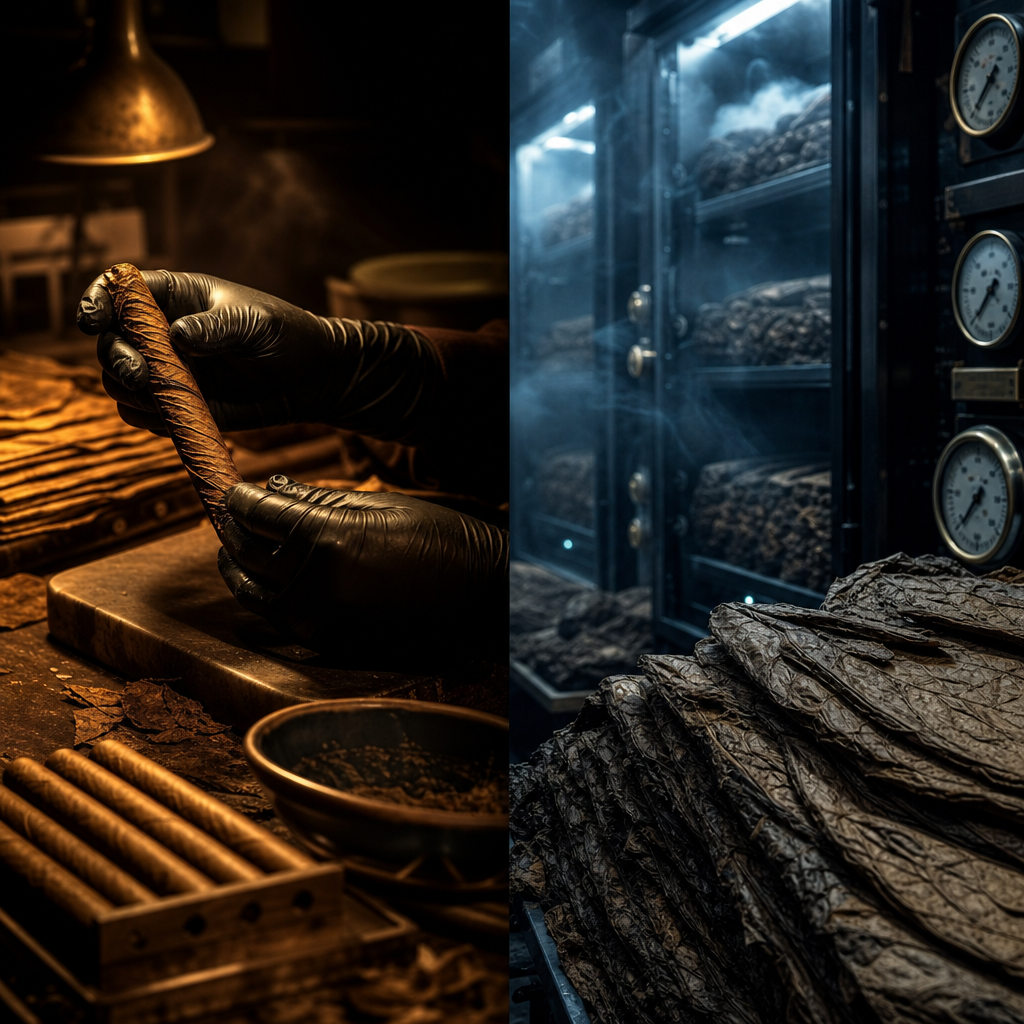
Curing usually takes place in a curing barn, lasting 45 to 60 days, during which chlorophyll gradually breaks down, and the color changes from green to yellow and brown. Then it enters fermentation piles, where leaves heat up under moisture and pressure, commonly controlled between 38 to 50°C, with each workshop having its rhythm. A rich line like Oliva Serie V may become sharp if under-fermented; if well-handled, it will have coffee, dark chocolate, and dried fruit richness.
Fermentation is the core stage of transforming raw nicotine and green substances into smooth aromas. Many veterans encountering pungent ammonia may think it's just a storage issue, but it could also stem from insufficient fermentation or a rushed release. Of course, subsequent box aging can blend flavors, but it cannot completely correct the flaws of the initial process; if the foundation is not clean, time will only magnify certain problems.
Rolling Craft: The Invisible Formula Behind the Burn Line
The taste of a cigar is not only in the leaves but also in the rolling. The same set of leaves, if bunched too tightly, will have too much draw resistance, burn slowly, and the sweetness may be stifled; if too loose, it will heat up too quickly, and the front aroma will not unfold before entering harsh heat. The Cuban tradition of Totalmente a Mano, Tripa Larga long filler hand-rolled cigars focuses on long leaf arrangement, airflow, and density control.
Take the Robusto size as an example, with about a 50 ring gauge and 124 mm length, Cohiba Robustos, Partagás Serie D No.4, and Romeo y Julieta Short Churchills have similar appearances but different styles. The difference comes from brand formulas and workshop mastery of filler arrangement. If Ligero is placed too centrally, it may cause uneven burning; if there is insufficient burning leaf, the ash column will be loose and require frequent correction.
The craft of a good cigar should allow flavor changes to occur naturally, rather than having the smoker constantly deal with burning issues. Veterans can observe three points: whether the first 1 cm after lighting is stable, whether the ash is uniform, and whether each puff interval of 45 to 60 seconds still maintains aroma. If storage conditions are the same and multiple cigars from the same box perform consistently, it usually indicates stable rolling and formula; if there is a significant difference, it may be due to batch management or storage history variables.
Wrapper, Size, and Aging: The Three Levers of Final Presentation
The wrapper is the first layer of visual language of a cigar and an important source of entry flavor. Connecticut Shade often brings cream, nuts, and light wood; Ecuador Habano may have spice, floral, and sweet wood; Maduro, processed for a longer time, often shows cocoa, coffee, molasses, and dark dried fruit. Comparing Ashton Aged Maduro, Liga Privada No.9, and Montecristo Línea 1935, one can feel how the wrapper and formula guide sweetness, concentration, and thickness.
Size also changes flavor. Lancero, due to its small ring gauge, has a high wrapper ratio, with a direct aroma line; Robusto has a high balance, often used by brands to showcase core formulas; Churchill and Double Corona provide longer changes but also test burning management more. Around 2004, the market gradually favored larger ring gauges, with the 6×60 size becoming popular in the U.S. market, but a larger ring gauge does not mean more complexity, sometimes just softer, slower, and looser.
Aging can round corners and blend aromas, but it cannot turn mediocre leaves into great works. Generally, medium-strength Cuban cigars may enter a more harmonious state in 3 to 5 years, while rich Nicaraguan lines may not need too long; if humidity is consistently above 72%, even a good vintage may become dull. Collection appreciation does not guarantee appreciation, still depending on source storage and market, with flavor judgment better based on actual state.
Common Questions
Why do cigars from the same box have flavor differences?
Differences within the same box may come from natural leaf variation, rolling density, box position, and storage humidity. Long filler hand-rolled cigars are not industrial replicas, even within the same batch there will be slight differences. When judging quality, don't rely on a single cigar, comparing at least 2 to 3 from the same box is more reliable.
Does a stronger cigar mean higher quality?
Not necessarily. Strength is just an expression of intensity and thickness; quality depends on balance, layers, burning, and aftertaste. Padrón 1926 is very dense, while Hoyo de Monterrey Double Coronas can be more elegant; they are different paths and should not be measured with the same yardstick.
Does a darker wrapper always mean a sweeter taste?
Dark wrappers often evoke cocoa, coffee, and molasses, but sweetness still depends on fermentation, filler, and burning temperature. If Maduro is over-processed or stored too wet, it may be dull and bitter rather than sweet. Color is a clue, not a conclusion.
How long should cigars be stored to improve?
This depends on the brand, size, vintage, and initial state. Some Cuban cigars may blend better in 3 to 8 years, but some rich Nicaraguan lines are very complete 1 to 3 years after release. Aging is not magic; stable storage is more important than blindly waiting.
How to judge craftsmanship from burning?
Look at draw resistance, ash column, burn line, and heating speed. If each puff interval is stable and still maintains aroma, and frequent corrections are not needed, it usually indicates reasonable rolling and humidity. If it often extinguishes, burns unevenly, or the tail is bitter, it may relate to craftsmanship or storage.
What should veterans train for when advancing?
It's recommended to keep records: brand, size, box period, humidity, lighting time, front-middle-back flavor, and burning performance. After continuously recording 30 cigars, you'll see your preferences and distinguish whether it's regional characteristics, formula design, or storage causing differences.
I always believe that the true joy of cigar enthusiasts is not in chasing fame but in understanding how a cigar travels from the land to your hand. When you can distinguish the soil's undertone, leaf position, fermentation cleanliness, and rolling stability, each evaluation will be clearer and more humble. A good cigar is not a myth but a work completed by agriculture, time, and human hands.
—Cigar Prince Wilson Tsai
Smoking is harmful to health.
Smoking is prohibited for those under twenty.
Quitline: 0800-636363.
This article is intended for adults over twenty as a reference for cigar culture, storage, and legal knowledge, not as an advertisement, promotion, or purchase suggestion.