In-depth Analysis of Cigar Flavor Components: The Interaction of Chemistry and Sensory Perception
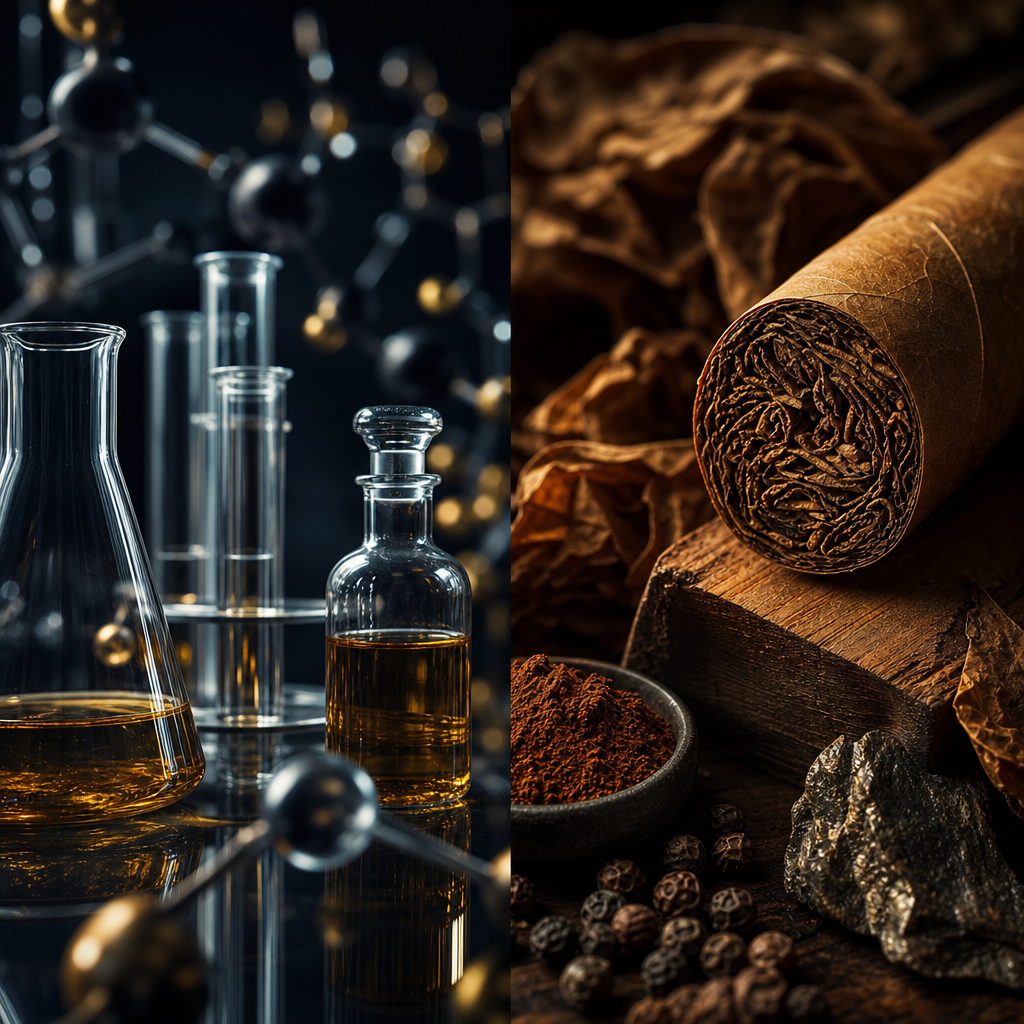
In-depth Analysis of Cigar Flavor Components: The Interaction of Chemistry and Sensory Perception
Cigar flavors are not a mysterious pile of adjectives but the result of soil, leaf position, fermentation, aging, burning, and sensory memory. As the editor of the "Cigar Bible," I am more concerned about why a cigar presents leather, cocoa, cedar, pepper, or mineral notes rather than just stopping at the intuitive judgment of "good or bad."
This article is based on the advanced knowledge of adult cigar enthusiasts, breaking down how chemical substances translate into smell, taste, and oral texture; and using case studies from regions like Cuba, the Dominican Republic, Nicaragua, and Honduras to analyze the subtle but decisive differences between different leaves.
Flavor is a Symphony of "Chemical Signals" and Brain Memory
The core of cigar flavor comes from volatile aromatic molecules, non-volatile taste molecules, and new compounds generated during burning. The former includes aldehydes, ketones, pyrazines, phenols, terpenes, etc., which form nutty, roasted, woody, floral, and spicy notes; the latter, such as organic acids, sugars, protein breakdown products, nicotine, and mineral salts, affect sweetness, bitterness, spiciness, saltiness, and thickness.
The true flavor of a cigar is not a single taste but the result of the combined stimulation of nasal smell, tongue taste, and oral trigeminal nerve. For example, Partagás Serie D No.4 is often described as having earthy, black pepper, and leather notes, which is not because a "leather molecule" directly exists, but because the combination of phenols, pyrazines, and trace nitrogen-containing compounds triggers the brain's past memories of leather, roasting, and damp wood.
Experienced smokers often say a cigar "opens up in the middle," which chemically is mostly related to stable burning temperature, increased tar, and different layers of the leaf bundle gradually participating in combustion. The first third may mainly involve the wrapper and outer filler; entering the middle, the proportion of seco and ligero in the core becomes more apparent, and the spiciness, mineral, and concentration are also amplified. Cohiba Siglo VI, when in good condition, often shows green grass, honey, and creaminess in the front, with coffee, roasted nuts, and delicate woody notes gradually emerging in the middle.
The difficulty of sensory training lies in: the same chemical signal can be described by different people using different vocabulary. Some describe the roasted notes brought by pyrazines as cocoa, some as coffee beans, and others as toasted bread. Advanced judgment should not only pursue beautiful adjectives but should be able to state the location, duration, intensity, and direction of flavor changes. This is the boundary from preference to professional understanding.
Sugar, Proteins, and Maillard Reaction: Sweetness Comes from More Than Just "Sweet"
The sweetness in cigars is rarely as direct as sugar but comes from residual sugars, organic acid balance, aromatic substances after fermentation, and the Maillard reaction during burning. During the drying and fermentation process, starch gradually converts, proteins break down into amino acids, and reducing sugars and amino acids generate complex aromas under heat, forming caramel, malt, cocoa, nut, and toasted bread notes.
Take the Dominican Davidoff Signature series as an example, which is often considered clean-lined, with obvious creaminess and grain sweetness. The reason is not only the milder strength but also the longer processing time of Dominican Olor, Piloto Cubano, and other leaf types, reducing ammonia and rough alkali sensations. In contrast, the ligero from Nicaragua's Estelí region often brings thicker cocoa, black pepper, and dark molasses impressions, with the Padrón 1964 Anniversary series being a typical example.
If the sweetness of a cigar is not supported by acidity and bitterness, it will appear flat; if the bitterness is too high, the sweetness will be suppressed. This is why, even with the same cocoa tone, Montecristo No.2's dry wood, cream, and cocoa often present a rounder Cuban balance, while some high-intensity Nicaraguan cigars may push cocoa towards dark chocolate, concentrated coffee, or even slightly burnt bitterness.
Experienced smokers can break down sweetness into three levels: whether there is a sweet aroma at the entrance, whether there is an illusion of sweetness in the mouth, and whether the aftertaste leaves a molasses or creaminess. If there is only a sweet aroma in the nasal cavity but the tongue is dry and bitter, it means the aromatic molecules are beautiful but the burning or preservation state may not be ideal; if it is not sweet at the entrance but licorice and nut sweetness emerge in the tail, it may be that the leaf blend formula unfolds only in the later stage.
Leaf Position, Leaf Types, and Regions: The Same Tobacco Plant Can Have Different Characters
A tobacco plant can be roughly divided into volado, seco, viso, ligero from bottom to top. The higher it is, the stronger the sunlight, the thicker the leaves, and the higher the nicotine, oil, and polyphenol content; the lower it is, the better the combustibility, the lighter the aroma, often responsible for stabilizing the burn line. This is also why blenders cannot only pursue "strength" but must ensure that burning, aroma, and structure are established simultaneously.
| Leaf Position | Common Function | Sensory Tendency | Blending Risk |
|---|---|---|---|
| Volado | Aids burning | Light woody, herbal | Too much can be weak |
| Seco | Provides aroma | Floral, hay, cedar | Too little can lack layers |
| Viso | Connects structure | Nutty, creamy, slightly spicy | Poor handling can be stuffy |
| Ligero | Increases concentration | Pepper, cocoa, earthy | Too much can extinguish or be bitter |
The subtlety of cigars often lies not in the strongest ligero, but in how seco and viso sew the aroma together. For example, Trinidad Fundadores, after being commercialized in 1998, its long cigar shape brings a lower burning rhythm, allowing hay, honey, wood, and slight spice to spread over a longer time; if replaced with a shorter, thicker size, even with similar style leaves, the performance will be more concentrated and heavier.
Regional differences are equally crucial. Cuba's Vuelta Abajo often shows mineral, hay, honey, and cedar lines; the Dominican Republic tends to be clean, creamy, and nutty; Nicaragua's Estelí, Condega, and Jalapa each have differences, with Estelí often being thick and spicy, Jalapa can bring softer sweetness and red earth aroma. Honduras' Jamastran often has woody, spicy, and more direct earthy feelings. These are not absolute labels but sensory coordinates after long-term comparison.
Fermentation and Aging: How Ammonia, Tannins, and Roughness Are Tamed
Tobacco leaves cannot directly become high-grade cigar materials after harvest; they must undergo curing, grading, fermentation, resting, and aging after rolling. The temperature in the fermentation pile can reach 38 to 50 degrees Celsius, depending on leaf thickness and target style; too high may damage the aroma, too low may result in insufficient transformation. During this time, proteins, sugars, polyphenols, and nitrogen-containing substances continue to change, ammonia decreases, and the stimulus is modified.
Take Arturo Fuente OpusX as an example; when it was launched in 1995, one reason it shook the market was the mature management and fermentation technology breakthrough of Dominican wrapper, showing that a region originally considered difficult to reach top wrapper standards could exhibit rich spice, cream, wood, and dark sweetness. This illustrates that flavor is not solely determined by the region; agronomy and post-processing can also rewrite sensory impressions.
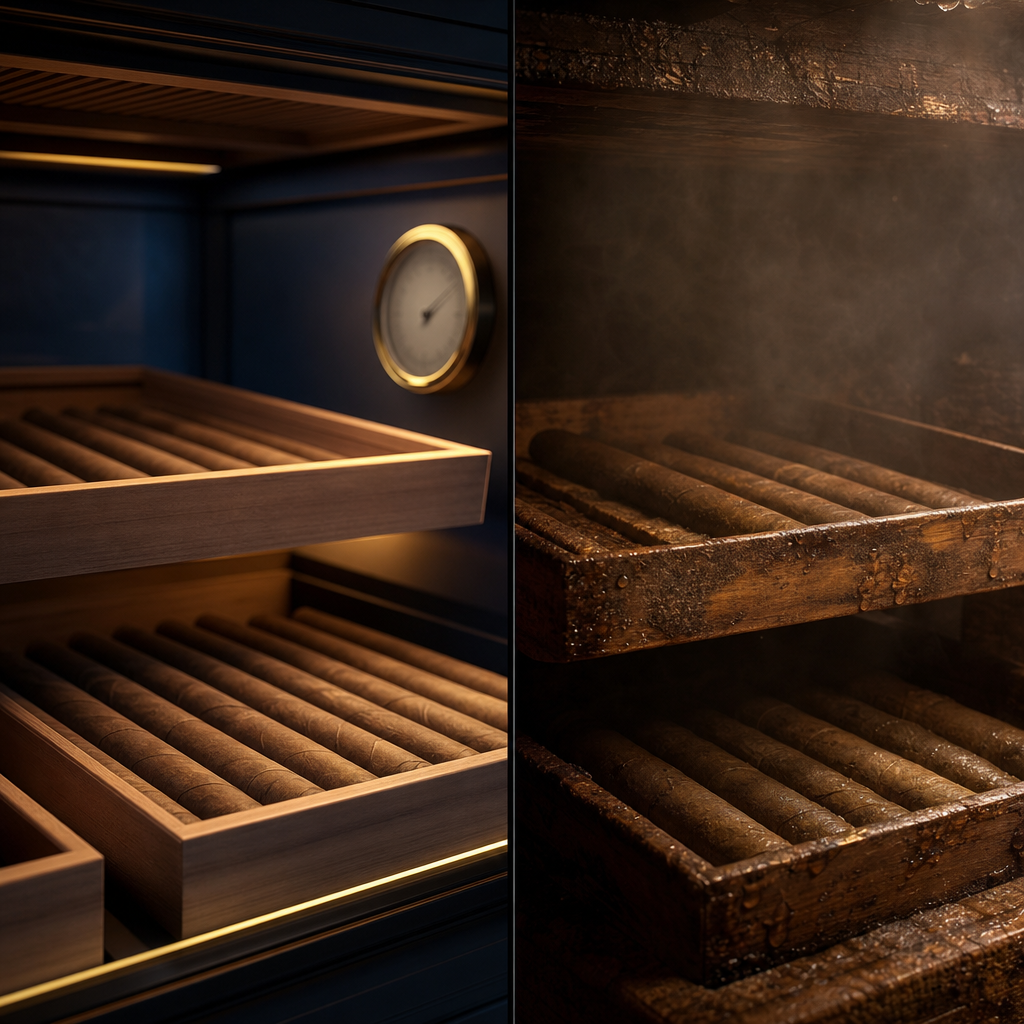
Fermentation solves whether tobacco leaves can be used, and aging deals with whether flavors can become harmonious. A box of H. Upmann Magnum 46 from 2014, if stored stably, often shows reduced green herbal notes, with honey, nuts, wood, and light tea notes becoming rounder; but if humidity is too high for a long time, it may instead develop moldy, rancid, or uneven burning.
Experienced smokers judge the aging state not just by the year. A more effective method is to check three things: first, whether the cold smell is clean, without pungent ammonia; second, whether the burning is stable, without frequent extinguishing; third, whether the later stage transitions from strong to deep, rather than from strong to bitter. Collecting years can be fun, but it does not guarantee appreciation, still depending on source preservation and market.
Burning Temperature and Rhythm: The Same Cigar Can Be Changed by You
The temperature at the burning end of a cigar can rise from about 400 degrees Celsius to over 800 degrees. The faster the rhythm, the more intense the thermal decomposition, and the easier it is for bitterness, spiciness, and tar thickness to increase. Conversely, if the rhythm is too slow, humidity too high, or draw too tight, it may result in insufficient burning, bringing sour, grassy, and ammonia sensations. This is why the same Romeo y Julieta Wide Churchills can be perceived as sweet by some and as wet wood and bitter by others.
Burning is not a passive result but the last chemical process of flavor generation. The size of the cut, the integrity of the wrapper, the ring gauge, length, and humidity all affect airflow speed. Modern large ring gauge cigars of 52 to 56 often have lower burning temperatures and thicker smoke, easily presenting cream and nutty notes; ring gauges of 42 to 46 have different leaf bundle proportions, with more concentrated aroma and faster transitions.
Advanced observation can establish consistency through the following steps:
- Stabilize the storage environment at about 65% to 69% relative humidity, with the temperature ideally between 18 to 21 degrees Celsius.
- Aim for smoothness with the cut, not overly large; too loose a draw will increase temperature too quickly.
- Keep 45 to 75 seconds between puffs, observing smoke temperature and bitterness changes.
- If the later stage suddenly becomes spicy, extend the interval first rather than rushing to correct the burn line.
- Record the sweetness, acidity, bitterness, spiciness, and aftertaste length of each third.
For example, Hoyo de Monterrey Epicure No.2 in good condition often wins with cream, cedar, nut, and light floral notes; if the rhythm is too fast, the delicate sweetness will be overshadowed by heat bitterness. Conversely, slowing down appropriately for thicker structured Nicaraguan cigars like Oliva Serie V Melanio will make dark chocolate and roasted aromas more prominent than pepper stimulation.
Brand Cases: From Cuba to the New World, How Chemical Styles Land
Cohiba Behike 52 was officially launched in 2010, often discussed for its use of medio tiempo leaves. These leaves, located at the top of the plant and rare in yield, receive strong sunlight, have high oil and concentration, and can bring complex notes of dark spices, coffee, cream, and honey wood. If in good condition, its strength is not a crude push but unfolds in a way that combines thickness and detail.
Montecristo No.2 is another classic chemical balance. The torpedo shape concentrates airflow in the front, often presenting dry wood, cocoa, nuts, and slightly bitter coffee; after the middle, if the leaf blend is mature, cream and light citrus peel notes will emerge. This triangle balance of acidity, bitterness, and sweetness is why many Cuban cigar enthusiasts return to study it over time.
New World cigars often draw flavor outlines more clearly, while Cuban cigars often sew minerals, herbs, and wood more finely. For example, My Father Le Bijou 1922 often shows black pepper, cocoa, earthy, and concentrated coffee tones, with clear sensory signals; after Davidoff Nicaragua was launched in 2013, it used Nicaraguan leaves to express cleaner spice, cream, nut, and sweet wood notes, demonstrating the brand's craftsmanship in elegantly modifying high-concentration regions.
Padrón 1926 Serie is known for its maturity, cocoa, coffee, and dried fruit thickness; its style key lies in leaf sorting and time management, not just strength. Conversely, long-sized Partagás like Lusitania, if stored and in ideal condition, often transition from leather, earthy, and woody to sweet spice and roasted nuts, with more noticeable changes than shorter sizes. The purpose of case comparison is not to rank but to establish the "chemical structure—leaf blend—sensory" correspondence ability.
Advanced Sensory Training: Turn Adjectives into Repeatable Judgments
For experienced smokers to advance further, the key is to make sensory records repeatable, rather than leaving only emotional impressions each time. I suggest breaking a cigar into the first 1/3, middle 1/3, and last 1/3, and separately recording aroma, taste, texture, burning, and aftertaste. Each item is marked with a strength score from 1 to 5, and the time is noted, such as nutty at the 12th minute, turning to coffee at the 28th minute, and increased bitterness at the 45th minute.
Professional recording is not about making cigars sound more mysterious but about fixing subjective feelings into comparable data. At least compare the same cigar on different dates with 3 sticks before qualifying to talk about stable impressions. If 5 out of 25 sticks in the same box have tight draws, 3 have skewed burn lines, it may be batch, storage, or rolling differences; if only one stick performs abnormally, it is not advisable to directly negate the entire brand.
Aroma training can borrow methods from coffee, whiskey, and spice boxes, but avoid over-applying. Common cigar references include:
- Wood: cedar, oak, cypress, pencil lead.
- Sweet aroma: honey, molasses, caramel, dried fruit.
- Roasted: coffee, cocoa, roasted almonds, rye bread.
- Soil: wet earth, mineral, mushroom, leather.
- Spicy: white pepper, black pepper, cinnamon, clove.
The easiest to misjudge are "concentration" and "complexity." High concentration is just strong signals, while complexity is multiple signals in order and with a clear main axis. Some high-strength cigars have a strong impact in the first 10 minutes but only have pepper and bitter coffee throughout; conversely, delicate long-sized cigars like H. Upmann Sir Winston may slowly unfold honey, tea, wood, and cream with a lower posture, which is the level advanced users should patiently capture.
Common Questions
The core of judging cigar flavors is to separate chemical, burning, and personal sensory observations, then reconnect the three on the same map. The following questions are the blind spots I often encounter when communicating with experienced cigar enthusiasts.
Why does the same cigar feel different each time?
The reason may come from storage humidity, batch, smoking rhythm, physical condition, and environmental odors. Even cigars from the same box have natural leaf differences; if relative humidity fluctuates from 62% to 72%, burning temperature, smoke thickness, and bitterness may change. Experienced smokers should record the date, humidity, and time, not just "good or bad today."
Is spiciness caused by nicotine?
Not entirely. Nicotine affects strength and physiological sensations, but oral spiciness is often related to trigeminal nerve stimulation, burning temperature, phenols, aldehydes, and spice-type volatiles. A noticeable black pepper sensation does not necessarily mean the highest nicotine; conversely, some cigars are not very spicy but have a thick aftereffect.
Is sourness in cigars always a bad thing?
Not necessarily. Moderate sourness can enhance freshness, like citrus peel, black tea, or fermented fruit sourness, which can make sweetness more three-dimensional. But if the sourness is like vinegar, wet cardboard, or stuffy sourness, accompanied by burning difficulties, it is necessary to suspect storage humidity, aging state, or leaf processing issues.
Does the wrapper really determine most of the flavor?
The wrapper is very important because it directly contacts the burning surface and provides outer aroma and oiliness; but it cannot be said to determine everything alone. The proportion of filler, burning speed, size, and rolling density will all change the performance. Maduro wrappers often bring sweet cocoa and coffee notes, but if the filler is unbalanced, it may also appear heavy and monotonous.
Is older always better?
Not necessarily. Cigars suitable for aging will reduce roughness, integrate aromas, and extend aftertaste over time; but poor storage will lead to a decline in flavor. High humidity may cause mold or stuffy sourness, while too dry will result in aroma loss and overheating. Age is just a clue, not a quality guarantee, nor a flavor verdict.
How to distinguish "complex" from "chaotic"?
Complexity is multiple flavors appearing sequentially or concurrently, still with a clear main axis; chaos is when sour, bitter, spicy, and burnt all rush out simultaneously without layers. You can observe the aftertaste: complex cigars usually finish cleanly, leaving wood, nut, or sweet aromas; chaotic cigars often leave tongue-stinging, burnt bitterness, or stuffiness.
I have always believed that the most fascinating aspect of cigars is not describing each puff as poetry but seeing the precise relationship between agriculture, time, craftsmanship, and sensory perception. When you can trace a hint of wood aroma to the leaf position, judge the burning rhythm from a bit of bitterness, cigars are not just a hobby but a flavor language that can be studied for a lifetime.
—Cigar Prince Wilson Tsai
Smoking is harmful to health. Under 20 is prohibited from smoking. Quitline: 0800-636363. This article is for reference only for adults over 20 years old regarding cigar culture, preservation, and regulations, not a tobacco advertisement, promotion, or purchase suggestion.