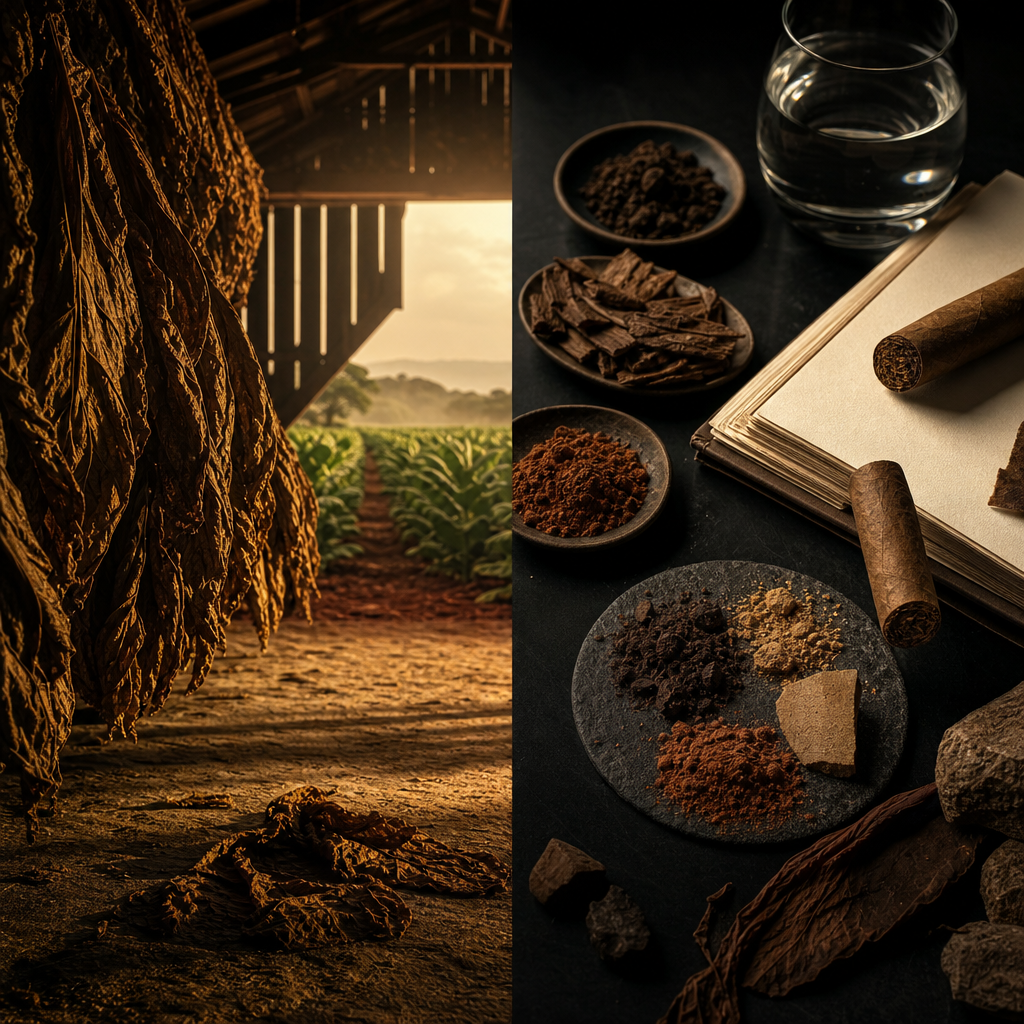
The Cultural Heritage and Evolution of Cigars

The Cultural Heritage and Evolution of Cigars
I often feel that when seasoned enthusiasts discuss cigars, if they only talk about strength, ring gauge, and origin, they're missing half the soul. As the editor of the "Cigar Bible," I care more about how a cigar traverses history, class, literature, diplomacy, and daily etiquette before landing in our hands.
Cigars are not merely a hobby; they are like combustible cultural archives: the leaves record the soil, the brand records the era, the band records aesthetics, and the smoking rhythm records a person's cultivation and discretion.
From Indigenous Rituals to European Power: The Starting Point of Cigar Culture
In 1492, when Columbus arrived in the Caribbean, Europeans systematically recorded the Taíno people's use of tobacco for the first time. The term "cohiba" at that time was not the brand we know today but a Taíno word referring to a bundle of tobacco leaves. After the Spaniards brought tobacco back to Europe, it quickly transformed from a medicinal herb and curiosity to a symbol of the court and aristocracy.
In 1717, the Spanish monarchy established a tobacco monopoly, making Seville a major tobacco processing center in Europe. By the late 18th century, Havana cigars were considered luxury goods, as the soil, humidity, and craftsmanship of Cuba's Vuelta Abajo region allowed them to surpass most colonial products in flavor stability. The cultural history of cigars does not begin with brands but with how humanity transformed a leaf into a ritual.
In the 19th century, cigars became symbols of diplomacy, commerce, and male socialization. After the Napoleonic era, European officers and businessmen introduced Havana cigars to clubs in London, Paris, and Vienna; smoking cigars represented not only wealth but also an understanding of time management and the boundaries of silence and conversation. This "slow" culture remains a cherished core among seasoned enthusiasts.
Havana Factories, Readers, and Brand Myths
The mid-19th century was a crucial period for the formation of Cuban cigar brands. H. Upmann was founded in 1844, Partagás in 1845, and Romeo y Julieta appeared in 1875. These brands are not just trademarks but historical documents written by families, factories, exporters, and colonial economies.
In Cuban cigar factories, there is a culturally significant role: the lector de tabaquería, or factory reader. Workers would roll cigars while listening to the reader recite newspapers, political commentaries, or novels. Montecristo was born in 1935, named after Alexandre Dumas' "The Count of Monte Cristo," a novel beloved by the workers. If seasoned enthusiasts only remember brand years but forget the reading voices in the factories, they miss the most moving chapter of cigars.
This also explains why Cuban cigars always carry a "narrative sense." The strength of Partagás, the elegance of H. Upmann, and the romance of Romeo y Julieta are not just flavor labels but accumulations of market aesthetics from different eras. When we talk about Serie D No.4, Magnum 46, or Churchill, we are also discussing an entire intersection of industry, literature, and social class.
War, Embargoes, and the Rise of New World Cigars
After the Cuban Revolution in 1959, many cigar families left Cuba, taking their techniques, connections, and seed memories to the Dominican Republic, Nicaragua, and Honduras. The U.S. embargo on Cuba in 1962, a political event, unexpectedly facilitated the long-term development of New World cigars, allowing non-Cuban regions to gradually form their own aesthetics from substitutes.
The Dominican Republic excels in delicacy, balance, and fermentation control, with representative brands like Arturo Fuente and Davidoff; Nicaragua, with regions like Estelí, Jalapa, and Condega, showcases rich spice and mineral notes, with Padrón 1964 Anniversary and Oliva Serie V being familiar examples for seasoned enthusiasts. The 1995 release of Fuente Fuente OpusX shattered the old notion that "premium wrappers could only rely on Cuba or Connecticut."
The maturity of New World cigars proves that cultural heritage is not about replicating Cuba but about growing a new language amid immigration, soil, and market pressures. Today, if seasoned enthusiasts oppose Cuba and the New World, they might miss the most important cigar evolution since the 1990s: styles are no longer just about "origin authenticity" but also "maker philosophy."
Bands, Boxes, and Art: The Visual Culture of Cigars
After 1837, as color lithography gradually matured, cigar bands and box labels became important tools for brand competition. 19th-century cigar boxes often featured goddesses, lions, crests, ships, coins, and aristocratic emblems, with a clear purpose: to make consumers feel noble, distant, and adventurous before lighting up.
Cohiba's black and yellow checkers, Montecristo's six swords and fleur-de-lis, Romeo y Julieta's lover imagery, and Davidoff's white minimalism all represent different eras' aesthetics. In 1966, Cohiba was born as a high-end Cuban diplomatic cigar and entered the commercial market in 1982, with its visual identity carrying strong national symbols and modern management implications.
| Visual Element | Common Era or Example | Cultural Message |
|---|---|---|
| Gold Emblems | 19th-century Cuban Boxes | Authority, Quality Assurance, European Aristocratic Imagination |
| Portraits | Bolívar, Sancho Panza | Literature, Heroism, National Narrative |
| Geometric Minimalism | Davidoff, Cohiba | Modern Luxury, Order, Recognition Efficiency |
| Limited Edition Second Band | Common after 2000 | Collectible Commemoration, Year Record, Market Segmentation |
A band is not just decoration; it is evidence of how cigar culture compresses history, aesthetics, and commerce into a square inch. Seasoned enthusiasts look at bands not only for authenticity and versions but also for how brands speak to specific eras.
Social Customs: Discretion, Rhythm, and Gentlemanly Feel
The core of cigar socialization is not about showing off but about discretion. 19th-century London gentlemen's clubs had smoking rooms where men would move after dinner to discuss politics, finance, and colonial news; 20th-century American business culture saw cigars appear at contract completions, election victories, and childbirths. It symbolizes "closure" and a temporary shared slow time between people.
Truly mature cigar etiquette is often reflected in small things: not rushing others to light up, not scorching the foot with flames, not flicking ash everywhere, and not commenting on others' choices without consent. When seasoned enthusiasts discuss flavors, they should not present personal preferences as absolute standards; a 50-ring gauge Robusto and a 38-ring gauge Lancero are inherently different rhythms.
- Observe the cap before cutting, don't rush the cut
- Toast the foot with heat, don't let flames engulf it
- Let the cigar rest naturally during conversation, don't puff continuously
- Let it extinguish naturally at the end, no need to crush it
The highest level of cigar socialization is showing your restraint, not your inventory. This is also what I believe is the most challenging and worthwhile part for seasoned enthusiasts to practice.
Aging, Collecting, and the Concept of Time: The Second Lesson for Enthusiasts
Discussing cigar culture cannot ignore time. Most handmade long cigars continue to change after production, depending on storage conditions, especially those with high tannins, higher strength, or tighter structures. Generally, 16–18°C and 65–70% relative humidity are common reference ranges; if the temperature is consistently high, flavors tend to dull, and if humidity is too high, burning and draw will be affected.
Cuban limited editions, Edición Limitada, have become an important collection context since 2000, such as the 2004 Cohiba Sublimes, 2007 Trinidad Ingenios, and 2010 Montecristo Grand Edmundo, prompting many seasoned enthusiasts to start building archives based on year, batch, and box condition. However, collection appreciation does not guarantee value increase; it still depends on source preservation and market.
Aging is not about leaving cigars to improve but providing a stable environment for the original structure to integrate. Seasoned enthusiasts should record the acquisition month, box code, storage humidity, box-opening status, and tasting notes; these data are more reliable than hearsay. Time can add smoothness but also magnify flaws; the key is always source, preservation, and judgment.
Contemporary Culture: From Clubs to Digital Communities
After 2000, cigar culture entered a new phase of dissemination. In the past, seasoned enthusiasts relied on print magazines, clubs, and acquaintances for communication; now, they establish a common language through forums, social media photos, video reviews, and auction records. The annual list of Cigar Aficionado, new releases at the Habanos Festival, and auction trends worldwide make information flow much faster than in the 1990s.
But speed also brings problems: some newcomers are led by high scores, rare bands, or celebrity photos, neglecting the basics. Seasoned enthusiasts should re-establish their evaluation framework, such as burn line, draw, transitions in the first, middle, and final thirds, finish length, aging potential, and box consistency. Brand names can provide clues but should not replace judgment.
The biggest change in contemporary cigar culture is that authority no longer comes only from a few reviewers but from everyone who knows how to record and compare. I often suggest that seasoned players divide their notes into "objective structure" and "subjective experience" columns; the former can be discussed, the latter retains personal aesthetics. This way, exchanges will be deep, not just rankings.
Frequently Asked Questions
Is cigar culture still centered on Cuba?
Cuba remains the historical core due to its brand density, factory traditions, and national narrative being too strong; however, today's cultural landscape is multi-centered. The Dominican Republic, Nicaragua, and Honduras each have mature languages and cannot be judged solely by "resemblance to Cuba." The true vision of seasoned enthusiasts is to understand Cuba's foundational status while respecting the independent aesthetics of the New World.
Why does the Churchill size carry cultural weight?
The Romeo y Julieta Churchill is deeply tied to the image of British Prime Minister Churchill, with a specification of about 47 ring gauge and 7 inches long, symbolizing long conversations, wartime leadership, and post-dinner contemplation. It is not the quickest to get into the state but can present a complete segment, thus often seen as a classic long cigar representative.
How should seasoned enthusiasts read brand years?
Years should be viewed alongside historical events. The 1840s H. Upmann and Partagás reflect Havana's industrialization; the 1935 Montecristo reflects factory reading culture; the 1966 Cohiba connects to the post-revolution national hospitality system. Simply memorizing founding years has limited value; understanding the historical context truly comprehends it.
What is the most common mistake in collecting?
The most common is chasing popular names while ignoring box condition, preservation records, and personal taste. High price does not equal suitability, and rarity does not equal maturity. If involving collection appreciation, remember: it does not guarantee value increase; it still depends on source preservation and market. Stable recording is more important than blind accumulation.
What does cigar etiquette reveal?
It reveals whether a person understands respecting the occasion. Those who understand cigars will not use smoke volume to pressure others, will not judge others by price, and will not present their preferences as the only standard. The core of cigar etiquette is not complex rules but making everyone at the table feel comfortable.
When I look at cigars, I never just see the burn and flavor; I see how they connect land, immigration, art, politics, and human character. Seasoned enthusiasts, in the end, pursue not more labels but deeper understanding; when a cigar makes you willing to slow down, its culture has already begun to speak.
—Cigar Prince Wilson Tsai
Smoking is harmful to health. Under twenty years old is not allowed to smoke. Quitline: 0800-636363. This article is intended for reference by adults over the age of twenty for cigar culture, preservation, and regulatory knowledge, not as tobacco advertising, promotion, or purchase advice.