From Havana to London Clubs: How Cigars Became a Social Symbol
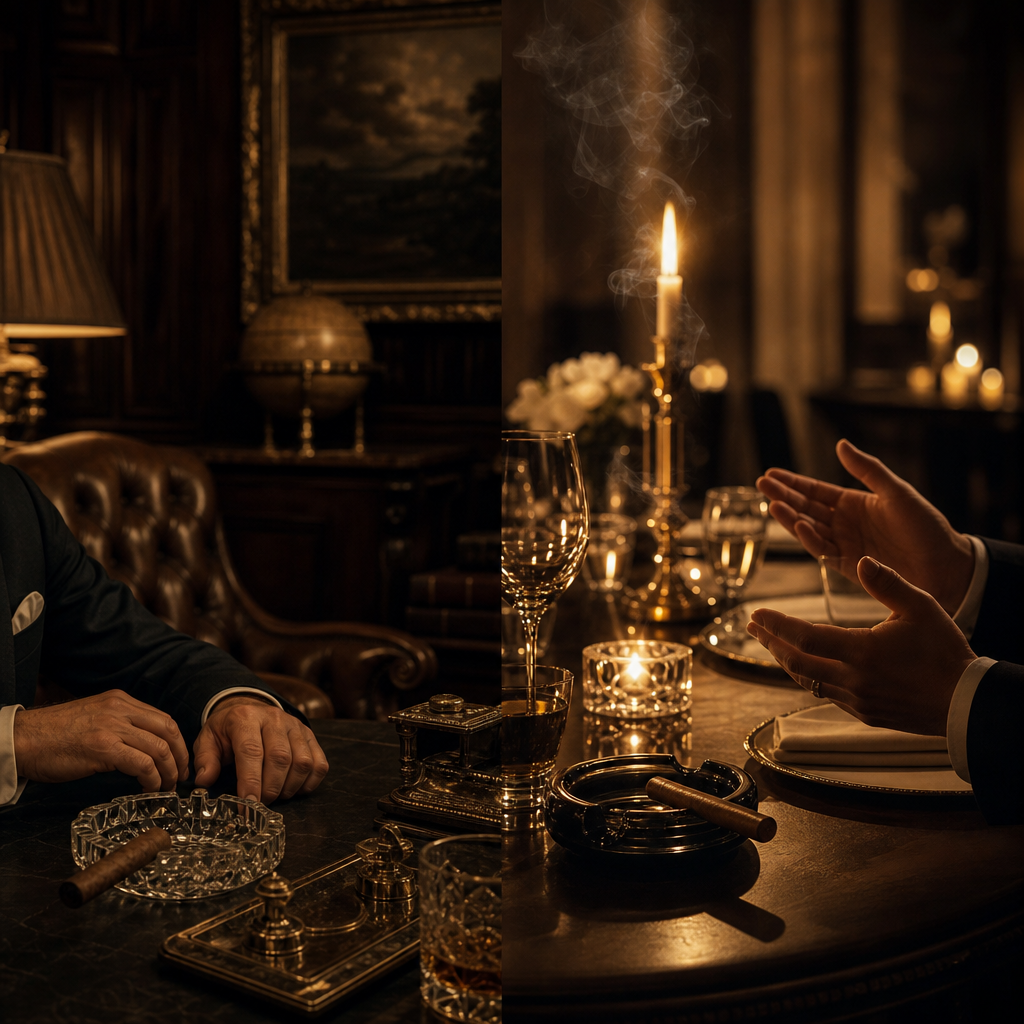
The social significance of cigars goes beyond smoke, aroma, and the reputation of their origin. For those who have mastered the basics of tasting, the next step is understanding how a cigar becomes a language of rhythm, courtesy, identity, and trust in dinners, business, and private gatherings.
As the editor of the "Cigar Bible," I often say that a cigar is like a slow-motion business card. It doesn't rush to persuade others but reveals a person's sense of time, discretion, and social etiquette between cutting, lighting, conversing, and concluding.
From Havana to London Clubs: How Cigars Became a Social Symbol
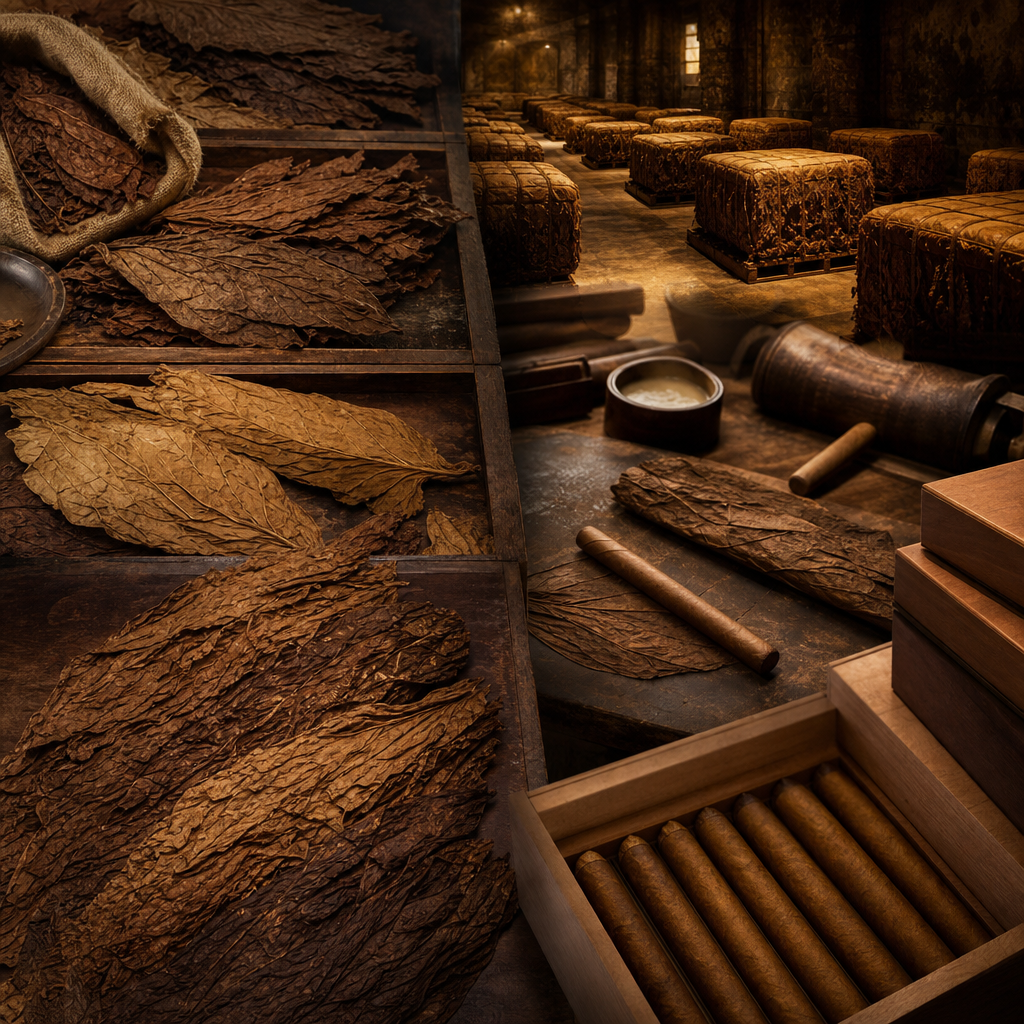
After the 16th century, tobacco entered Europe from the Americas, and by the 18th and 19th centuries, cigars gradually transformed from novelties into social media for the upper class. In the 1820s, London gentlemen's clubs, Parisian salons, and Madrid cafes saw cigars intertwined with discussions of politics, finance, and literature. Around 1850, Havana cigars gained significant momentum in the European market, and "Cuba" became not just a place of origin but a code for taste and identity.
Cigars entered the social core because they demand time and require people in the setting to slow down. A Robusto lasts about 45 to 60 minutes, while a Churchill can commonly reach over 90 minutes; such length makes it naturally suitable for deep conversations rather than hurried small talk. From British wartime Prime Minister Churchill's preference for Romeo y Julieta Churchill to the history of Cohiba as a Cuban state gift in 1966, cigars have long surpassed mere hobbies to become extensions of power, diplomacy, and etiquette.
However, beginners often misunderstand: possessing a branded cigar does not equate to having taste. On the contrary, in truly mature social settings, what matters is whether you respect others, the space, and the rhythm. Whether you can refrain from showing off at the start, not dominate the conversation, and not leave a mess of ashes at the end speaks more than the brand itself.
The First Lesson of Cigar Etiquette: Slow, Not Dragging; Quiet, Not Awkward
The most important rhythm in cigar socializing is "slow but not scattered." Before lighting up, confirm if the setting is appropriate; if someone at the table is uncomfortable with smoke, it's basic etiquette to ask and adjust your position. Cutting the cap should not be a forceful performance, and the flame need not be theatrical; using a cedar spill, long match, or jet lighter is fine, as the focus is on evenly toasting the foot to avoid burnt flavors overtaking the first puff.
In social settings, cigar etiquette is not about showing off but about making others feel comfortable. Common mistakes include puffing too quickly, causing high temperatures, frequently tapping off ash, pointing with the cigar, and exhaling large clouds while others are speaking. For example, with a Partagás Serie D No.4, with a ring gauge of 50 and a length of 124mm, puffing every 30 seconds can quickly turn it bitter; a light puff every 60 to 90 seconds maintains a stable aroma and aligns better with the conversation's pace.
Beginners can remember three simple actions:
- Before starting: Confirm the space and companions' acceptance.
- During: Keep the cigar below shoulder level, not interrupting conversations with smoke.
- At the end: Let the cigar extinguish naturally, without forcefully pressing it like a cigarette.
These seemingly small matters can clearly distinguish between "knowing how to smoke" and "knowing the occasion." A true cigar gentleman does not magnify himself but stabilizes the atmosphere at the table.
Brand, Size, and Identity: The Silent Language in Social Settings
Cigar brands indeed have signaling functions in social contexts. Cohiba is often seen as a high-recognition symbol, Montecristo No.2, with its torpedo shape and stable image, is a regular on business tables, while Hoyo de Monterrey Epicure No.2, with its relatively mild flavor, is often used for more relaxed afternoon exchanges. Non-Cuban cigars like Davidoff, Padrón, and Arturo Fuente represent refinement, richness, or American collection culture in different circles.
Brands can start conversations but cannot complete social interactions for you. For instance, around 2010, many Asian novices used Cohiba Behike 52, 54, 56 as status symbols due to their high profile after their official launch in 2010; however, if the conversation only stays on price and rarity, it appears shallow. In contrast, being able to explain why you choose Bolivar Belicosos Finos after dinner or Quai d’Orsay No.50 during the day better demonstrates understanding.
Size also conveys messages. Robusto represents efficiency and completeness, suitable for about an hour of conversation; Double Corona indicates the host has arranged for a long time; Petit Corona is suitable for short gatherings. What you choose in a setting is not just a matter of taste but a statement of "how I expect this interaction to unfold." Beginners should focus on using size, strength, and duration to find the correct tone for the social scene rather than chasing the most expensive options.
How a Cigar Can Change a Conversation: From Icebreaking to Building Trust
The most fascinating social function of cigars is drawing strangers into the same rhythm. If two people are both waiting for the initial aroma to open up, they naturally slow down the conversation; when the ash reaches 2 cm, and the aroma shifts from woody to nutty or leathery, the topic often moves from small talk to experience exchange. This shared waiting makes cigars one of the few mediums that can "create silence without awkwardness."
A good cigar conversation does not rush to close a deal or express an opinion but first establishes a shared experience. I've seen many business settings where what truly brings both parties closer is not the first sentence about cooperation but a discussion about the condition of a 2014 boxed Montecristo Especial No.2: whether the storage temperature and humidity were stable, whether the draw was smooth, and whether the front, middle, and back were clean. These details reveal the other person's patience and judgment.
Cigars can also prevent social interactions from becoming overly utilitarian. Instead of constantly asking about positions, performance, and resources, it's better to start with "Do you prefer rich or mild flavors?" or "Would you choose a heavier size after dinner?" The answers often reveal lifestyle, travel experiences, time management, and aesthetics. Cigars add a layer of buffer to interpersonal interactions: it's not about immediately exchanging benefits but first exchanging tastes and stories.
Occasion, Time, and Pairing: Social Judgment Is More Important Than Taste
Different occasions require different cigars. After a midday coffee, a high-strength Ligero style might overshadow the spirit; after dinner, paired with whiskey or rum, a brand with a thicker structure can be chosen. Considering common social durations, 30 minutes can accommodate a Petit Corona, 60 minutes suits a Robusto, and over 90 minutes can consider a Churchill or Double Corona. Misjudging the time often affects the atmosphere more than choosing the wrong taste.
Choosing a cigar is not just about asking "which is the best," but "who is present at this time and place, and how much time is left." For example, if there are six people after a dinner party, with two being less experienced, if the host arranges all strong sizes, it may create pressure; instead, preparing options like H. Upmann Magnum 46, Hoyo Epicure No.2, or Davidoff Signature 2000, which are more friendly, allows people of different levels to participate naturally.
| Scene | Suggested Size | Approximate Time | Social Focus |
|---|---|---|---|
| Afternoon Coffee | Petit Corona / Corona | 30-45 minutes | Relaxed icebreaking, avoid heaviness |
| After Business Dinner | Robusto / Toro | 50-75 minutes | Stable rhythm, conducive to deep conversation |
| Private Long Gathering | Churchill / Double Corona | 90-120 minutes | Reserved for familiar people and long conversations |
| With Beginner Friends | Corona / Robusto | 40-60 minutes | Moderate strength, reduce pressure |
Pairing with drinks also requires moderation. Single malt whiskey, aged rum, port wine, and black coffee are common, but alcohol content should not be used as a show of force. Water is equally important, as it cleanses the palate and prevents conversations from being dragged down by taste fatigue. A mature host will make the pairing a background, not a test.
Gifts, Collection, and Face: The Human Aspect of Cigars
Cigars are often used as gifts because they are shareable, preservable, and narrative. A box of 25 Partagás Lusitanias is not just an item but represents the giver's understanding of whether the recipient has the time, space, and storage conditions. If the recipient does not have a humidor, gifting a large box of high-moisture-sensitive cigars may become a burden; a selection of 3 to 5 stable single cigars can sometimes be more considerate.
The core of cigar gifting is not the price but whether you understand the recipient's level and occasion. For example, for elders, choose brands with a stable and recognizable flavor; for new friends, avoid overly strong and long sizes. If mentioning years, such as 2018, 2019, or 2020 boxed, the focus should be on clear origin, stable storage, and traceable condition, not just using the year as a boast.
In terms of collection, the Asian market has indeed focused on limited editions, regional editions, and discontinued items in recent years, with cases like Cohiba 1966 Edición Limitada 2011 and Ramon Allones Phoenicio often discussed. However, I always remind: collection appreciation does not guarantee appreciation, still depending on source preservation and market. Cigars are different from standardized financial products; if the temperature exceeds 24°C for a long time or humidity fluctuates drastically, even the most beautiful appearance may lose value and flavor.
Cigars and Social Status: True Taste Does Not Rely on Oppression
The symbolic nature of cigars in social status is both real and dangerous. The reality is that it involves time, knowledge, storage equipment, and international circulation; the danger is that if cigars are used as tools to oppress others, they quickly become vulgar. Those with real social experience usually do not start by quoting prices or using rarity to embarrass the table.
Cigars can indicate social position, but mature individuals will turn the sense of position into the ability to care for others. For example, when the host brings out high-end cigars, if they also prepare milder options and simply explain the strength and time, it shows more class than merely displaying a box of expensive brands. After 2015, many Asian cigar communities began to focus more on storage curves, box numbers, draw resistance, and aging conditions, with discussions moving from "is it expensive" to "do you understand."
Social status is also reflected in the freedom not to smoke. If the state is not suitable for the evening, the space does not allow it, or the companions are clearly uncomfortable, choosing not to light up is a high-level judgment. The most charming aspect of cigar culture is not having to complete the ritual every time but knowing when to stop and when to let go. Those who can restrain themselves are usually more respected than those eager to perform.
Frequently Asked Questions
Should beginners bring their own cigars to social events?
Yes, but first observe the nature of the occasion. If it's a private gathering with friends, bringing 1 to 2 familiar sizes is sufficient; if it's a formal business dinner, it's not appropriate to display them immediately. The purpose of bringing cigars is not to take the spotlight but to have a suitable choice when needed.
Will not knowing brands be disrespectful?
No. Disrespect usually comes not from not knowing but from pretending to know. You can directly say you prefer mild, medium, or strong flavors and ask experienced individuals for a simple introduction. Listening and maintaining humility are more important than memorizing brand names.
Can you comment on someone else's cigar?
Yes, but the tone should be light. Instead of saying "yours is not good," you can say "I've tried this one before, and I remember it having a distinct woody note." Social commentary should focus on sharing, not scoring.
How long should cigar ash be kept?
There is no fixed standard; about 2 to 3 cm of naturally falling ash is more stable. Deliberately keeping it long for a performance can easily dirty the table or clothes. Stability and cleanliness are more polite than exaggeration.
Will smoking cigars during business conversations be too aggressive?
It depends on the occasion and the other party. If the other party is also familiar with cigars, it can form a common rhythm; if the other party is not accustomed, avoid making cigars a pressure. True leadership is making the other party comfortable entering the conversation.
The depth of cigar socializing is not in how beautiful the smoke is or how rare the box label is, but in how a person arranges time, respects others, understands history, and transforms taste into discretion. To me, the most precious aspect of a good cigar is that it slows you down; once slowed down, you can see others and yourself.
—Cigar Prince Wilson Tsai
Smoking is harmful to health. Under 20 years old is prohibited from smoking. Quitline: 0800-636363. This article is for reference by adults over 20 years old on cigar culture, preservation, and regulations, not a tobacco advertisement, promotion, or purchase suggestion.