The Science of Cigars and Flavor: How Chemical Components Affect the Smoking Experience
The Science of Cigars and Flavor: How Chemical Components Affect the Smoking Experience
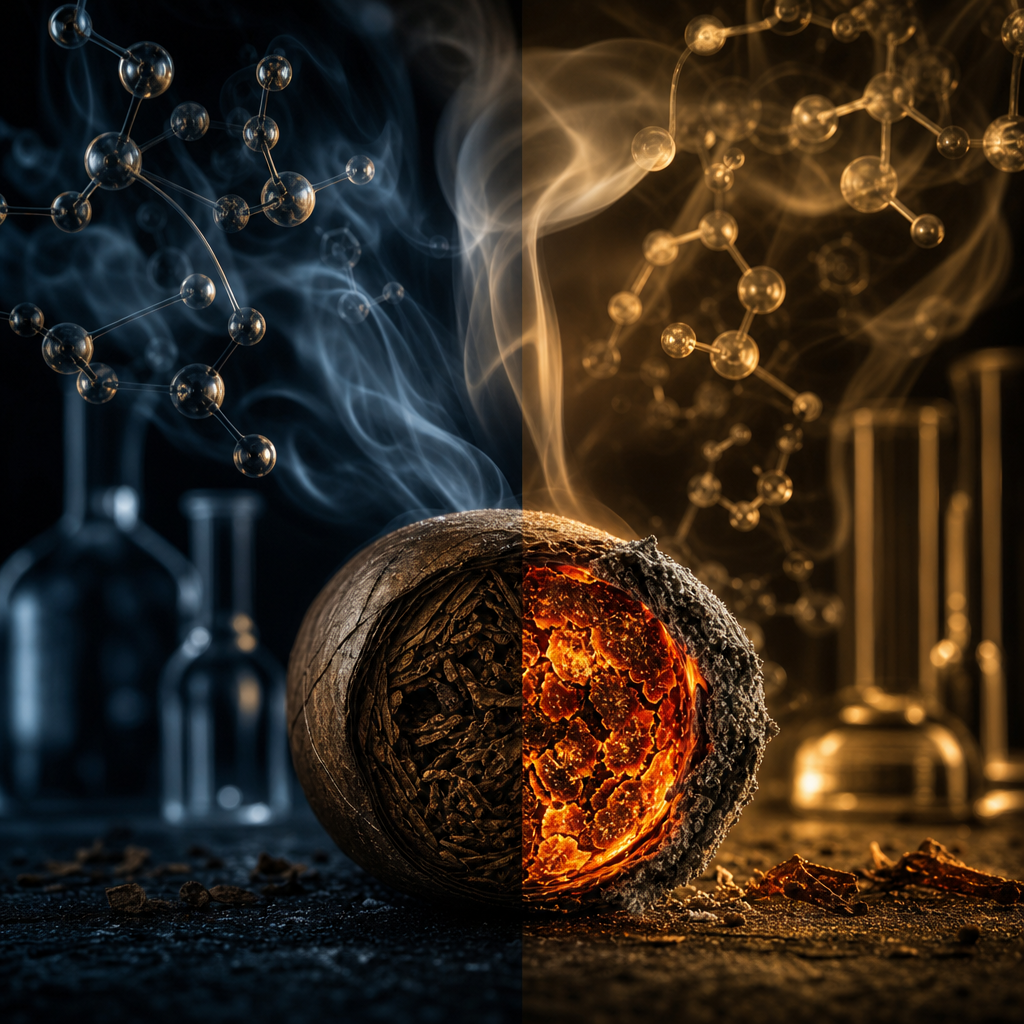
When seasoned cigar enthusiasts discuss cigars, if they only focus on terms like wood, leather, cocoa, and pepper, they will soon hit a bottleneck. The truly interesting part is that these words are not imaginary but are the result of sugars, proteins, fats, alkaline substances, and aromatic compounds in the tobacco leaves interacting during combustion, pyrolysis, and condensation.
As the editor of the "Cigar Bible," over the years, I have been most concerned not with making flavors sound mysterious, but with making the smoking experience verifiable. When you understand how chemical components translate into mouthfeel, nasal aroma, and aftertaste changes, your judgment of Cohiba, Partagás, Padrón, or Davidoff will be more precise.
Flavor Molecules Hidden in Tobacco Leaves: Not Fragrances, but Phytochemicals
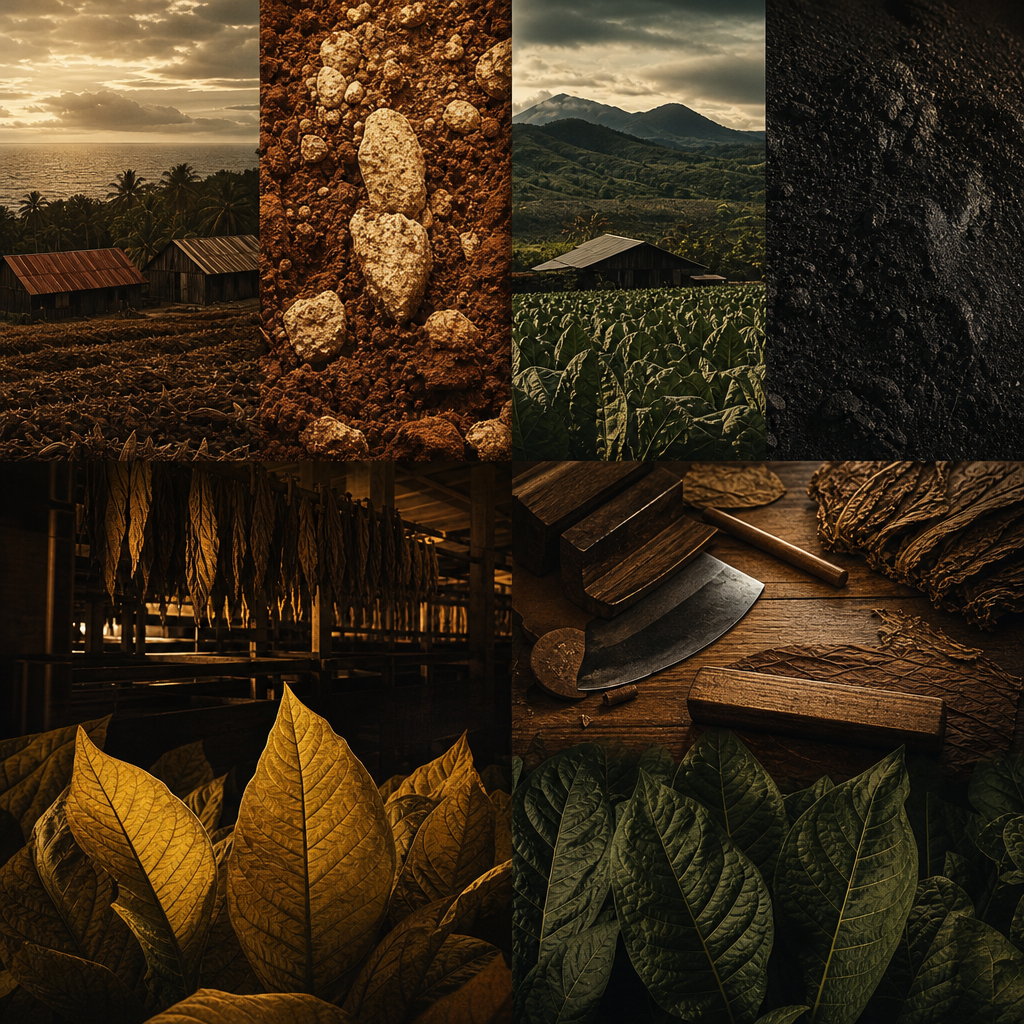
The starting point of a cigar's flavor is the alkaloids, carbohydrates, amino acids, polyphenols, lipids, and resinous substances accumulated by the tobacco plant in the field. Taking the premium tobacco leaves from Cuba's Vuelta Abajo as an example, the filler often pursues strength and aromatic structure, while the wrapper is responsible for the initial sweet, oily, and aromatic profile that contacts the tongue and nasal cavity. The creamy, grassy, and nutty notes noticed by many seasoned smokers when Cohiba Behike 56 was officially launched in 2010 are related to the more refined material selection and formula structure.
Cigar flavor is not caused by a single molecule, but by the gradual release of hundreds of volatile and semi-volatile compounds at different temperatures. For example, pyrazines often bring roasted nuts, coffee, and cocoa notes; aldehydes may present hay, woody, and slightly sweet notes; phenols are prone to form smoky, leathery, herbal, or even earthy tones. The black pepper, rich soil, and roasted notes of Partagás Serie D No.4 are classic examples of such compound combinations.
Seasoned smokers often say that some cigars "open slowly in the front," which can be understood chemically as the conservative release speed of volatile molecules, with oils and resins gradually heating up in the burning environment before the aroma unfolds. The torpedo head design of Montecristo No.2 can also change the smoke density depending on the cut size, making the same batch of cigars present different intensities of coffee, woody, and citrus peel notes.
Fermentation and Aging: Rearranging Sugars, Ammonia, and Coarse Notes
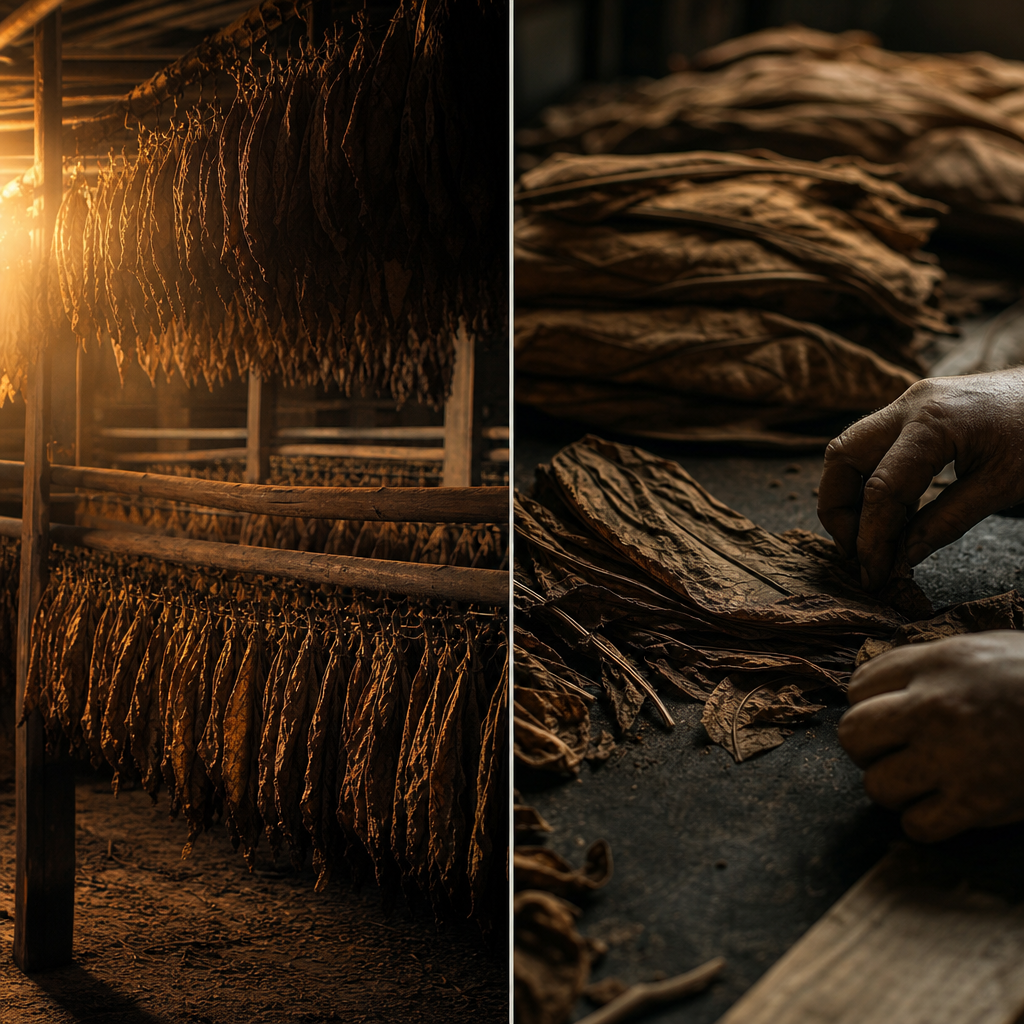
Tobacco leaves are not immediately usable after harvesting. Traditional processing includes drying, fermentation, grading, and long-term aging; during the fermentation pile process, temperatures can often rise to 45 to 60 degrees Celsius, with some procedures involving repeated turning to control humidity and heat. This stage reduces green ammonia flavors, breaks down proteins and pectin, and allows polyphenols to oxidize, further forming softer brown aromas.
Fermentation is not about aging the tobacco leaves but about transforming irritants into a flavor structure acceptable to the palate. Sugars and amino acids have the opportunity to participate in pathways similar to the Maillard reaction in a heated environment, bringing out roasted, caramel, nutty, and bread crust notes; when protein residues are too high, the smoke may appear coarse, spicy, and astringent. If H. Upmann Sir Winston is well-preserved, the common honey, cedar, and delicate tea notes come from the balance achieved by mature leaf composition and time.
Aging time should not be simplified as the longer, the better. The same cigars from 2008, 2014, and 2019 may perform very differently due to differences in storage humidity, box ventilation, and raw material batches. Some Bolívar Belicosos Finos remain clear in strength after 5 to 8 years but become more rounded; poorly preserved ones may lose oils, leaving only dry wood and hollow smoke.
- Insufficient fermentation: noticeable grassy, ammonia, and tongue-pricking sensations
- Over-fermentation or unbalanced storage: flat aroma, reduced sweetness
- Well-aged: reduced irritation, smoother aroma transitions
- Excessive humidity: dull burning, murky smoke, bitter end
Burning Temperature and Three-Stage Flavor: Why the Same Cigar Can Change
The core temperature at the burning end of a cigar can exceed 600 degrees Celsius, while the area closer to the inhaled airflow is lower; the smoke that actually enters the mouth is a mixture of high-temperature pyrolysis products, incompletely burned particles, water, and oil condensation. The faster you smoke, the higher the burning temperature, making sugars and oils more prone to rapid pyrolysis, turning flavors from sweet to bitter, and amplifying spiciness. This is why some people taste cocoa and coffee in the same Padrón 1964 Anniversary, while others only remember bitterness.
The changes in the front, middle, and back sections are essentially the result of gradual changes in heat, tar condensation, and formula proportions. The front section is usually most affected by the wrapper, with clearer aromas; the middle section sees the binder and filler enter stable combustion, with the main flavors complete; the back section accumulates more tar, moisture, and heat, making the mouthfeel thicker, spicier, or saltier. Since its debut in 1995, Arturo Fuente OpusX has been regarded as a representative of high-end Dominican strength, with its back-end spicy and sweet woody tug-of-war testing rhythm control.
Seasoned smokers can use a simple method to check if they are overheating: if the interval between each puff is less than 30 seconds and the cigar body near the burn line becomes hot to the touch, the flavor is likely already pushed towards bitterness. A more stable rhythm is usually one puff every 45 to 75 seconds, allowing the smoke to linger briefly in the mouth before using retronasal olfaction to capture aroma layers, rather than chasing large amounts of smoke.
pH, Nicotine, and Oral Sensation: Strength Comes Not Only from "Heavy Flavors"
Many seasoned smokers mix strength, concentration, and flavor thickness, but the three are not the same. Nicotine is one of the main alkaloids, providing physiological strength; the pH value of the smoke affects the perceptibility of nicotine on the oral mucosa. Generally, alkaline smoke makes nicotine stimulation more noticeable, with more direct impacts on the tongue root, throat, and nasal cavity.
Strength is not just about high nicotine content but is a combination of alkalinity, smoke density, spicy molecules, and burning temperature enhancing perception. Nicaraguan puros are often described as having distinct strength, such as when Davidoff Nicaragua was launched in 2013, many noticed it had more black pepper, coffee, and roasted sweetness compared to the brand's traditional Dominican lines; but its refinement lies in containing the impact rather than just amplifying spiciness.
Astringency in taste is often related to polyphenols, dryness, and burning efficiency; numbness may come from nicotine, spicy compounds, and heat stimulation; sweetness is not necessarily directly tasted from sugar but is a synthesis of caramelization, roasted aromas, and oral associations. If a cigar is stored at 65% to 69% relative humidity, it is usually easier to maintain clear burning and a clean finish than long-term 75%.
| Sensation | Possible Related Components or Conditions | Common Expressions |
|---|---|---|
| Sweetness | Sugar pyrolysis, aldehydes, oils | Honey, caramel, cream |
| Spiciness | Phenols, pyridines, higher temperature combustion | Black pepper, cloves, nasal stimulation |
| Bitterness | Overheating, tar accumulation, uneven burning | Strong coffee, charred wood, tongue root bitterness |
| Astringency | Polyphenols, dryness, insufficient fermentation | Tea tannins, dry wood, oral contraction |
Wrapper, Binder, Filler: How Formulas Determine Flavor Release Order
Cigars are not just about rolling tobacco leaves together. While the wrapper may not account for a high proportion of the total weight, it directly covers the burning surface and is the first to contact the lips and olfactory senses, significantly impacting aroma impressions. Connecticut Shade often presents cream, hay, almond, and mild wood; Cameroon may bring cinnamon, nuts, and light sweet spices; Maduro commonly exhibits cocoa, molasses, coffee, and a thicker mouthfeel.
The key to the formula is not which leaf is the strongest, but which leaf speaks at what time. Take Romeo y Julieta Churchill as an example, its charm often lies in maintaining linearity between gentle floral, black tea, cedar, and light sweetness; while Liga Privada No.9, a non-Cuban rich route, uses dark wrappers, full oils, and heavy smoke to create a continuous sense of dark chocolate, earth, and strong coffee.
In the filler, ligero, seco, volado, and other different parts have their respective tasks. Ligero, with more sunlight, has higher oil content and strength, burning slower; seco has brighter aromas; volado has good combustibility, supporting stable fire lines. If a cigar's strength suddenly increases in the back section, it may not be a quality issue but rather the formula arranging heavier leaf groups to gradually dominate in the later burning stages.
In advanced evaluations, I break down a cigar into three layers: first, whether the burn is stable; second, whether the aroma has transitions; third, whether the finish is clean. Many expensive cigars may not be complex, while many mid-priced cigars may be more enjoyable due to a clean formula. What seasoned smokers truly pursue is a reasonable structure, not just intensity.
Calibrating Smoking Skills with Science: Don't Let Good Tobacco Be Ruined by Bad Rhythm
Cigar flavor has a scientific basis, but the smoker's technique determines whether it can be correctly presented. A cut that's too small restricts airflow, forcing the burning end to overheat; a cut that's too large makes the smoke too fast, potentially loosening the flavor. Torpedo shapes like Montecristo No.2 or Vegas Robaina Unicos can have their smoke density and sweetness concentration changed by just a 1 to 2 mm difference in cut.
A good rhythm is about maintaining stable heat at the burning end, not constantly urging it. When lighting, do not press the flame directly into the foot; instead, evenly toast the edges before letting the entire cross-section light up simultaneously. If the initial burn is uneven, do not rush to make major corrections; temporary uneven burning can be caused by humidity, wrapper thickness, and indoor airflow, and excessive correction can increase bitterness.
Seasoned smokers can establish a fixed record system to make sensations comparable data. I recommend at least noting the date, brand, size, box code or year, humidity, cutting method, lighting method, each section's flavor, and body sensations. If you only write "good draw" or "ordinary" for a 2016 Cohiba Siglo VI, a 2020 Partagás Lusitanias, or a 2022 Hoyo de Monterrey Epicure No.2, it will be difficult to judge the reasons years later.
- Before smoking: check the cigar's elasticity, wrapper sheen, and foot aroma
- When lighting: first toast the outer circle, then heat the cross-section evenly
- During smoking: one puff every 45 to 75 seconds, avoid continuous rapid puffs
- After the middle section: observe if bitterness comes from overheating or tar accumulation
- When finishing: if only spiciness and bitterness remain in the back section, putting it down early is more rational than forcing it
Common Questions
The purpose of flavor science is not to turn cigars into laboratory reports but to allow seasoned smokers to more accurately judge the source of each puff. Understanding chemistry will only make the senses freer, not more rigid.
Why can the same box of cigars vary?
Because tobacco leaves are agricultural products, even within the same box and year, leaf thickness, oil content, and rolling density can still differ. If one cigar burns tightly, the smoke temperature and tar accumulation will also change the flavor.
Are darker cigars necessarily stronger?
Not necessarily. Maduro wrappers often bring cocoa, molasses, and coffee notes, but strength also depends on the filler formula, nicotine content, and pH. Dark color does not necessarily mean heavier.
How long is ideal for aging?
There is no single answer. Cuban delicate types can be observed for 3 to 8 years of change, while rich Nicaraguan or Dominican high-strength types may also become more rounded in 2 to 5 years, but storage conditions are more important than years.
Why does the back section tend to be bitter?
The back section accumulates heat, tar, and moisture, and the burning cross-section is closer to the mouth. If smoked too quickly, bitterness will appear early; slowing down the rhythm or ending appropriately is usually better than remedying.
Does alcohol pairing change the flavor?
Yes. High alcohol can amplify spiciness and dryness, while sweet sherry or aged rum can enhance caramel, nut, and woody notes. The core of pairing is to let the drink not overpower the cigar's main body.
Does collecting cigars equate to investment?
High rarity and good provenance do affect market discussions, but it does not guarantee appreciation; it still depends on provenance, preservation, and market. For me, collecting should first serve to understand flavor, not just look at price curves.
I have always believed that the true advancement of seasoned smokers is not how many famous brands they have smoked, but being able to clearly articulate why a cigar is good at this moment, why it is unbalanced in the back section, and why the same model differs in different years. Chemistry allows us to see the order behind tobacco leaves, while the senses remind us to retain enjoyment. When knowledge and rhythm go hand in hand, every cigar becomes a more complete reading.
—Cigar Prince Wilson Tsai
Smoking is harmful to health. Underage smoking is prohibited. Quitline: 0800-636363. This article is intended for adults over the age of 20 as a reference for cigar culture, preservation, and regulatory knowledge, not as tobacco advertising, promotion, or purchase advice.