Distinguishing: Production Batch, Box Code Batch, and Sales Batch Are Not the Same
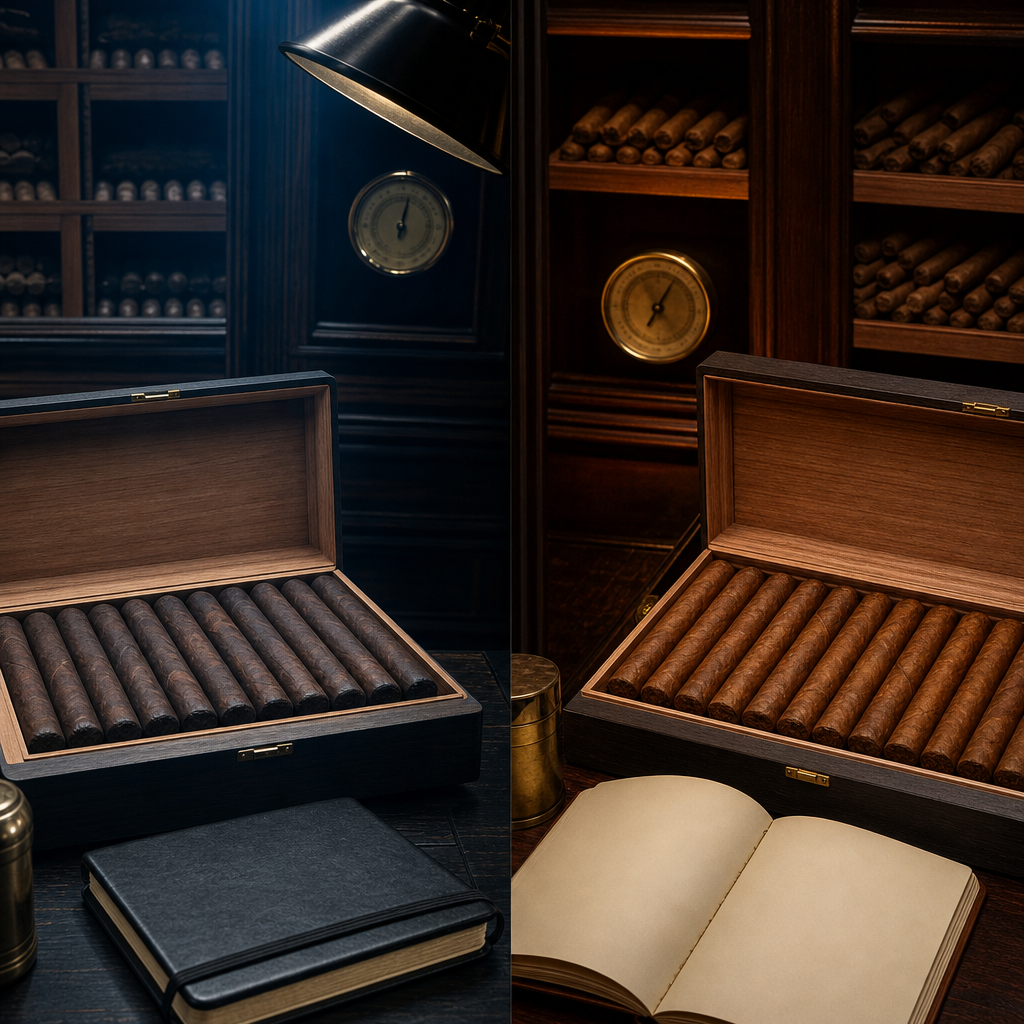
Veteran cigar enthusiasts often say, "Same brand, different box, like two different personalities." This saying isn't mystical; it's the result of the combined effects of tobacco leaf vintage, factory rhythm, transportation conditions, post-receipt storage, and market feedback. As the editor of the "Cigar Bible," what I care about most is not the surprise of a single stick but the explainable differences within a batch.
The so-called sales batch is not just the date on the box or the time of arrival by the distributor. It is more like a flavor history: from the rainfall in the Dominican Republic in 2019, the temperature control in Nicaraguan fermentation rooms in 2020, to the Cuban box codes in 2021, and the storage channels in 2022, all leaving traces in the burn line, sweetness, spiciness, and finish.
Distinguishing: Production Batch, Box Code Batch, and Sales Batch Are Not the Same
Many veterans, when they get a box of Cohiba Siglo VI, Montecristo No.2, or Partagás Serie D No.4, will first look at the month and year on the bottom of the box, such as JUN 19, OCT 21, MAR 23. This is an important clue, but it represents the boxing and factory information, not that all the tobacco leaves were harvested on the same day, fermented in the same barrel, or rolled by the same team. Cuban cigars, in particular, involve vintage inventory and grading in leaf blending.
Interpreting batches cannot rely solely on the date at the bottom of the box; production, boxing, logistics, and storage must be analyzed separately. If the first half of a 25-stick box burns steadily and the latter half has tight draw, it could be due to differences in rolling density; if the whole box has a green grassy taste, it is more likely related to the tobacco leaf aging time or transportation humidity. These two require completely different handling.
I usually divide batches into three layers: the first layer is the agricultural batch, such as Seco, Viso, Ligero from the same region and year; the second layer is the factory batch, which includes fermentation, grading, rolling, and boxing; the third layer is the sales batch, including distributor arrival, storage cycle, and retail end preservation. When veterans compare flavors, saying "2020 was better" is not precise enough; they should further record the box code, month of receipt, and storage conditions.
From cases I've recorded, some Cuban Robustos arriving between late 2021 and early 2022 often had ammonia and sharp woodiness in the first six months, with nutty and creamy notes emerging after a year at 65% to 67% relative humidity. Batch differences are not a single-point answer but a series of traceable variables.
Year and Region: Weather Can Rewrite the Foundation of the Same Brand
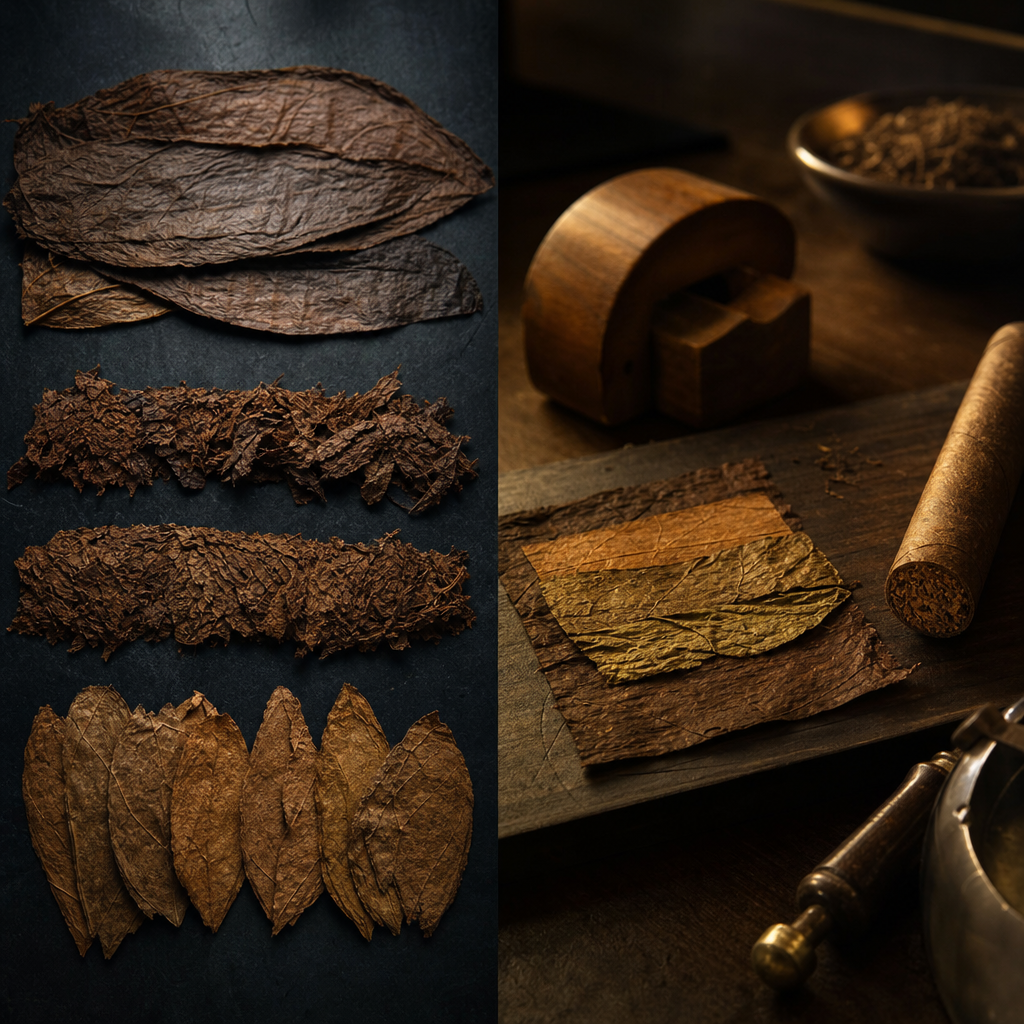
Tobacco is a crop, and its flavor is primarily governed by weather. Taking Nicaragua's Estelí, Jalapa, and Condega as examples, Estelí often provides strength and black pepper, Jalapa offers sweetness and floral notes, and Condega usually has earthy and coffee tones. If a particular year has more rain, the sugar accumulation in Viso leaves, the thickness of Ligero, and the burning speed will differ, ultimately reflecting in the sweetness and strength of different batches of the same brand.
For instance, Padrón 1964 Anniversary in different natural wrapper batches over the years may lean towards cocoa powder and roasted coffee in some years, while others may be closer to brown sugar and leather. This doesn't mean the formula has changed, but rather the subtle shifts caused by the annual performance of raw materials and selection ratios. The Davidoff Winston Churchill series often shows different balances between creaminess, white pepper, and hay due to the state of Dominican leaves.
Mature players need to learn to distinguish between "brand style" and "year expression." Brand style is like the skeleton, such as H. Upmann's elegant woodiness, Montecristo's cocoa and coffee, and Partagás' earthiness and spiciness; year expression is like clothing, which may make sweetness brighter or spiciness more forward. Interpreting every difference as authenticity or storage issues would miss the opportunity to understand the tobacco.
I suggest veterans establish at least three years of records for the same model. For example, with Romeo y Julieta Churchill, compare the boxing years of 2018, 2020, and 2022, observing floral notes in the early stage, woodiness in the middle, and bitterness in the latter under the same 65% to 68% humidity. When samples accumulate to more than five sticks per batch, judgments won't be misled by single-stick deviations.
Fermentation, Grading, and Rolling: Factory Rhythm Determines Detail Stability
Factory variables are often the most underestimated segment by veterans. After harvesting, tobacco leaves need to undergo drying, fermentation, and further aging. The temperature of fermentation piles, turning frequency, and moisture content will affect ammonia, spiciness, and sweetness. If fermentation is insufficient, the early stage often has a pungent smell; if over-processed, it may appear flat, bitter, and lacking aroma.
The reason why Cuban box codes are studied by veterans is that different factories indeed show observable differences in certain periods. For example, some batches of Hoyo de Monterrey Epicure No.2 between 2014 and 2016 exhibited bright creaminess and cedar, while others leaned towards herbal notes and uneven draw. This isn't necessarily a brand failure but the result of the interplay of raw materials, factory manpower, rolling speed, and quality control status.
The execution quality of the factory for the same formula cigar will determine whether it is "layered" or "just an outline." Excessive rolling density will cause tight draw, and when the burning temperature rises, bitterness appears early; too low density will burn too fast, making the aroma seem empty. Veterans often say a batch is "very loose" or "very stuffy," which usually traces back to rolling and moisture content clues.
Non-Cuban brands also have batch differences, but they present differently. Fuente OpusX, due to the unique leaves from the Dominican Chateau de la Fuente farm, has significant impacts on spiciness, dried fruit, and leather depending on the year and aging time; My Father Flor de las Antillas often shows batch shifts in pepper, cocoa, and nut proportions. These differences are not necessarily flaws but rather the charm of handmade cigars.
Transportation and Storage: The Same Batch in Different Environments Can Diverge in Flavor
The real complexity of sales batches lies in the journey after leaving the factory. Sea freight, air freight, transit warehouses, distributor warehouses, and retail storage can all alter the humidity curve. Cigars fear not short-term fluctuations but repeated large fluctuations; for example, dropping from 72% to 58% and then returning to 70% will affect the elasticity of the wrapper, burning stability, and aroma release.
For common 25-stick box packaging, if the outer box stays in a high-temperature environment for too long, moisture will redistribute within the box. Cigars near the box edge may dry quickly, while those in the middle remain moist; if the first stick after opening the box burns unevenly, it doesn't mean the whole box is bad. Veterans will let the whole box rest in a stable environment for 30 to 90 days before starting to establish batch impressions, especially for Cuban cigars that have just arrived.
The first month after receipt is often not the best time to evaluate a batch but the starting point to observe its return to balance. I often use 65%, 67%, and 69% environments for different sizes: Lancero and Corona Gorda are more afraid of moisture, Robusto is moderate, and Churchill and Double Corona can be given time to adjust. Of course, this is not a formula; it also depends on the oil content of the wrapper and the draw.
There was once a box of Bolivar Belicosos Finos boxed in 2020, which initially had salty bitterness in the early stage and spicy dryness in the latter; after 8 months at 66% humidity and 20 to 21°C, the black coffee, earth, and cocoa notes became noticeably rounder. Such cases remind us: sales batch differences are sometimes not "good or bad" but "different states upon arrival."
Consumer Feedback: How Veteran Collective Memory Influences Batch Evaluation
The cigar community relies heavily on word of mouth, but word of mouth can also amplify biases. Once a batch of Behike, Cohiba Robusto, or Trinidad Fundadores is praised by a few seasoned players, it quickly forms a consensus of "this year is strong"; conversely, if early boxes are in poor condition, the entire month may be negatively labeled. Veterans must use feedback but not be led by it.
When I consider consumer feedback, I first ask three things: how many samples are there? Are the storage environments similar? How long after opening the box was the evaluation made? If someone smoked only one stick and lit it immediately after taking it out at 72% humidity, their spiciness and stuffiness may not represent batch quality. If 10 players at different times and under different storage conditions all point out insufficient sweetness in the midsection of the same batch, the credibility is much higher.
Batch reputation has reference value but must be read with sample size, storage conditions, and timeline. For example, some Cuban box batches from 2017 to 2018 had ordinary reviews when first released, but the flavor opened up three to five years later, and the reviews improved. This kind of delayed change is more common in large sizes like Double Corona, Piramides, and Churchill because the leaf volume and structure require more time to integrate.
The collector's market is also influenced by feedback, but I would remind: collection appreciation does not guarantee value increase; it still depends on source preservation and market. Even if batch popularity is high, if the box condition, seal, humidity record, and source documents are insufficient, value judgment will be discounted. For veterans, the truly reliable is their long-term records, not just chasing short-term topics.
Establishing Your Own Batch Evaluation System: Turning Feelings into Evidence with Tables
The key to veteran advancement is turning "I think this batch is better" into comparable data. I suggest recording at least 5 sticks per box, observing them in the 1st, 3rd, 6th, and 12th months after receipt. Each record doesn't need to be an article, but it should have fixed fields; otherwise, memory can easily be distorted by single-time surprises or disappointments.
Here is a simplified version of the fields I often use, suitable for comparing different sales batches of the same brand:
| Field | Suggested Recording Method | Interpretation Focus |
|---|---|---|
| Box Code and Receipt Date | e.g., MAR 21, received 2023/08 | Distinguish boxing and sales time difference |
| Storage Conditions | 20°C, 66% RH, placed for 90 days | Eliminate errors caused by the environment |
| Draw | 1 to 5 points | Determine rolling density and humidity |
| Early, Middle, and Late Stage Flavor | Sweetness, woodiness, spiciness, bitterness | See if the flavor is coherent |
| Burning State | Number of relights, number of extinguishments | Track moisture and structure |
| Finish | Length, cleanliness, off-flavors | Evaluate maturity and balance |
Without records, it's hard to distinguish whether batch differences are objectively present or caused by the day's taste and emotions. I also set a "benchmark batch" in the same model, such as a stable box of Montecristo No.2 or Arturo Fuente Don Carlos, as a comparison sample. Every time I encounter a new batch, I use the benchmark's sweetness, woodiness, spiciness, and finish length to calibrate.
Practically, I avoid smoking too many high-strength cigars consecutively to evaluate batches, such as Liga Privada No.9, Bolivar Royal Coronas, Oliva Serie V Melanio. Taste fatigue can amplify bitterness and suppress sweetness. It's best to compare under similar diets, close times, and the same humidity conditions for meaningful data.
Common Questions
Should every stick in the same box taste the same?
No. Even in the same box, handmade cigars have differences in leaf position, rolling density, and moisture distribution. The reasonable expectation is consistent style, not copy-paste for each stick. If the same box only has small fluctuations in sweetness and draw, it's usually normal; if multiple sticks are bitter, stuffy, and severely unbalanced in burning, it's necessary to check storage and batch status.
How long should cigars be stored after receipt before judging the batch?
I usually give 30 to 90 days. If it's a large size or unstable after long-distance transport, it can be extended to 6 months. Robusto types reveal contours faster, while Churchill, Double Corona, and Piramides often need longer for moisture and aroma integration.
Is an older box code year always better?
Not necessarily. If older years are poorly preserved, aromas will dissipate, wrappers will become brittle, and even moldy or dry wood ash notes may appear. The year is just a clue, not a quality guarantee. Rather than just chasing old boxes, I value source, humidity records, box condition, and actual state more.
Do non-Cuban cigars also need to look at batches?
Yes, just in a different way. Non-Cuban brands often have more stable quality control, aging, and supply chains, but year, farm leaves, limited series, and wrapper batches still affect flavor. Brands like Fuente, Padrón, Davidoff, and My Father are worth annual comparison.
How to avoid being misled by online batch reputation?
First, look at the sample size, then the storage conditions and timing of the evaluators. If it's just a few immediate impressions, take it as reference; if multiple long-term players have consistent descriptions within 6 to 12 months, the credibility is higher. Ultimately, it still comes back to your records and taste calibration.
I always believe that the most fascinating aspect of cigars is not eliminating differences but understanding where they come from. The variations across years and batches of the same brand are footnotes written by land, craftsmanship, transportation, and time. If veterans can replace rumors with records and impatience with patience, they will read a more complete story in every box. —Cigar Prince Wilson Tsai
Smoking is harmful to health. Under twenty years old is not allowed to smoke. Quitline: 0800-636363. This article is for reference by adults over twenty years old for cigar culture, preservation, and legal knowledge, not a tobacco advertisement, promotion, or purchase suggestion.