Analysis of Cigar Flavors and Beverage Pairing Strategies
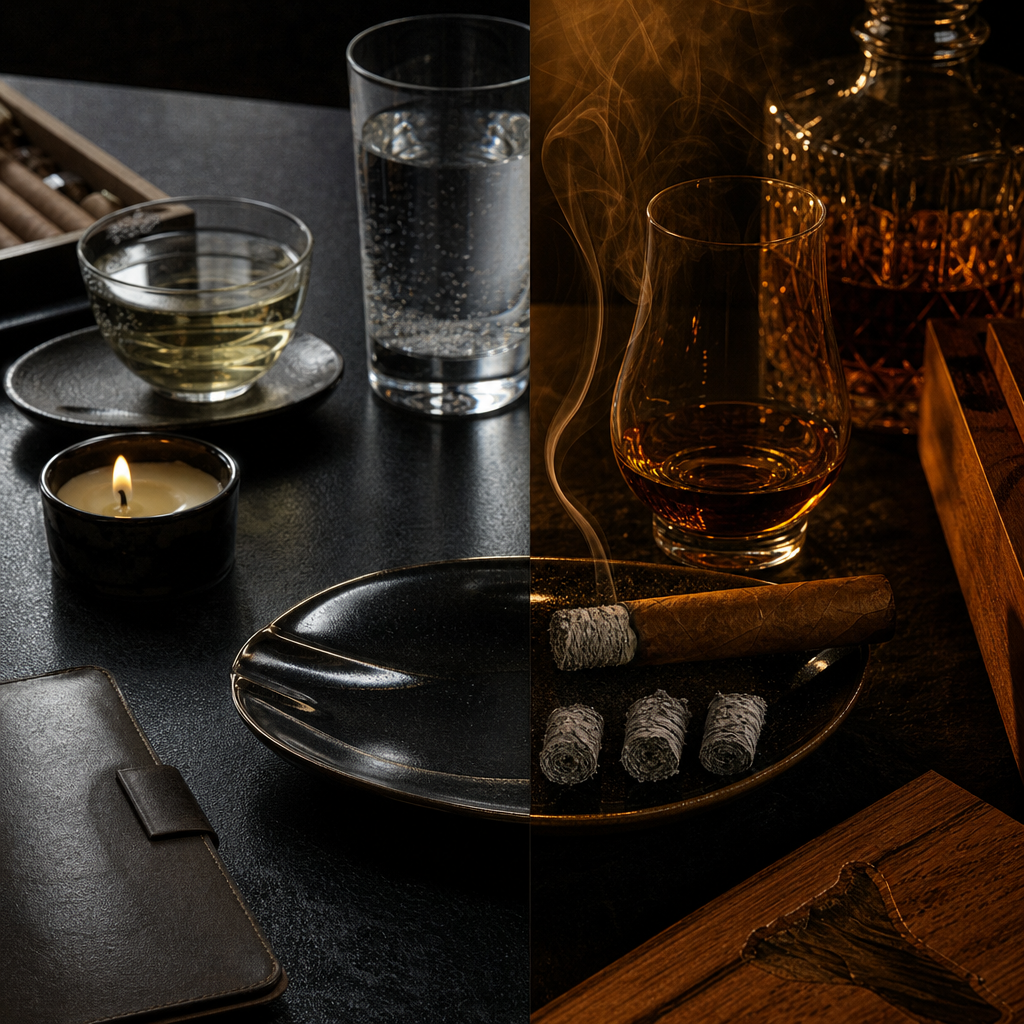
Analysis of Cigar Flavors and Beverage Pairing Strategies
Cigar flavors are never just "strong" or "mild." What seasoned enthusiasts truly pursue are the transitions between the three stages of burning, the nuances of retrohaling, and how beverages can enhance the clarity of wood, nuts, spices, leather, cocoa, and floral notes.
As an editor for the "Cigar Bible," I have recorded box numbers, vintages, humidity, and beverage pairings for many years, discovering that the same cigar can appear like a painting under different lighting when paired with different drinks. Below, I will not discuss beginner slogans but rather actionable, verifiable advanced strategies.
Flavor Is Not a Single Point, But a Three-Stage Structure
When analyzing cigars, seasoned enthusiasts do not rush to judge good or bad but instead divide the burning process into the initial, middle, and final stages. Take the Montecristo No.2 as an example: if stored at 18°C with a relative humidity of 65% to 68%, the initial stage often features dry wood, toasted bread, and light cocoa; the middle stage transitions to coffee, hazelnuts, and slight leather; if the final stage burns steadily, black pepper and mineral notes will emerge.
Cohiba Siglo VI, added to the Línea 1492 series in 2002, is often discussed for its complexity. Its focus is not just on grass, cream, and honey notes, but how these aromas are elongated in a large ring gauge and slower burn. If the beverage is too sweet, it may suppress the delicate grass and grain notes of the initial stage.
When analyzing flavors, please record "what flavors appear" and "at what minute they appear" separately. The same leather note appearing within the first 10 minutes often indicates a deeper character of the cigar; if it appears after 45 minutes, it usually results from a gradually pressurized structure.
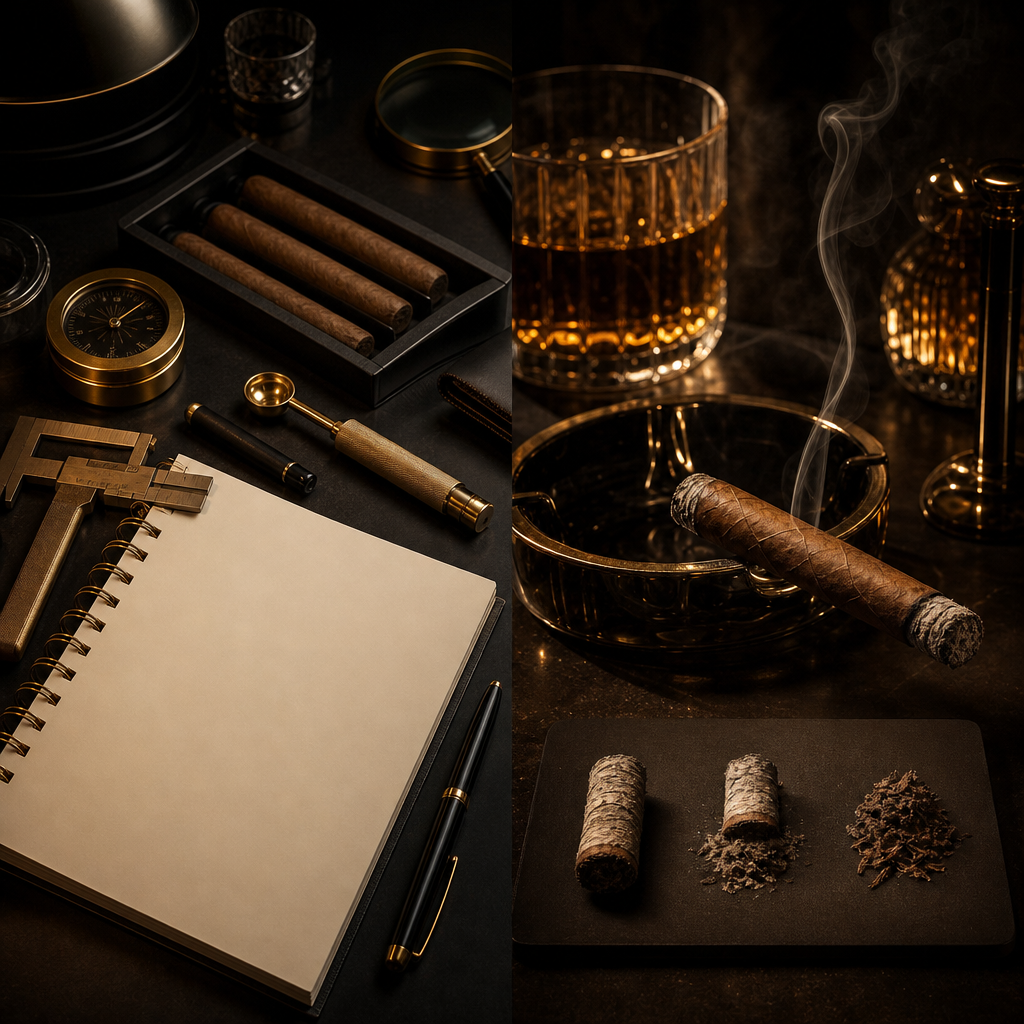
My own record sheet notes burning time, ash length, primary aromas every 15 minutes, and mouthfeel weight. For example, Partagás Serie D No.4 can be completed in about 50 to 60 minutes; if the middle stage features sweet pepper, soil, and black coffee interplay, it is suitable to find a beverage with a roasted feel but not overly sweet to complement it.
Strength, Richness, and Complexity: Three Often Confused Indicators
"Strong" does not mean "good," and "rich" does not mean "complex." Strength often refers to nicotine and stimulation; richness refers to the weight and oiliness in the mouth; complexity is the number of aroma changes and whether the transitions are clear. Padrón 1964 Anniversary, launched in 1994, often gives a solid impression of cocoa, coffee, pepper, and roasted nuts, but its complexity comes from balance, not just strong flavors.
Davidoff Nicaragua, since its debut in 2013, provides a good contrast: it has the spice and sweet wood of Nicaraguan tobacco but maintains Davidoff's consistent clean lines. Describing it as merely "strong" would overlook the layers between red pepper, cream, and dried fruit.
Before pairing with beverages, first determine if the cigar is high in strength, richness, or complexity. High strength requires a beverage buffer, high richness requires a comparable body, and high complexity requires a clean, unobtrusive drink.
| Cigar Type | Typical Example | Flavor Focus | Beverage Direction |
|---|---|---|---|
| Medium Strength, High Complexity | H. Upmann Sir Winston | Cream, cedar, nectar | High mountain oolong, champagne |
| High Richness, Cocoa Notes | Padrón 1964 Anniversary | Dark chocolate, coffee | Bourbon, aged rum |
| Prominent Spice | My Father Le Bijou 1922 | Pepper, leather, soil | Sherry cask whisky |
| Delicate Herbal | Cohiba Siglo VI | Grass, honey, grains | White tea, Cognac VSOP |
Sweet, Sour, Bitter, Salty, Umami: Using Taste Levers for Pairing
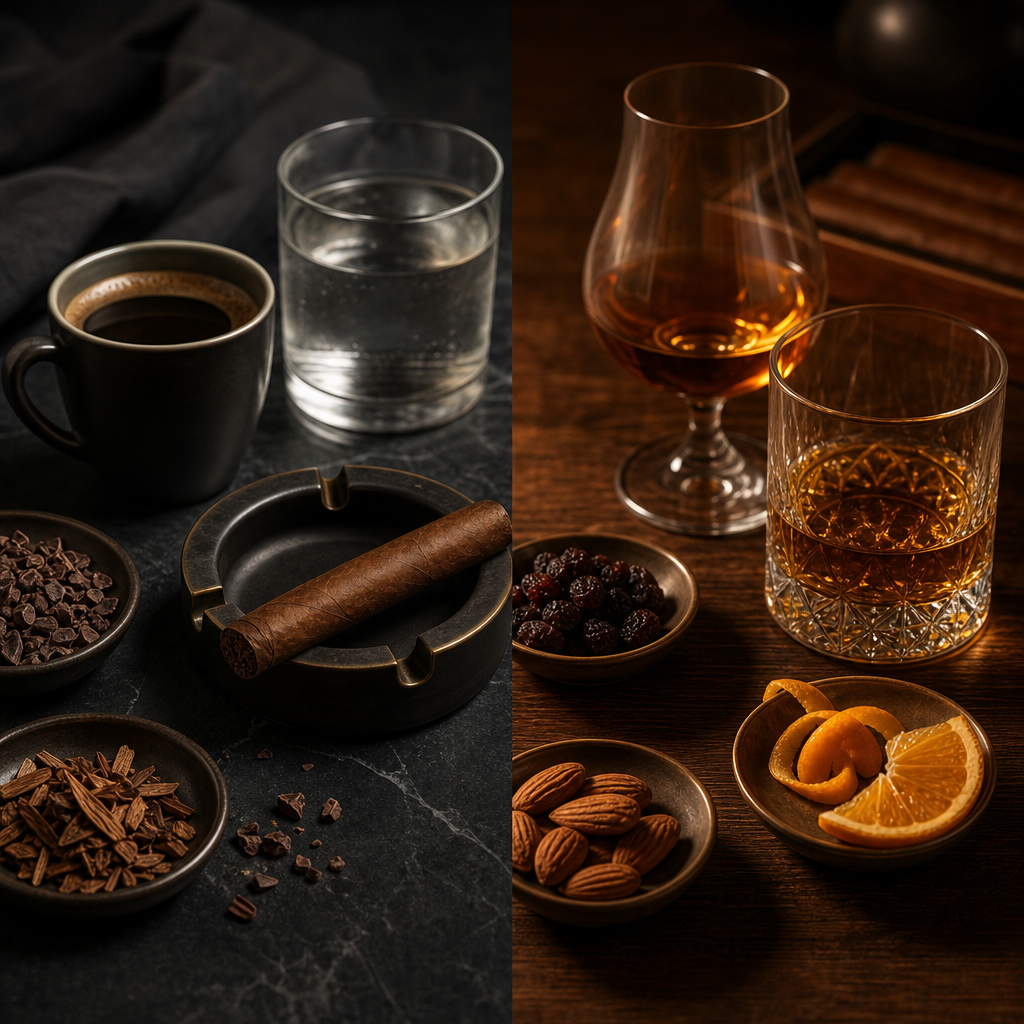
Cigar aromas are abundant, but the true control of pairing success lies in the five taste levers. Sweetness can soften pepper and wood, for example, dark rum paired with Arturo Fuente OpusX can round out its spicy and leather notes; acidity can cleanse the palate, suitable for cigars with high oiliness; bitterness, if used well, can amplify cocoa and coffee notes, but excessive amounts will make the final stage appear dry and hard.
Take Partagás Serie P No.2 paired with black coffee as an example: if the coffee roast is too deep, the final stage can become a bitter stack of bitterness. Conversely, choosing medium-dark roast Colombian coffee with nutty and low acidity can enhance the cigar's earthy, woody, and spicy layers. The beverage does not necessarily have to "overpower" the cigar; it can simply make the contours clearer.
Sweetness rounds the corners, acidity cleanses the palate, bitterness deepens the flavor; if the proportions are wrong, even the best cigar will appear heavy. Seasoned enthusiasts should view the drink as a mixing console, not a supporting role or decoration.
Salty and umami flavors are also often underestimated. Dry sherry, junmai daiginjo sake, or mineral water can make cigars like Hoyo de Monterrey Epicure No.2, which are more rounded, appear more three-dimensional. If the cigar has cream, cedar, and floral notes, a small amount of mineral sensation will make it brighter.
Pairing Spirits: The Division of Whisky, Cognac, and Rum
Whisky is not a universal answer. Peaty Islay single malts may overpower the herbal and honey notes of delicate Cuban cigars with their smoky iodine flavors; but when paired with cigars like Liga Privada No.9 or Padrón 1926 Serie, which are high in richness and have prominent dark cocoa, peat and oiliness can form a heavy dialogue. The key is whether the cigar itself has enough structure.
Sherry cask whisky is suitable for cigars with dried fruit, leather, and spice. Macallan 12 Sherry Oak or GlenDronach 15, when paired with works like My Father Le Bijou 1922, which have prominent pepper and soil, can complement with raisin, cinnamon, and roasted oak sweetness, but avoid high alcohol content causing mouth numbness.
The core of pairing spirits is not that the older the better, but whether the cask type, sweetness, alcohol feel, and cigar richness match. A clean-structured spirit with 40% to 43% alcohol content often reads cigar details better than a 58% cask strength.
Cognac is suitable for cigars with cream, floral, and fine wood notes, such as H. Upmann Magnum 46 or Quai d’Orsay No.50. Rum is suitable for cocoa and caramel notes, especially Dominican and Nicaraguan leaf series. If you have a Cuban box style from around 2008, rum's brown sugar and vanilla can reduce final stage dryness.
Tea, Coffee, and Non-Alcoholic Choices: Truly Testing Details
Many seasoned enthusiasts think that without alcohol, the ritual is diminished, but tea and coffee can better test cigar details. The milk aroma, orchid aroma, and refreshing aftertaste of Taiwanese high mountain oolong are suitable for cigars like Cohiba Robusto, Hoyo de Monterrey Double Coronas, which have herbal and nectar notes. The recommended tea temperature is 55°C to 65°C; too hot will amplify tongue surface stimulation.
Pu-erh ripe tea and heavily fermented oolong are suitable for dark flavors. Pairing over 10-year-old dry-stored ripe Pu-erh with Bolivar Belicosos Finos, soil, wood, and sweet jujube notes will connect. If it's raw Pu-erh, be cautious with acidity and smoke; insufficient aging or obvious storage flavors can make the cigar's middle stage sharp.
Non-alcoholic pairing is not a fallback, but one of the best ways to preserve the original outline of the cigar. Especially when comparing two cigars of the same brand but different box periods, white water, sparkling water, and light tea can present differences better than spirits.
Coffee depends on roast and extraction. Espresso is suitable for short-time, rich cigars like Robusto or Petit Robusto; pour-over is suitable for Churchill, Double Corona, which have longer durations. In 2019, I paired medium-roast Ethiopian washed beans with Davidoff Aniversario No.3, and the citrus acidity almost overwhelmed the cream notes; later, switching to Brazilian yellow bourbon, the hazelnut and sweetness connected.
Practical Process: From the First Puff to the Last Three Inches
Advanced pairing requires establishing a process, not relying on momentary inspiration. The first step is to stabilize the cigar at 65% to 69% relative humidity for at least 14 days; the second step is to confirm the beverage temperature, such as whisky at 18°C to 22°C, red tea around 60°C, sparkling water at 6°C to 8°C. If the temperature is wrong, the aroma will dissipate early or become dull.
After lighting, do not rush to drink alcohol in the first 5 minutes; first establish the cigar's own baseline. At the 10th minute, take small sips of the beverage, observing if the sweetness is amplified, bitterness increased, or retrohaling extended. If the drink makes the tongue root bitter or throat hot, it indicates that the alcohol, tannin, or roast is too high, and there is no need to force it.
A good pairing will make the cigar's transitions clearer; a bad pairing will only make all flavors blend into one. The judgment standard is simple: if after drinking, returning to the cigar, the initial aromas are masked, it's a mismatch; if clearer boundaries of nuts, floral, or cocoa emerge, it's a plus.
I recommend seasoned enthusiasts adopt the three-cup method: one cup of room temperature water, one cup of the main beverage, and one cup of palate-cleansing sparkling water. Record every 20 minutes, including burn line, ash color, mouthfeel weight, primary aromas, and beverage impact. After doing this for 10 cigars, you will understand your taste map better than simply listening to brand reviews.
Common Questions
Are cigars and whisky the most stable combination?
Not necessarily. Whisky is just a tool, not the standard answer. Peat, sherry cask, and bourbon cask differ greatly; delicate herbal cigars encountering heavy peat often lose floral and honey notes.
Can the same cigar be paired with two types of beverages?
Yes, but the order is important. It is recommended to start with water or light tea to confirm the cigar's original appearance, then move to spirits. If you start with high-alcohol cask strength whisky, subsequent tea often finds the palate already covered by alcohol.
Does longer aging make pairing easier?
No. 5-year, 10-year, or 15-year aging will change spiciness and wood depth, but unstable storage can cause flatness, dullness, or excessive dryness. Collection appreciation does not guarantee value increase; it still depends on source storage and market.
Are large ring gauge cigars more suitable for sweet wine?
Large ring gauges burn slowly and have a large smoke volume, indeed able to withstand sweeter rum or port cask whisky. However, if the cigar itself has floral or creamy lines, overly sweet drinks may still cause the middle stage to lose focus.
How to avoid the final stage becoming bitter?
First, check humidity and rhythm. Each interval of 45 to 75 seconds is more stable; too fast will increase temperature. For drinks, use sparkling water to cleanse the palate or switch to low-sugar tea to avoid stacking bitterness.
How detailed should pairing records be?
At least note the brand, size, box period or purchase year, storage humidity, beverage name, temperature, and three-stage flavors. The progress of seasoned enthusiasts comes from records that can be reviewed, compared, and corrected.
I always believe that the relationship between cigars and beverages is not about showing off, but about patience. A truly good pairing will let you read different expressions at the 20th minute, 50th minute, and 80th minute. Brand, vintage, and price are just clues; ultimately, it still comes back to storage, burning, and your own palate. May each lighting be clearer, quieter, and more restrained than the last.
—Cigar Prince Wilson Tsai
Smoking is harmful to health. Under twenty years old is not allowed to smoke. Quit smoking hotline: 0800-636363. This article is for reference by adults over twenty years old for cigar culture, storage, and regulatory knowledge, not a tobacco advertisement, promotion, or purchase suggestion.