Beginners should remember one principle first: only cut the end of the cap, and do not cut past the shoulder line
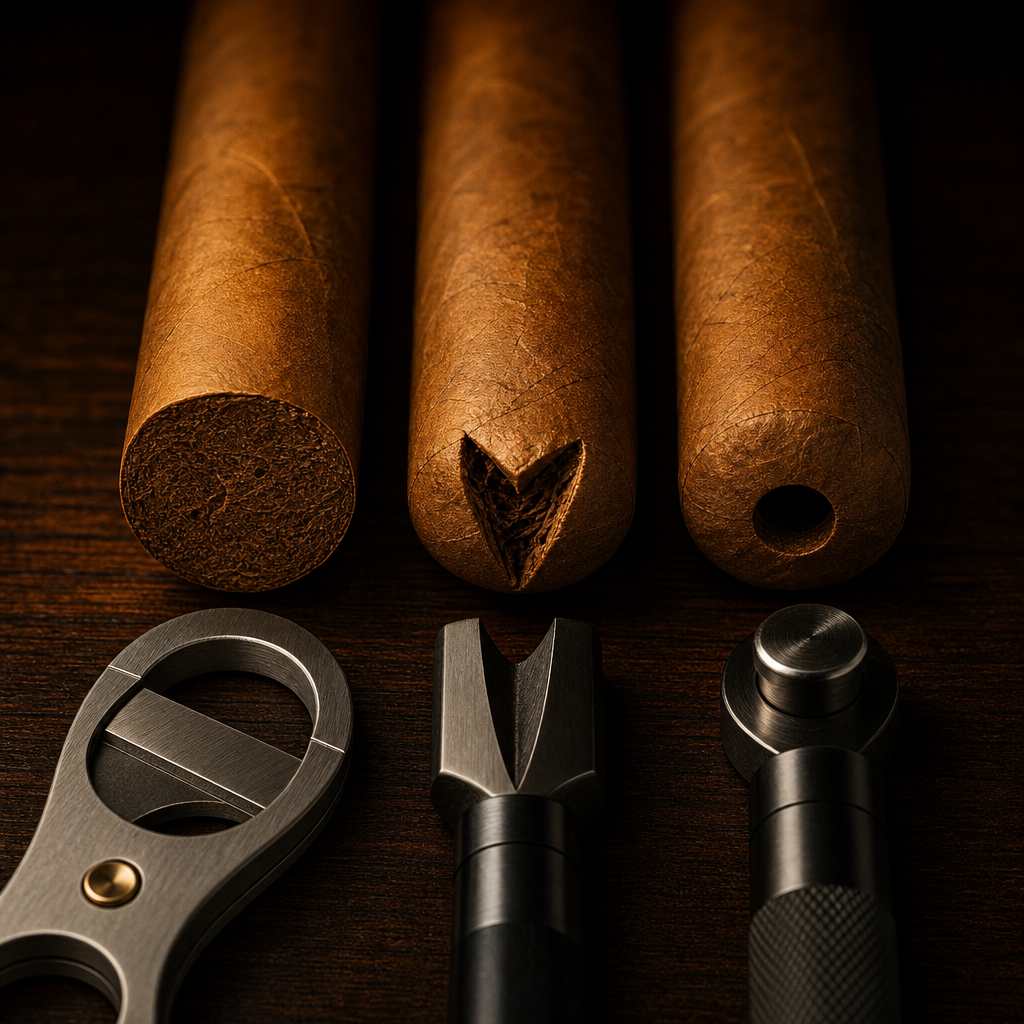
How should you cut a cigar? In simple terms: only cut off the very end of the cap to open the draw channel; do not cut past the shoulder line. The three common cuts - straight cut, V cut, and punch - differ in the shape of the opening and the feel of the draw, not in a "one-to-one match with ring gauge size". The straight cut is the most universal and forgiving, and can be used on almost any parejo straight-sided cigar; the V cut creates a V-shaped notch and preserves more of the cap; the punch opens a round hole in the cap and is suitable for round-headed, flat-headed, structurally stable cigars, but pointed cigars (Torpedo, Pirámide, Belicoso) are not suitable for punching. This article is a compilation of adult knowledge and regulatory/cultural information, and does not encourage smoking.
Beginners should remember one principle first: only cut the end of the cap, and do not cut past the shoulder line
The head of a cigar usually has one or more layers of cap. The purpose of cutting is only to open the draw channel, not to cut off the entire head. There is a "shoulder line" where the cap meets the body of the cigar. When cutting, stay within the shoulder line and remove only that small section at the very end.
- Cutting too deep (past the shoulder line): the cap that secures the wrapper is cut off, making the wrapper likely to loosen, crack, or even come off in a whole piece.
- Cutting too shallow: the opening is too small, the draw is too tight, and smoking becomes laborious - this can still be fixed by making another small cut or by using a punch to fine-tune the opening.
It is better to cut conservatively at first and adjust if it is not enough; once you cut too far, there is no going back.
Differences and suitable uses of the three cutting methods
Straight Cut: Use a double-blade cutter to cleanly cut off the end of the cap. This is the most universal and least error-prone cutting method. The opening is large and airflow is smooth. It is suitable for almost all parejo straight-sided cigars, and it is the first method beginners should learn.
V Cut: Cut a V-shaped notch into the cap, preserving more of the cap structure while creating a concentrated opening. The feel is between a straight cut and a punch; however, if the notch is too deep, or if hard pressure is applied to a relatively dry cap, the cap can easily crack.
Punch: Twist a round hole into the center of the cap. The cut area is small and the cap is preserved the most. It is suitable for round-headed, flat-headed, structurally stable parejo cigars. Note: pointed cigars (Torpedo, Pirámide, Belicoso) are not suitable for punching, because a pointed head does not provide a flat head surface for aligning the punch. These should instead be cut with a straight cut or V cut, trimming in small increments.
Key summary: choosing a cut by cigar shape/ring gauge
| Cigar shape/ring gauge | Recommended cut | Notes |
|---|---|---|
| Parejo straight-sided, 38-44 ring | Straight cut, small-hole punch | Do not cut past the cap shoulder line |
| 46-54 ring | Straight cut, V cut, or punch | Adjust according to draw resistance and personal habit |
| 55 ring and above | Straight cut, deep V cut, large-hole punch | If the punch is too small, the draw may be tight |
| Torpedo/Pirámide pointed head | Straight cut or V cut | Punching is not recommended; trim in small increments |
| Cap is relatively dry or already cracked | Straight cut is the safest | Avoid hard-pressure V cuts that may cause cracking |
What needs to be emphasized is this: ring gauge is only a reference, not a hard rule. The straight cut is almost universally applicable; whether a cigar can be punched depends on the "head shape" rather than the "ring gauge size" - round heads and flat heads can be punched, while pointed heads should not be punched.
Tools and technique: how to cut without tearing
The cutter blade must be sharp. A dull blade is not cutting; it is crushing. It will tear the wrapper, lift the rolled edge, and directly ruin a good cigar. The motion should be decisive: align the position and make one clean cut, without hesitating or sawing back and forth. For a punch, align it with the center of the cap, gently rotate and push it in, and do not stab forcefully. After cutting, first check whether the opening is clean and whether the wrapper has lifted. Take a test draw; if it is too tight, adjust further.
Practical notes
- Beginners should start with the straight cut. It is the simplest and least likely to go wrong. After becoming familiar with it, you can then try the V cut and punch.
- Before cutting, first check the condition of the cap: if it is relatively dry or cracked, the straight cut is the safest. Do not apply hard pressure with a V cut.
- Use cigars only in places where smoking is legally permitted; most indoor public places in Taiwan are smoke-free. Please respect no-smoking rules and nearby non-smokers. A punch creates a smaller cut area and a smaller draw volume, but that is a difference in feel, not a reason to evade smoke-free rules.
- Persons under 20 years old may not smoke; this article is for adult reference on cigar culture and knowledge only.
Common mistakes
- Cutting past the shoulder line: cutting off the cap that secures the wrapper makes the wrapper likely to loosen or crack.
- Forcing a punch on a pointed cigar: Torpedo/Pirámide does not have a flat head, and punching will damage the pointed-head structure.
- Using a dull blade: an unsharp blade will tear the wrapper and lift the rolled edge.
- Thinking the cut must match the ring gauge: the straight cut is almost universal; punching depends on head shape, not ring gauge.
- Cutting too shallow and not fixing it: an overly tight draw is tiring, but it can actually be corrected with another cut or a punch.
- Applying hard pressure with a V cut on a relatively dry cap: a dry cap is brittle and can easily crack under hard pressure.
Frequently Asked Questions
-
Which cutting method should a beginner use for the first cigar? Straight cut. It is the simplest and most forgiving, and is suitable for almost all straight-sided cigars.
-
How deep should the cut be? Only cut off the very end of the cap and stay within the shoulder line. It is better to be conservative and adjust if needed.
-
Can a pointed cigar (Torpedo) be punched? Not recommended. A pointed head does not have a flat head surface for aligning the punch. Use a straight cut or V cut instead, trimming in small increments.
-
What if I cut too deep? Cutting past the shoulder line usually cannot be fixed, and the wrapper may loosen. Next time, remember to remove only the end and cut more conservatively.
-
How do I fix a cut that is too shallow and a draw that is too tight? You can make another cut to enlarge the opening, or use a punch to add a hole in the center for fine adjustment.
-
Is a punch suitable for small ring gauges? The key is not ring gauge, but head shape. Round-headed, flat-headed, structurally stable cigars can be punched; pointed heads should not be punched.
Sources
- Compiled from widely recognized industry knowledge on cigar cutting tools
- General consensus on the operation of cigar accessories (straight cut/V cut/punch)
Knowledge summary: cigar cutting is not that mysterious. Remember the principle of "only cut the end of the cap and do not go past the shoulder line". Learn the most universal straight cut first, then decide whether a punch can be used based on head shape (do not punch pointed heads). Keep the cutter sharp, make decisive motions, and cut conservatively so you can adjust if needed - take care of these points, and even beginners can cut cleanly and neatly. - Cigar Prince Wilson Tsai