Examining Cigar Character Through Brand History: Age Isn't Everything
Veteran cigar enthusiasts don't stop at "which one do I like"; the real intrigue lies in how a brand compresses land, formula, size, historical figures, and market psychology into seemingly similar yet distinctly characteristic creations.
As the editor of Cigar Bible, my years of observing the Cuban, non-Cuban, and Asian markets have increasingly convinced me that a brand is not just a trademark but a recognizable, sustainable, and challengeable language of taste. Understanding the essence of a brand allows one to move from preference to judgment in cigar selection.
Examining Cigar Character Through Brand History: Age Isn't Everything
Many veterans are familiar with names like Cohiba, Montecristo, Partagás, and Romeo y Julieta, but the spirit of a brand often lies not in its founding year but in the choices it made during historical turning points. Montecristo, founded in 1935, derives its name from The Count of Monte Cristo, often read by factory readers; its core is not just literary romance but a stable, recognizable structure suitable for long-term flavor mapping.
Cohiba follows another logic. Emerging around 1966 as a diplomatic cigar, it officially entered the international market in 1982. Its brand myth is tied to the Cuban national image, particularly with its independent leaf selection and extra fermentation processes, creating a highly recognizable profile among herbal, honey, cream, and mineral notes. The value of brand history lies in explaining why certain flavors are consistently maintained, rather than letting age become an empty halo.
Partagás, established in 1845, is more like a concentrated snapshot of Old Havana: soil, leather, black pepper, and roasted wood are often central themes. Romeo y Julieta is remembered for its early 20th-century silver tube Churchill in the British market, with soft floral, woody, and sweet notes that cross different experience levels. Veterans focusing only on strength may miss the "stable personality" brands have cultivated over time.
Formulas and Leaves: Different Syntax from the Same Country
Cuban brands are often simplified as "Havana flavor" by outsiders, but even from Vuelta Abajo, different brands have distinct formula orientations. H. Upmann often integrates cedar, nuts, cream, and gentle spices finely; Bolívar tends to present heavy earth, coffee, cocoa, and strong aftertastes. This is no accident but the result of long-term brand positioning and blending standards.
The non-Cuban world shows even more divergence in leaf syntax. Since the 1990s, Davidoff has focused on the Dominican Republic, pursuing cleanliness, balance, and precision; Padrón uses Nicaraguan leaves, long-term stock, and dark wrappers to establish a profile of concentrated coffee, cocoa, and molasses. Arturo Fuente's Hemingway series is known for its perfecto shape, testing rolling skills and elegantly layering woody sweetness and spices.
A formula is not just piling good leaves together but deciding which rhythm the brand wants to speak in. As veterans advance, they can break down the leaves into three layers for observation: the wrapper determines the first impression and oiliness, the binder affects burning and structure, and the filler is the core of mid-to-late-stage strength and transitions. When you can say "this is the brand's syntax" rather than just "it's good to smoke," you've truly entered the next stage.
Size, Ring Gauge, and Craftsmanship: Brand Essence Often Lies in Proportions
Different sizes of the same brand can be like different orchestrations by the same composer. Cohiba Siglo VI, with a 52 ring gauge and about 150 mm length, became a significant marker of modern large ring gauge trends after its 2002 release; in contrast, the Lancero, with about a 38 ring gauge and 192 mm length, has finer lines and more pronounced herbal, floral, and tea notes. The brand's character hasn't changed, but the focus of presentation is entirely different.
Partagás Serie D No.4 is famous for its robusto size, 50 ring gauge and 124 mm length, with concentrated power and direct rhythm; Lusitanias, a double corona, about 194 mm in length, has a slower initial development and more complete leather and wood in the latter part. For veterans, size is not just an appearance option but a combination of burning area, temperature, smoke density, and time management.
To truly understand a brand, you must also understand in which sizes it best expresses itself. I often suggest using three sizes of the same brand for horizontal notes, such as robusto, corona gorda, and double corona, recording changes every 10 minutes in the front, middle, and back sections. If a brand maintains detail in small ring gauges and doesn't become loose in large ones, it usually indicates stable craftsmanship and formula foundation.
Recognition Map of Classic Brands: Judging by Structure, Not Impressions
Veterans fear being trapped by existing impressions, such as "this brand is strong" or "that brand is mild." I prefer to look at structure: is the opening clear, is there a transition in the middle, is the end clean, is the burn stable, and does aging increase integration? Below is a simplified map to facilitate comparing brands on the same coordinates.
| Brand | Founding or Key Year | Common Core Tones | Representative Observation Case |
|---|---|---|---|
| Cohiba | 1966/1982 | Herbal, honey, cream, mineral | Siglo VI shows the fullness of modern large ring gauges |
| Montecristo | 1935 | Cocoa, coffee, wood, slight sweetness | No.2 is a classic torpedo size textbook |
| Partagás | 1845 | Earth, leather, black pepper | Serie D No.4 demonstrates concentrated power |
| H. Upmann | 1844 | Cedar, nuts, cream | Magnum 46 often shows balanced old-school lines |
| Padrón | 1964 series launched in 1994 | Cocoa, coffee, molasses | 1964 Anniversary shows Nicaraguan depth |
| Davidoff | 1968 brand launch, 1990s shift to Dominican | Clean, grain, floral, cream | Signature series shows precision |
Brand recognition should not rely on label memory but on repeatable structural observation. If you consistently capture the same main theme across different years and storage conditions, it is worthy of being called a brand character. The table is just a starting point; true judgment must return to personal notes, batch differences, and storage conditions.
Limited Editions, Commemoratives, and Market Psychology: Rarity Doesn't Equal Better Understanding of the Brand
Since the 2000s, the cigar market has increasingly focused on limited editions, regional versions, and commemorative series. Cuban Edición Limitada has been a market focus since 2000, usually featuring darker wrappers and specific sizes; Regional Edition links brands with regional preferences, with different strategies often appearing in Asia-Pacific, Europe, and Middle Eastern markets. These works amplify topics and also amplify price fluctuations.
The problem is that limited editions do not necessarily represent the brand better than regular lines. Some limited editions make the brand richer, sweeter, and more luxurious, with strong short-term appeal but may not retain the original framework. Conversely, regular lines like Montecristo No.2, Partagás Serie D No.4, and H. Upmann Magnum 46, due to their long-term comparability, are stable samples for studying brand essence.
Rarity is market language; brand essence is taste language. The two can overlap but should not be equated. When discussing future value in collections, one must remain calm: it does not guarantee appreciation, and it depends on source preservation and market. Veterans facing high-profile works should first ask three questions: does it continue the brand's core? Is its size reasonable? Has its price already overdrawn expectations?
Storage and Aging: Brand Personality Can Be Amplified or Distorted by Environment
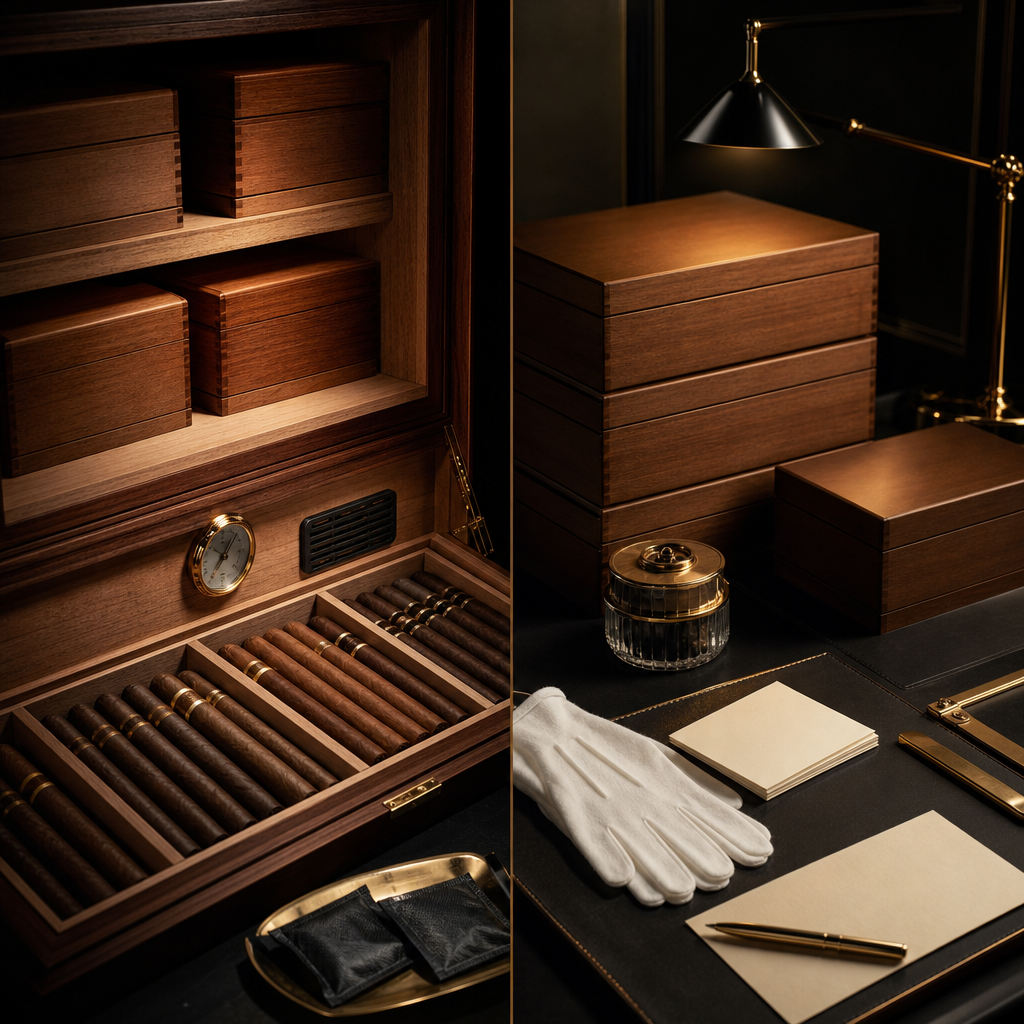
The same cigar at 65% and 72% relative humidity can seem like two versions. Higher humidity can lead to thick, stuffy smoke, suppressed sweetness, and unstable burning; lower humidity can open aromas quickly, but the end can easily become sharp, bitter, and hot. For most long-fill cigars, I prefer a storage range of 65% to 69% humidity, with a temperature of about 18 to 21°C, focusing on stability rather than daily adjustments.
Aging is not a myth but a chemical and time collaboration. Rich Nicaraguan dark-wrapped works often have rough edges rounded after 1 to 3 years of integration; Cuban medium-strength brands, if stored properly, may increase honey, wood, and dried fruit notes in 3 to 5 years. However, some fresh-lined works, if stored too long, may lose vibrant herbal and floral notes; not all brands are suitable for long-term storage.
The goal of storage is not to age every cigar but to allow the brand's original character to be expressed more cleanly. I recommend veterans record in batches from the same box: sampling at the 3rd month, 12th month, and 24th month, noting burning, aroma, strength, and aftertaste. Compared to listening to others' age myths, your environmental data is more reliable.
How Brands Influence Choices: Veterans Should Build Their "Flavor Portfolio"
Once you have preferences, the next step is not just to pursue the same type but to build a brand portfolio. If you like Cohiba's herbal creaminess, you can add Davidoff as a reference for cleanliness; if you prefer Partagás's heaviness, you can compare Bolívar or Padrón for different sources of earth, cocoa, and spice. This cross-comparison trains judgment better than vertical collection of a single brand.
I divide my personal cigar collection into four roles: daily calibration, in-depth observation, special years, and comparison samples. Daily calibration can choose stable regular models; in-depth observation uses multiple records from the same box; special years are for understanding market and batch; comparison samples are for comparing different regions, similar sizes, and similar strengths. Doing so avoids being led by fame and ensures each lighting has a learning purpose.
Veterans choosing brands are not looking for a single answer but establishing a system that can explain their preferences. If a brand can only evoke emotions but cannot be described, compared, or back-tested, its value to you is limited. Conversely, even if it's not the most expensive cigar, as long as it can consistently provide structure and detail, it deserves a place on the long-term observation list.
Frequently Asked Questions
Why is there a big difference in the same brand across different years?
Cigars are agricultural products, and leaves are affected by annual rainfall, sunlight, fermentation batches, and factory conditions. In Cuba, the performance of box sets can vary significantly across different years; non-Cuban brands, although often stabilizing formulas with stock leaves, can still change in oiliness, sweetness, and burning due to different wrapper batches. A brand provides direction, not a guarantee of identical performance in every stick.
Should veterans first study Cuban or non-Cuban brands?
Both are worthwhile, but the research methods differ. Cubans are suitable for looking at brand history, size traditions, and aging changes; non-Cubans are suitable for examining regions, wrappers, factories, and blender styles. For example, Padrón, Fuente, Davidoff, and My Father can all be used to establish regional comparisons. Don't divide the world into high and low but into syntax differences.
Do limited editions better represent the brand essence?
Not necessarily. Limited editions often carry market tasks, possibly enhancing sweetness, concentration, or packaging memory points, but not necessarily purer than regular lines. To understand a brand, start with long-standing core sizes, then look back at how limited editions vary; the judgment will be more accurate.
Can collecting cigars be considered an investment?
You can study the market, but cigars should not be viewed solely with an investment mindset. Box condition, source, preservation, rarity, and international demand all affect price. When discussing collection value, remember: it does not guarantee appreciation, and it depends on source preservation and market. For veterans, knowledge and preservation discipline are more important than chasing trends.
How to judge if a brand is suitable for long-term exploration?
Look at three points: first, is the regular line stable; second, can different sizes retain core character; third, does it integrate better after 1 to 3 years of aging. If a brand only has single-stick surprises but lacks series consistency, it may be suitable for appreciation, not necessarily for deep digging.
What items should be recorded in notes to be useful?
At least record the brand, size, box code or year, storage humidity, lighting time, changes in the front, middle, and back sections, burning state, and aftertaste. Scores can be included, but words are more important. Three months later, you'll find that the truly valuable part is not "how many points" but whether you can accurately describe differences.
The essence of a brand is the fingerprint left by time, land, craftsmanship, and market. Veterans who only chase lists will eventually be limited by them; those who can read brands structurally can establish their flavor coordinates between Cohiba's herbs, Partagás's soil, Padrón's cocoa, and Davidoff's precision. My advice is simple: less following, more recording; less myth, more verification. The truly fascinating part of cigars is not the answer but the process of understanding yourself better with each smoke.
—Cigar Prince Wilson Tsai
Smoking is harmful to health. Persons under the age of 20 are prohibited from smoking. Quitline: 0800-636363. This article is for reference by adults over the age of 20 for cigar culture, storage, and regulatory knowledge only, not as an advertisement, promotion, or purchase suggestion for tobacco products.