Aroma and Flavor Blending of Cigars: An Analysis of How to Adjust Flavor Layers
Aroma and Flavor Blending of Cigars: An Analysis of How to Adjust Flavor Layers
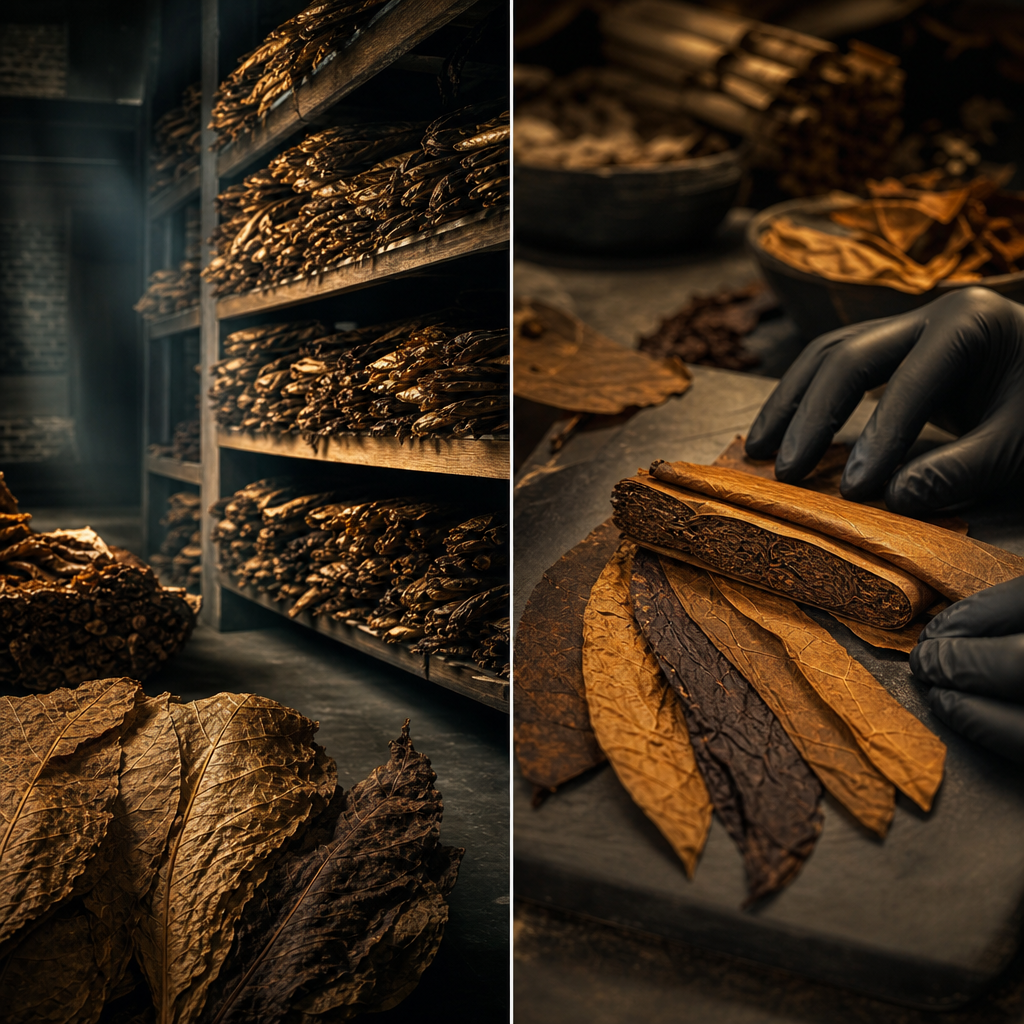
In the world of cigars, the layers of flavor do not merely rely on simple descriptions like "woody, leathery, cocoa, pepper," but depend on the choice of leaves, fermentation, and blending techniques. The aroma of high-end cigars is achieved through a meticulous combination of different regions, leaf positions, and aging times, allowing each puff to present unique changes. The structure of the wrapper, binder, and filler is clearly defined, influencing the initial aroma and overall flavor. Different regions such as Cuba, Nicaragua, and the Dominican Republic each have their own characteristics, providing a rich palette for blending. Changes in size can also rewrite flavors, allowing cigars from the same series to exhibit different levels of taste. Understanding these essentials is key to appreciating the art of cigar blending.
Aroma Blending is Not Adding Fragrance, But Flavor Arrangement of Leaf Structure
In the cigar community, "aroma blending" is often misunderstood as adding external flavors; however, in high-end handmade cigars, true aroma blending is about leaf blending. Blenders use different regions, leaf positions, fermentation levels, and aging times to present different profiles in the early, middle, and late stages of a cigar. For instance, the Drew Estate Liga Privada No.9, which gained fame after 2007, emphasizes not a single sweetness, but the black sugar, soil, and concentrated coffee notes brought out by the Connecticut Broadleaf wrapper.
The flavor layers of a cigar come from the tension and balance between leaves, not from a single leaf being stronger. Enthusiasts often pursue strength, but strength is merely the result of nicotine, oils, and burning density; the real challenge is to make the strength not coarse. The long-standing popularity of the Cuban Partagás Serie D No.4 is not only due to its spicy aroma but also because its leather, dry wood, cocoa, and salty notes maintain rhythm in the Robusto size.
Blenders usually set a "main theme" first: for example, using Estelí ligero as the backbone, Jalapa seco to bring out sweetness, and Dominican volado to correct burning. This is somewhat like an orchestra, where the double bass should not overpower the violin, but without the bass, it would feel thin. The goal of high-end blending is to ensure every puff has variation without any flavor jumping out to disrupt the whole.
Wrapper, Binder, and Filler: How the Three-layer Structure Works
The basic structure of a cigar consists of the wrapper, binder, and filler. The wrapper is often said to determine 60% of the flavor, which should not be understood mechanically, but it indeed affects the initial aroma, sweetness, oils, and visual impression. Ecuador Connecticut often carries creamy, almond, and hay notes; Mexican San Andrés Maduro often has dark chocolate, wet soil, and molasses notes. The thinner the wrapper, the more it tests burning control; the oilier the wrapper, the easier it is to bring thickness.
The binder is often overlooked as the "flavor hinge." It not only fixes the filler but also affects the burn line and middle support. For example, Dominican binders are often used to soften Nicaraguan fillers; some Honduran binders add dry wood and spice notes. The wrapper gives the first impression, the filler provides strength, and the binder determines whether the two can be stably combined.
| Structure | Common Function | Flavor Impact | Example |
|---|---|---|---|
| Wrapper | Outer aroma, oils, sweetness | Initial aroma, finish, visual | Ecuador Habano, Connecticut Broadleaf |
| Binder | Structure fixation, burn adjustment | Middle thickness, dry-wet balance | Dominican, Honduran, Nicaraguan |
| Filler | Main strength and layers | Concentration, rhythm, transitions | Estelí ligero, Jalapa seco, Cuban seco |
Take the Padrón 1964 Anniversary as an example; the density of Nicaraguan leaves is very high, but it is not just "heavy." Its cocoa, coffee, wood, and slight sweetness can coexist, indicating that the wrapper and filler do not conflict with each other. For enthusiasts wanting to deconstruct a cigar, the most effective method is not just to remember flavor words but to ask: does this flavor come from the outer layer, the core, or the burning speed?
Leaf Position Determines Strength: The Power Distribution of Ligero, Seco, and Volado
On the same tobacco plant, from bottom to top, sunlight, thickness, and oils vary. Volado is mostly at the bottom, with good burnability and lighter flavor; Seco is in the middle, with more delicate aroma; Ligero is at the top, with the most sunlight, thick leaves, high oils, and high strength. If too much ligero is used, the cigar can feel oppressive, even bitter, spicy, or ammonia-like; if too much volado, it burns beautifully but lacks depth.
Ligero is the engine, not the whole car; Seco is the syntax of aroma, Volado is the order of burning. When Cohiba Behike was officially launched in 2010, one of the discussion points was the medio tiempo leaf position. This top small leaf has low yield, high oil, and concentration, capable of bringing honey, cream, herbal, and deep spice notes, but if not precisely blended, it can easily make the rhythm heavy.
Leaf position blending also involves fermentation. Thick leaves usually require longer time to degrade irritants, and factories stack them in pilóns for fermentation, with temperatures possibly controlled between 35 to 45°C, flipping according to leaf thickness. High-end Cuban leaves often undergo years of grading and aging; non-Cuban premium factories also store ligero for 2 to 5 years before use. Experienced enthusiasts judge blending maturity by noting whether the strength is clean: powerful but not prickly, substantial but not dull.
Regions as the Blending Palette: Differences Between Cuba, Nicaragua, and the Dominican Republic
Cuba's Vuelta Abajo is often seen as the classic flavor benchmark, characterized not simply by intensity but by a mix of saltiness, hay, cedar, cream, and mineral notes. The pyramid size of Montecristo No.2 has long been used to understand Cuban balance: the early stage is softer, the middle stage rises with nutty and woody notes, and the late stage deepens with spice. This layering largely comes from soil, varieties, and long-term grading systems.
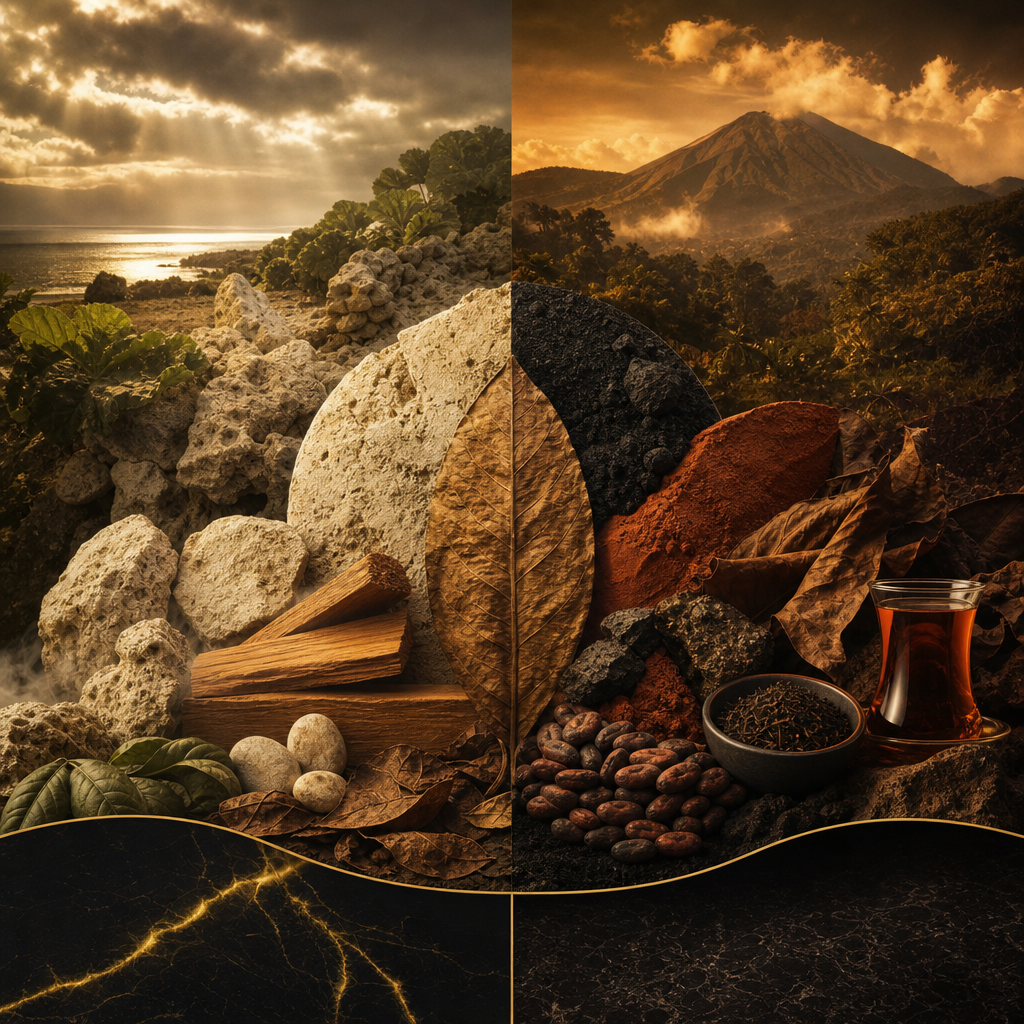
Nicaragua is like a high-resolution painting. Estelí commonly features rich black pepper, coffee, and soil; Jalapa is more rounded, often with sweet wood, cocoa, and floral notes; Condega can provide herbal, nutty, and middle balance. After its launch in 2007, Oliva Serie V became a model for many enthusiasts studying Nicaraguan ligero, due to its high concentration yet retaining sweetness and clear burning.
The Dominican Republic's value lies in elegance and aromatic detail. Since its debut in 1995, Arturo Fuente OpusX has proven that the Dominican Republic can also produce high-strength, high-structure puros. Regions are not about high or low grades, but different blending languages; understanding regions allows one to predict a cigar's framework and transitions. Adding Ecuador or Mexican San Andrés wrappers can further widen the blending palette, rearranging sweetness, soil notes, and oils.
Size Rewrites the Formula: Flavor Differences in the Same Series with Different Ring Gauges
The same formula made into Robusto, Toro, Churchill, Lancero will not just taste "different in length." The smaller the ring gauge, the higher the wrapper proportion, often making the initial aroma and spice more direct; the larger the ring gauge, the more filler proportion, with lower burning temperature, possibly making the taste rounder and sweeter, but if not well blended, it can feel loose. Trinidad Fundadores with a 40 ring gauge and 192mm length is a good example for studying wrapper performance.
Size is part of blending, not just an appearance decided after packaging. Montecristo No.2 with about a 52 ring gauge and 156mm length, has a tapered head that changes smoke concentration, making the middle and late stages more compressed; while the common Robusto with about a 50 ring gauge and 124mm length has a shorter burning time, requiring faster transitions in the early, middle, and late stages. This is also why within the same series, Robusto often best reflects the blender's decision-making ability.
Large ring gauges have become popular in recent years, such as Gordos over 60 ring gauge, with the advantage of cool smoke, obvious sweetness, and strength not necessarily sharp; the disadvantage is that the wrapper's influence is diluted, and if the filler lacks layers, only volume remains. Lancero is the opposite, where any wrapper flaws, rolling tightness, or humidity unevenness will be magnified. For enthusiasts wanting to study flavor sources, it is recommended to cross-compare different sizes of the same brand, which is more rewarding than just looking at scores.
Fermentation and Aging: Letting Blending Transition from Sharp to Harmonious
Even with good varieties and regions, new leaves may carry greenness, ammonia, or harshness. The purpose of fermentation is to transform proteins, sugars, and nitrogenous substances for cleaner burning. Many factories handle leaf positions separately: volado ferments shorter, while ligero, being thick and oily, takes longer. High-end brands often store leaves for 1 to 3 years before rolling and product aging.
Finished cigars also change. After being boxed for 6 to 12 months, humidity and smoke often stabilize; around 3 years, spice may mellow, and wood and nutty notes become more pronounced; 5 to 10 years, if well-preserved, may reveal more refined finishes like honey, leather, dried flowers, and old wood. Aging does not turn bad cigars good, but allows cigars with structure to gradually unfold.
Storage conditions directly affect the outcome. I personally prefer a range of about 18 to 21°C, with relative humidity of 65% to 69%; too high humidity can make burning stuffy and flavors dull, while too low can cause cracking and spiciness. When discussing old boxes, limited editions, or market prices, it must be clear: collection appreciation does not guarantee appreciation, still depending on source preservation and market. What is truly worth long-term storage are cigars with structured blending, stable burning, and expandable flavors.
How Blenders Fine-tune Layers: From Proportion to Rolling Details
A new formula is usually not completed in one go. Blenders may first conduct 5 to 20 sets of experiments, rolling small batches of samples with different regions and leaf positions, then recording changes in the early 0 to 20 minutes, middle 20 to 50 minutes, and late 50 minutes and beyond. If the early stage is too spicy, they may reduce ligero or change the wrapper; if the middle stage is hollow, they may increase seco or change the binder; if the late stage is bitter, it often requires adjusting the thick leaf proportion, burning temperature, or fermentation maturity.
Blending is not about pursuing more flavors, but about removing flavors that disrupt balance. Enthusiasts can understand cigars in three dimensions: aroma, taste, and structure. Aroma includes wood, spice, floral notes; taste includes sweetness, saltiness, oils; structure includes burning, draw resistance, smoke volume, and finish. Many cigars have beautiful aromas but feel empty due to loose draw resistance; some have large smoke volume but lack finish.
You can use the following methods for systematic recording:
- Record size, origin, box code, or year information.
- Write 3 main flavors for early, middle, and late stages, not exceeding 9 words.
- Note burn line, relight frequency, draw resistance, and ash stability.
- Compare different sizes of the same brand, not just different brands.
- Observe storage differences at 65%, 67%, 69% humidity.
Rolling can also change layers. Entubado rolls each filler leaf into small tubes, often enhancing airflow stability; book bunching stacks like book pages, efficient but more testing on the hand feel. No matter how good the leaves are, if rolling causes skewed burning or hot spots, the blending layers will be distorted.
Common Questions
Understanding aroma blending for enthusiasts is not about memorizing more flavor words, but about judging which layer of structure the flavor comes from. The following questions are the most frequently asked by seasoned cigar enthusiasts and best reveal the blending level of a cigar.
Why do different batches of the same brand vary?
Tobacco is an agricultural product, and rainfall, sunlight, and harvest time all affect the leaves. Even if the same brand maintains the same formula, blenders may use leaves from different years to correct flavors. Cuban brands especially show batch characteristics; non-Cuban premium factories often use stock leaves for stabilization.
Does the wrapper really determine most of the flavor?
The wrapper affects initial aroma, sweetness, and finish, but the filler cannot be ignored. If the filler strength is high, the wrapper becomes a modifier; if the filler is lighter, the wrapper is more dominant. Ecuador Connecticut and Broadleaf placed on the same filler will show very obvious differences.
Why do some cigars have a good early stage but collapse in the middle?
A common reason is insufficient seco or inadequate binder support. The early stage relies on wrapper aroma, but once burning enters the core, insufficient filler layers will feel hollow. This is also why the Robusto size particularly tests blending, as transition time is short.
Does high strength mean high blending skill?
Not necessarily. Strength can be piled up with ligero, but balance is more difficult. High blending skill should be clean, focused, with a finish, not just spicy and oppressive. The value of Padrón, OpusX, Oliva Serie V lies in having structure behind the strength.
How long is aging most suitable?
There is no fixed answer. Generally, 6 to 12 months can stabilize box humidity; 3 to 5 years may mellow spice; over 10 years depends on preservation and original structure. If burning was poor and flavors scattered initially, long aging may not improve it.
How to train oneself to recognize blending?
Change only one variable at a time. First compare different sizes of the same brand, then compare different wrappers of the same size, and finally cross regions. Record 5 items each time: initial, sweetness, spice, burning, finish. Building your own reference table is more reliable than chasing single high scores.
Cigar aroma blending is an art completed by agriculture, fermentation, storage, craftsmanship, and time. What I love is not a cigar that overwhelms with one puff, but a work that can explain itself from the first to the last segment. The true joy for enthusiasts is reading the blender's choices in the smoke and understanding the changes in their own taste.
—Cigar Prince Wilson Tsai
Smoking is harmful to health. Under 20 years old is prohibited from smoking. Quitline: 0800-636363. This article is intended for adults over 20 years old as a reference for cigar culture, preservation, and regulation knowledge, not as tobacco advertising, promotion, or purchase advice.