The Oily Saltiness of Campbeltown Whisky: The Motor Oil and Salty Freshness of the Former Whisky Capital, Paired with Bolívar Belicosos Finos
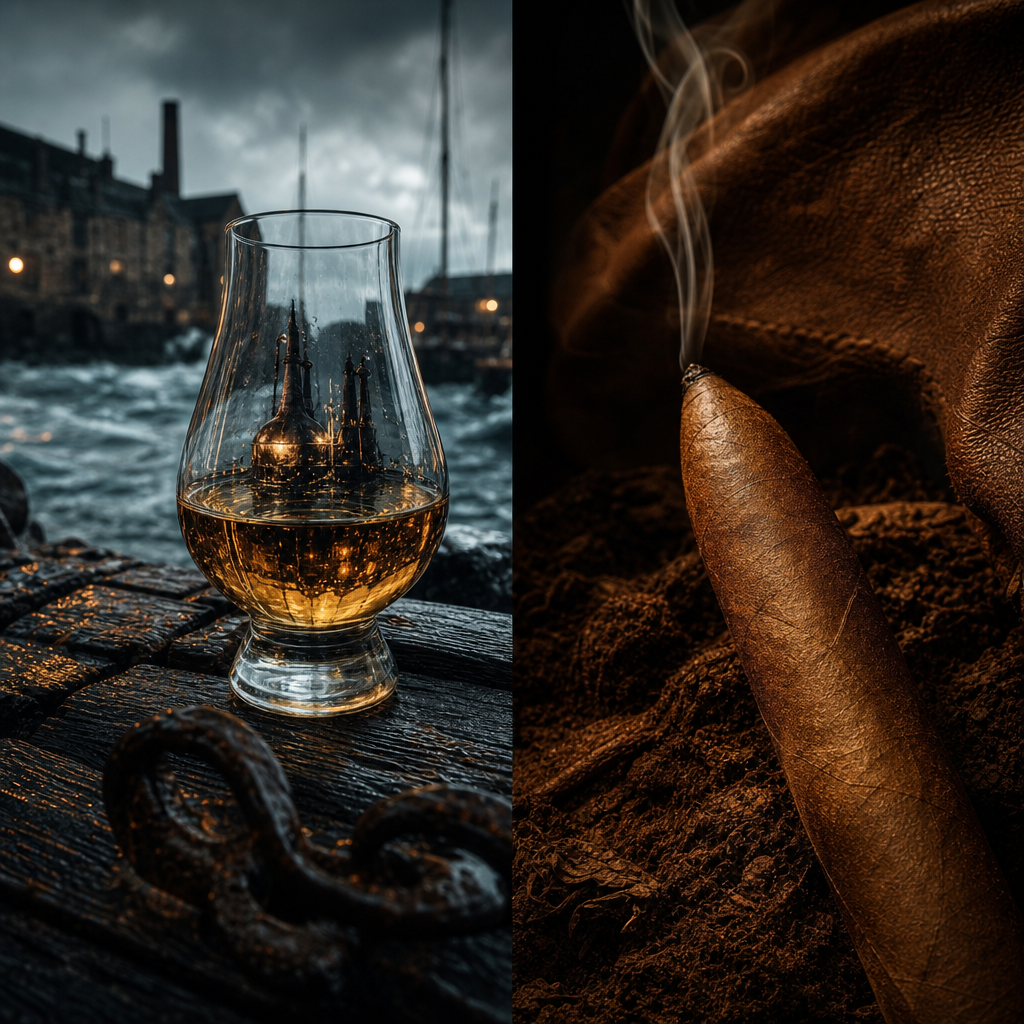
The Oily Saltiness of Campbeltown Whisky: The Motor Oil and Salty Freshness of the Former Whisky Capital, Paired with Bolívar Belicosos Finos
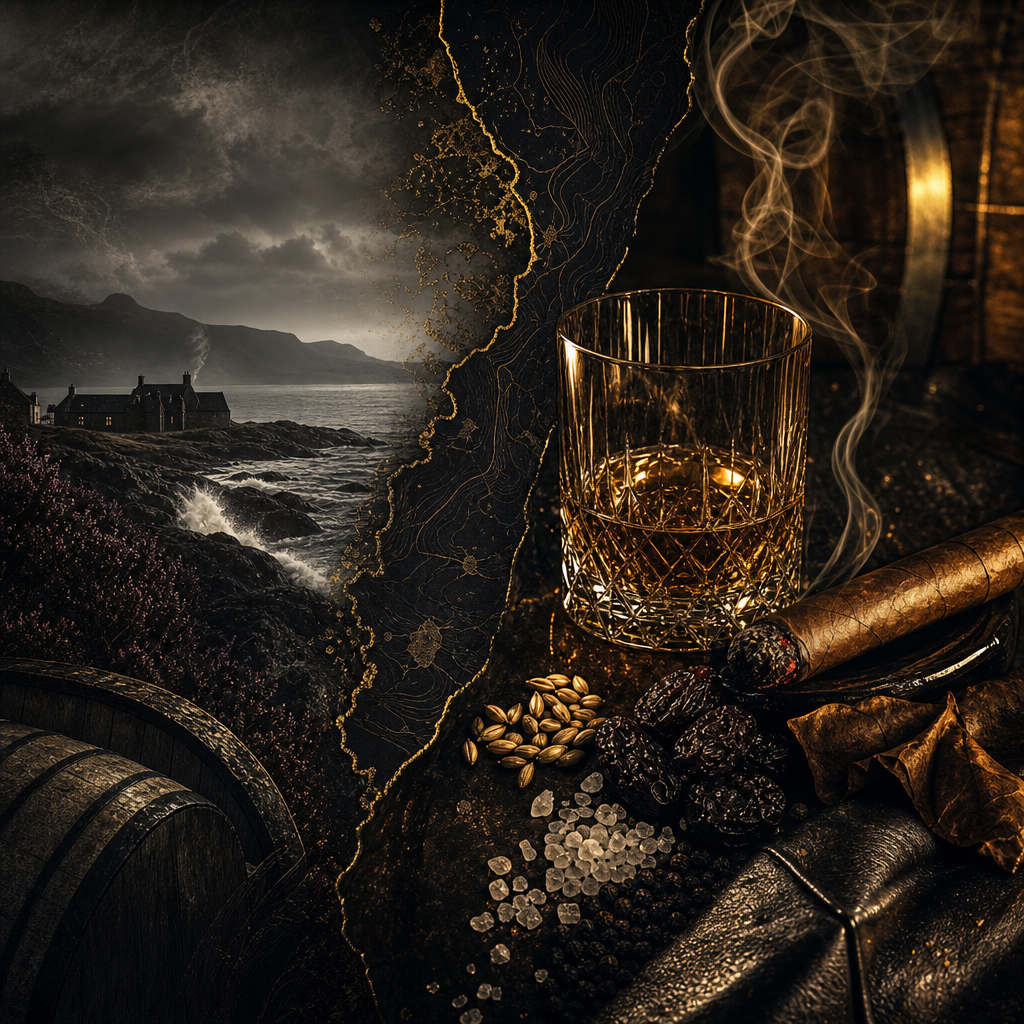
When Campbeltown whisky meets Bolívar Belicosos Finos, the most fascinating aspect is not just the phrase "whisky and cigar pairing," but how two dark flavor systems align in the mouth. I often say that a truly layered pairing must articulate how salt alters earthiness, how oil carries smoke, and how leather stretches bitterness into depth. This combination is perfect for cigar enthusiasts to delve into, as the body of Campbeltown whisky is never about clean and pretty aromas, but rather the shadows of sea breeze, motor oil, warehouse beams, and light peat.
As the editor of the "Cigar Bible," I don't just classify Campbeltown whisky as "sea salt whisky," nor do I merely describe Bolívar Belicosos Finos as a rich Cuban cigar. The former is the most dramatic epitome in the history of Scottish regions, while the latter is one of the best representatives of compressing smoke into a bundle within the Cuban Campana format. When both are placed on the same table, readers should not see who overpowers whom, but how saltiness, soil, leather, coffee bitterness, and oiliness rearrange between each puff.
The Rise and Fall of Campbeltown from the Whisky Capital to Three Distilleries
Campbeltown in the late 19th century was not the small, quiet region it is today, but a whisky city driven by sea transport, coal, malt, and ambition. In the 1880s, there were once over 30 distilleries operating here, with barrels leaving the docks for Glasgow, England, and overseas markets. At that time, "whisky capital" was not a rhetorical term but a reality built by production capacity, commercial density, and regional reputation.
The turning point came quickly, with over-expansion, inconsistent quality, changes in transportation costs, and shifts in market tastes gradually eroding the city's aura. The Prohibition in the United States in 1920 cut off an important export, and the Great Depression further suppressed demand, leading many distilleries to either cease production or be dismantled, converted to storage, or completely disappear. Today, only Springbank, Glen Scotia, and Glengyle remain as the core continuing under the Campbeltown name.
This history is directly written into the flavor of the whisky because what remains is not the most easily understood profile by the public, but the most stubborn and least willing to be rounded off local characteristics. The connoisseur status of Campbeltown whisky comes from transforming post-decline rarity into stylistic density. When we match it with Bolívar Belicosos Finos, it's like pushing the salty mist of a lost port city into Cuban black soil and leather.
The Funky Framework of Sea Salt, Motor Oil, Leather, and Light Peat
Campbeltown whisky is often said to have a sea salt feel, but this "saltiness" is not a thin saltwater, but a salty freshness layered with damp dock planks, dry seaweed, shell edges, and warehouse air. It differs from the medicinal peat of Islay and the honey malt of the Highlands; Campbeltown's salt is often wrapped in oil, with a bit of waxy and metallic coolness. Upon entry, it doesn't shine first but adheres to the tongue, then slowly releases salt, acid, smoke, and nut shells.
The so-called motor oil funk is closer to an industrial feel formed by fatty acids, esters, sulfur notes, and copper distillation traces. It's not a dirty defect but a dark aroma like an old garage, leather tool bag, lubricant, and wet wool. If barrel aging is handled well, this uncleanliness will be framed by vanillin, tannins, and caramelized lignin in the oak, becoming a tension-filled wildness.
Light peat here is usually not the protagonist but the background scorch marks and smoke ash lines. It prevents the sea salt from dispersing and gives the leather and oiliness a lower center of gravity. The key to Campbeltown's funky style is putting ocean, industrial, and animal leather into the same oil structure. This is precisely why it can accommodate the deep earthiness and coffee bitterness of Bolívar.
How 2.5 Distillations and Traditional Craft Shape the Oily Body
Talking about Springbank, one cannot ignore the 2.5 distillations, which is the most recognizable element in Campbeltown's craft vocabulary. Simply put, it's not standard double distillation nor complete triple distillation, but a process where part of the low wines and feints are reintroduced at different stages, forming a body between heaviness and clarity. The result is a liquid that retains enough oil, grain weight, and phenolic shadows, yet doesn't completely fall into heaviness.
This distillation method leaves more perceptible edges of higher alcohols, fatty acid esters, and sulfur compounds in the whisky. Coupled with traditional floor malting, longer fermentation, direct fire or steam heating historical context, and self-sufficiency in completing most processes within the distillery, the Springbank series often has a "not overly polished" taste. Glen Scotia appears sharper between dried fruit, sea breeze, and oak spices, while Glengyle's Kilkerran creates another tight sensation with grain sweetness, minerals, and light smoke.
For cigar pairing, the significance of 2.5 distillations lies in concentration and adhesion. The oily body can grasp the phenols, pyrazines, and roasted bitterness in the smoke, preventing them from dissipating quickly. Campbeltown whisky doesn't dominate with alcohol strength but extends flavor contact time with an oil film and slight saltiness. This is particularly important for Campana pointed cigars, as the pointed head naturally compresses the smoke into a more concentrated bundle.
The Stylistic Coordinates of Springbank and the Three Distilleries in the Region
When discussing Campbeltown whisky today, Springbank is often the most important reference point because it retains heavy craft, small production rhythm, and multiple distillation styles. The Springbank brand usually balances medium peat, oil, saltiness, and grain sweetness, Longrow leans towards more direct peat smoke, while Hazelburn presents softer fruit aromas with triple distillation and no peat. These names are not just marketing branches but living textbooks on how the same region dissects distillation variables.
Glen Scotia's history dates back to 1832, with a style often seen in orange peel, sea breeze, spices, old wood, and a slight waxiness. It doesn't always carry the rough edges of Springbank but still retains Campbeltown's saltiness and coastal warehouse feel. Glengyle, revived in 2004, fills in the regional puzzle with Kilkerran, making Campbeltown not just a nostalgic term but a still-breathing flavor system.
If pairing with Bolívar Belicosos Finos, I would avoid overly sweet barrel samples, choosing whisky that retains sea salt, leather, oil, and light smoke. Too heavy sherry cask dried fruit and sulfur notes might push the cigar's dark chocolate towards dullness, while too light bourbon casks might be overshadowed by the rich cigar body. The differences among the three distilleries remind us that Campbeltown is not a single flavor but a dialect with common sea breeze and oil fingerprints.
The Campana Structure and Rich Cigar Body of Bolívar Belicosos Finos
Bolívar Belicosos Finos (Cuba, Campana pointed, 52 × 140mm) is a cigar very suitable for testing pairing endurance. The 52 ring gauge provides enough filling thickness, the 140mm length allows for clear transitions in the front, middle, and back sections, and the Campana pointed head changes the way smoke flows into the mouth. The pointed head is not just a decorative appearance; it concentrates the smoke outlet, enhancing the pressure on the center of the tongue and the back of the palate.
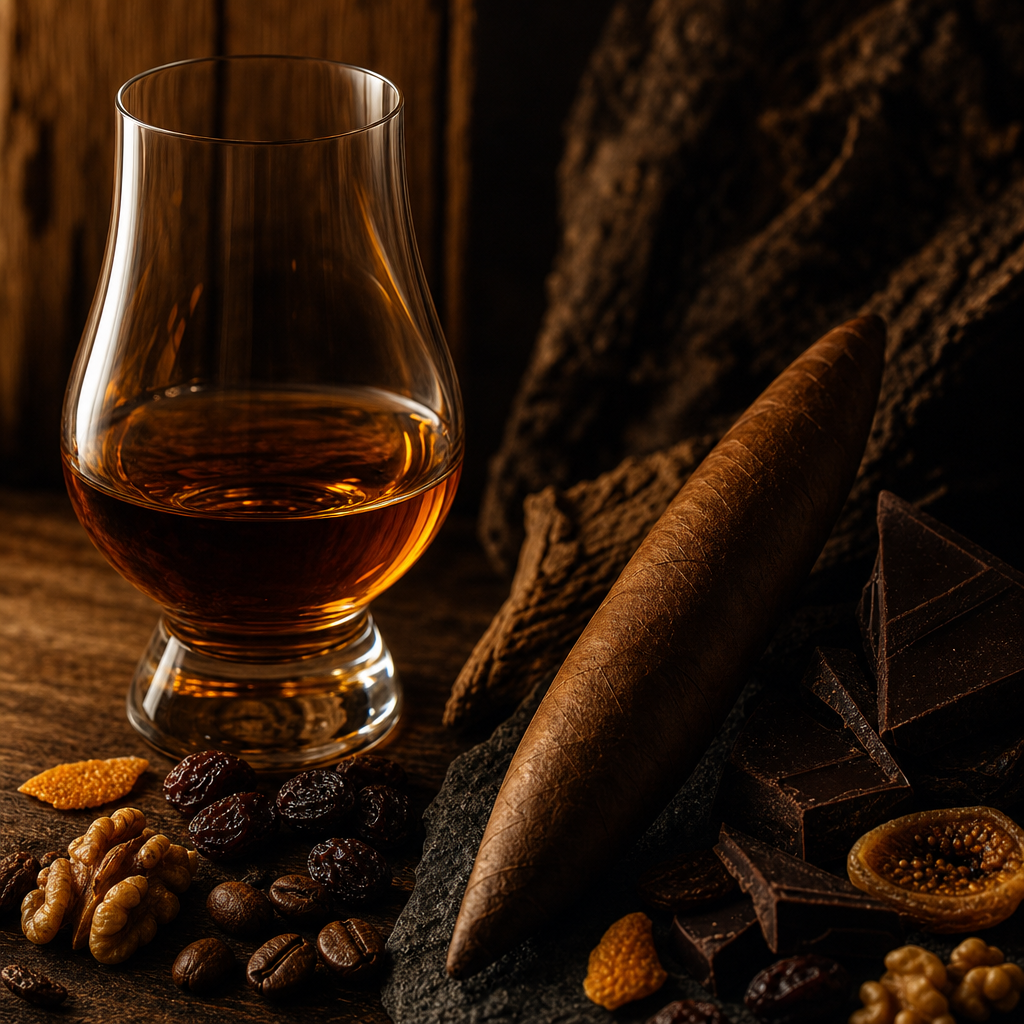
In terms of flavor, Bolívar Belicosos Finos often has a main axis of deep earth, dark chocolate, leather, and coffee. The front section may start with dry earth, cocoa powder, and slightly bitter wood, the middle section transitions to concentrated coffee, leather, and roasted nuts, and the back section becomes more pronounced with black soil, pepper, and charred bitterness. Its rich cigar body is not just about strength but about dense flavor particles, heavy smoke weight, and long-lasting aftertaste.
If this cigar encounters a whisky that is too sweet or too fragrant, it can turn the leather and earth into dull heaviness; if it encounters a whisky that is too sharp, it can make the coffee bitterness and pepper seem dry and hard. The oily sea salt of Campbeltown whisky provides a mediation, neither embellishing Bolívar's roughness nor letting it go out of control. The core charm of Bolívar Belicosos Finos is compressing Cuban black soil and leather into the pointed smoke flow, forming a high-density rather than simply heavy cigar body.
The Token × Token Reaction of Sea Salt Whisky and Cuban Black Soil
Sea Salt Freshness × Deep Earth is the first reaction perceived in this pairing. The saltiness reduces the roughness of bitterness on the tongue, making Bolívar's dark chocolate and coffee not just bitter but adding edges of salty caramel, roasted nut skins, and moist earth sweetness. This doesn't make the cigar sweet but allows the mineral sweetness originally hidden by bitterness in the soil flavor system to emerge.
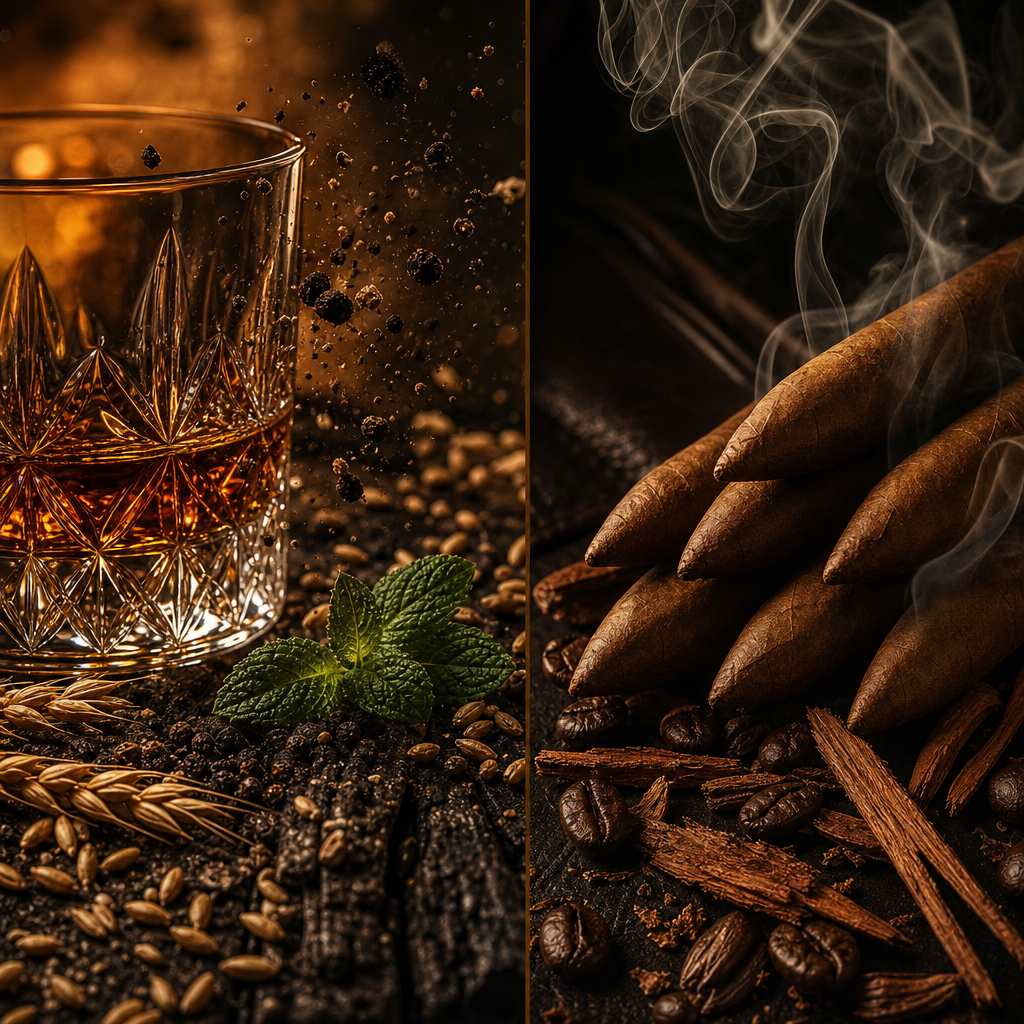
Motor Oil Funk × Leather Wildness is the second layer and also the most Campbeltown intersection. The lubricant, waxiness, and slight sulfur notes in the whisky resonate with the leather, stable edges, and dry wood box aroma of the cigar; both belong to the "charmingly unclean," but if the proportions are correct, they become a complex with life. Light Peat Phenols × Tobacco Smoke Resonance will extend the aftertaste, aligning smoke ash, charred cocoa, and sea breeze on the same line.
| Flavor Token | Campbeltown Whisky Side | Bolívar Belicosos Finos Side | Changes in Mouth After Intersection |
|---|---|---|---|
| Sea Salt Freshness | Dry Seaweed, Shells, Salt Mist | Deep Earth, Mineral Soil | Bitterness becomes round, soil flavor shows salty-sweet balance |
| Motor Oil Funk | Waxiness, Lubricant, Old Warehouse | Leather, Dry Wood, Wild Aroma | Roughness turns into animalistic depth |
| Light Peat | Smoke Ash, Scorch Marks, Phenols | Tobacco Smoke, Coffee Charred Bitterness | Aftertaste extends, smoke layers deepen |
| Oily Body | Fatty Acid Esters, Malt Oiliness | Pointed Head Concentrates Smoke | Flavor lingers longer, concentration showdown clearer |
| Oak Spices | Lignin, Vanillin, Tannins | Dark Chocolate, Coffee | Bitter-sweet framework forms, not easily scattered into dryness |
Pointed Head Concentrates Smoke × Oily Body is a structural concentration showdown. Bolívar's Campana lets smoke enter like a narrow bundle, Campbeltown's body spreads like an oil film, and after collision, it first tightens then disperses. The most precise chemical description of this pairing is sea salt modifying earth bitterness, motor oil accommodating leather wildness, and oil film extending smoky phenols.
Detailed Control of Tasting Order, Glass Type, and Maturation State
This pairing is not suitable for quick and large sips because its changes are hidden between salt, bitterness, oil, and smoke. A small tulip glass can be used to concentrate sea salt, leather, and light peat, but don't push the whisky temperature too high, or alcohol evaporation will amplify the coffee bitterness in the cigar's front section. The first sip of whisky only needs to establish oil and saltiness on the tongue before entering the cigar's front section to better read the sweet edge of deep earth.
The cut size of Bolívar Belicosos Finos will affect the pairing result. If the pointed head is cut too wide, the smoke flow widens, and the concentration decreases. If a more concentrated draw is retained, the contrast between the oily body and smoke bundle is clearer. In the front section, start with whisky, let the cigar dominate in the middle section, and use a small amount of whisky to clear the coffee charred bitterness and dryness on the tongue in the back section.
The maturation state will also change this relationship. Younger Bolívar may have sharper pepper, leather, and soil, suitable for pairing with oilier, saltier, and grainier Campbeltown; cigars integrated over time will have rounder dark chocolate and coffee, capable of withstanding more pronounced oak spices. The purpose of controlling the order is not to weaken the strength but to distinguish the positions of salt, soil, leather, and smoke in each encounter.
Frequently Asked Questions
The key to determining whether this pairing is successful is whether the bitterness deepens rather than dulls.
Does Campbeltown whisky have to be Springbank?
Not necessarily, but Springbank is one of the clearest coordinates for understanding regional syntax. If the sample can present sea salt, oil, leather, light smoke, and grain thickness, even if it comes from Glen Scotia or Kilkerran, it can establish a connection with Bolívar Belicosos Finos. The focus is not on the fame of the label but on whether the flavor structure is complete.
Why is Bolívar Belicosos Finos particularly suitable for this oily body?
Because the Campana pointed head concentrates the smoke, allowing deep earth, dark chocolate, leather, and coffee to enter the mouth at higher density. The oily body can accommodate this smoke pressure, preventing the bitterness from drying out quickly. If the body is too thin, only coffee charred bitterness and pepper remain in the back section.
Will the sea salt make the cigar too salty?
Good sea salt doesn't directly increase saltiness but acts like a trace of salt in seasoning, changing the proportion of bitterness and sweetness. It will bring out mineral sweetness in deep earth and turn dark chocolate from dry bitterness to thicker cocoa. If the whisky's saltiness is sharp and alcohol is prominent, the pairing will be unbalanced.
Is heavier peat more suitable for this cigar?
Not necessarily. Bolívar Belicosos Finos already has a rich cigar body and noticeable smoky charred bitterness; too heavy peat might compress leather and coffee into a single smoke ash. The advantage of Campbeltown's light peat is providing background scorch marks rather than stealing the main melody.
Should water be added to adjust the whisky?
A very small amount of water can be used to observe the aroma unfolding, but there's no need to dilute the body to lose the oiliness. If adding water makes the sea salt, grain sweetness, and leather clearer, the pairing will be more delicate; if the motor oil funk disappears, leaving only woody sweetness, it lacks the soul of Campbeltown. Each adjustment should be based on the mouthfeel structure.
Which part of the cigar is suitable to start drinking whisky?
In the front section, let the whisky establish saltiness and an oil film, let the cigar's leather and coffee dominate in the middle section, and use whisky to handle charred bitterness and dryness in the back section. This avoids being overwhelmed by concentration from the start and allows reading Bolívar's progression from earth to dark chocolate to leather charred bitterness. Rhythm is more important than quantity.
The brilliance of Campbeltown whisky and Bolívar Belicosos Finos lies in their pursuit not of cleanliness and appeal but of handing over sea salt, motor oil, black soil, and leather to those who understand how to read deeply. When the oily body envelops the pointed smoke, saltiness opens up bitterness, and the old port city and Cuban land meet in the same aftertaste.
Further Reading|Complete Map of Whisky Regions: From Scotland's Five Major Regions to Asia's New Forces, an Overview of Flavors Paired with Cigars|The Lightness of Triple Distilled Lowland Whisky: Afternoon of Grass and Citrus, Paired with the French Elegance of Quai d'Orsay No.54|Irish Whiskey Single Pot Still: Smoothness of Green Apple and Cream, Paired with Romeo y Julieta Wide Churchill
—Cigar Prince Wilson Tsai
Smoking is harmful to health. Smoking is prohibited for those under twenty. Quitline: 0800-636363. This article is intended for adults over the age of twenty as a reference for cigar culture, preservation, and regulations, not as tobacco advertising, promotion, or purchase advice.
Drunk driving is prohibited. Excessive drinking is harmful to health. Drinking is prohibited for those under eighteen. This article is also not an advertisement, promotion, or purchase advice for alcohol; please drink responsibly.